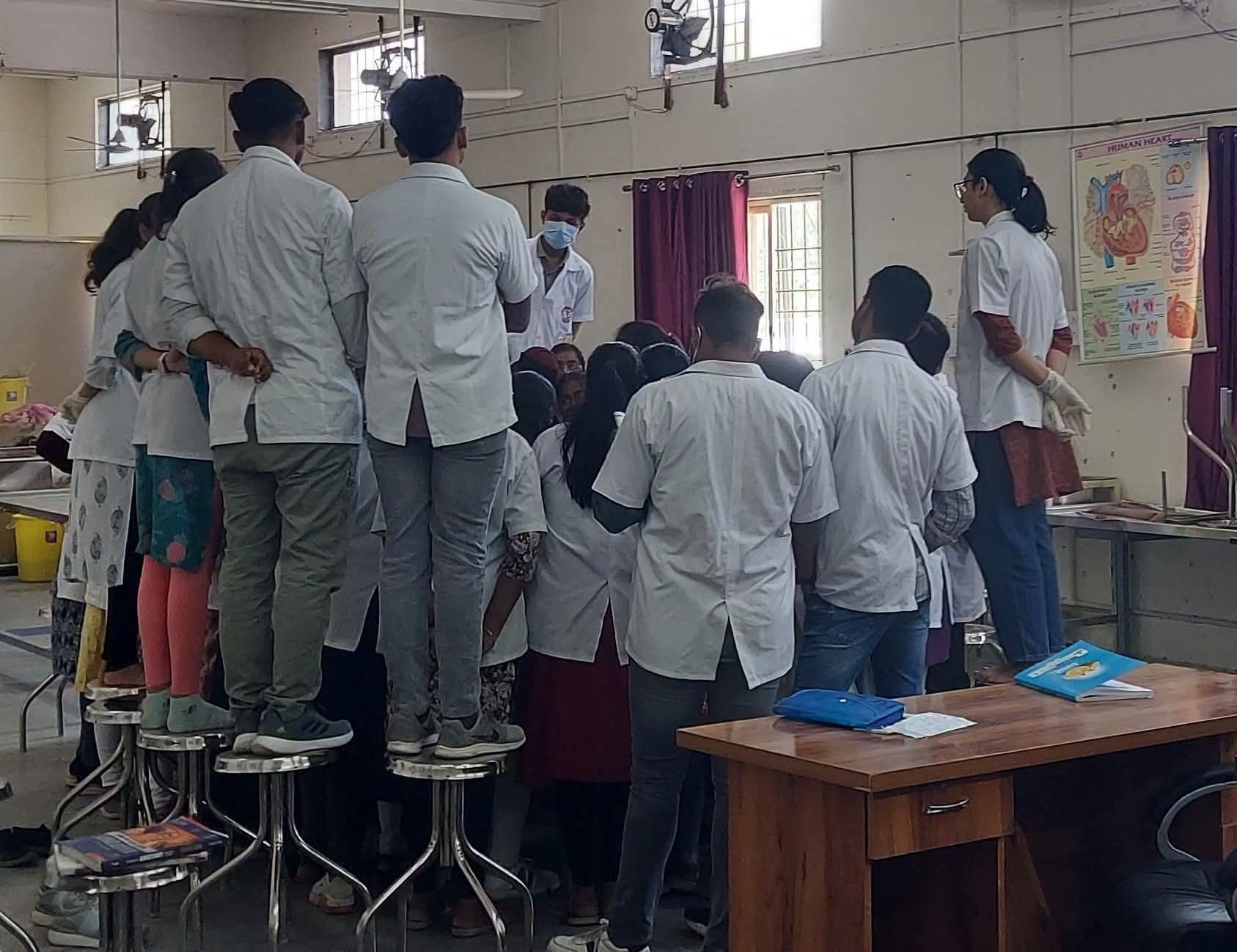
With dozens of medical students frequently crowded around a single table, the chronic shortage of cadavers already strains practical training in India. Protecting the reputation of these silent mentors is essential to ensuring that future surgeons gain the hands-on experience necessary to save lives.

By Kalpana Pandey
The decision to donate one’s body to medical science is an act of quiet, profound defiance against superstition. When I walked into KEM Hospital in Mumbai a few months ago to complete the formal process, my motivations were clear: to help dispel deep-seated societal misconceptions about death, to promote scientific rationalism, and to ensure my physical form remained useful to humanity long after my breath left it. I wanted to inspire others toward a selfless contribution that directly shapes the future of healthcare. However, a recent and deeply unsettling controversy involving an MBBS student at that very institution has raised disturbing questions about the moral and ethical scaffolding of our medical education system.
Sejal Pawar, a student at the prestigious KEM Hospital, appeared on a digital stand-up comedy platform called the ‘Pranit More Show’ and made crude, highly insensitive jokes regarding donated cadavers. In a video clip that rapidly went viral, she and her colleagues laughed while recounting how they mocked the genitalia of male dead bodies during their anatomy lessons, casually suggesting they would sever them at the end of the procedure. This footage triggered an immediate wave of outrage across the medical fraternity and sensitive sections of civil society. It followed an earlier video where Pawar disparaged her own college as “chindhi” (shoddy), labeled the people around her “ugly,” and dismissed her teachers as “toxic.”
This incident strikes directly at the foundational ethics of medicine. In dissection halls worldwide, the cadaver is traditionally revered as a “First Teacher” or “Silent Mentor,” an honor codified through the Cadaveric Oath. Dr. Asha Kadam, a veteran medical professional, recalls that in her student days, despite the overpowering smell of formalin, a profound compassion would well up for the body on the table. The constant realization that someone had selflessly given their form so others could learn left no room for inhuman or mocking thoughts. Dr. Kadam also notes a sharp social contradiction: a society that demands immediate professional ruin for minor everyday lapses was initially slow to condemn, and in some quarters actively enabled, explicit verbal desecration of the dead by a future doctor.
The controversy marks a troubling intersection where professional ethics are sacrificed for digital engagement and momentary internet fame. While some online defenders attempted to shield the behavior under the banner of “dark comedy” and “freedom of expression,” professionals outside Mumbai strongly reject the justification. Dr. Daphne Claire, a dentist practicing in Kerala, points out that dark comedy historically originated as a coping mechanism for victims processing their own trauma. No creator has the moral authority to exploit someone else’s body or an unlived experience for shock-value humor and brand it as comedy. Dr. Claire also highlights a gendered double standard in digital spaces, noting that a predominantly male audience initially drove the video’s metrics and inflated the student’s follower count because they found her attractive, illustrating a collective moral blind spot when male donors are publicly humiliated.
While the KEM administration swiftly intervened by launching an inquiry, placing Pawar on compulsory leave, and mandating counseling, which ultimately led to her issuing a public apology, the structural problem runs deeper. Securing a highly competitive medical seat does not automatically instill basic humanity or sensitivity. In a country where millions of women are systematically denied an education, the misuse of a premier medical opportunity to mock the dead represents a tragic institutional failure, signaling an urgent need to strictly integrate empathy and bioethics into medical training.
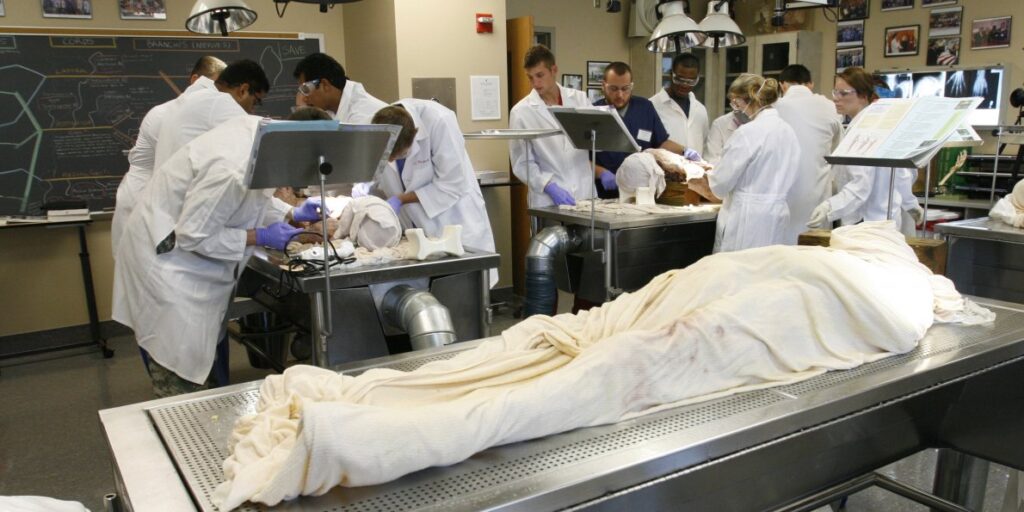
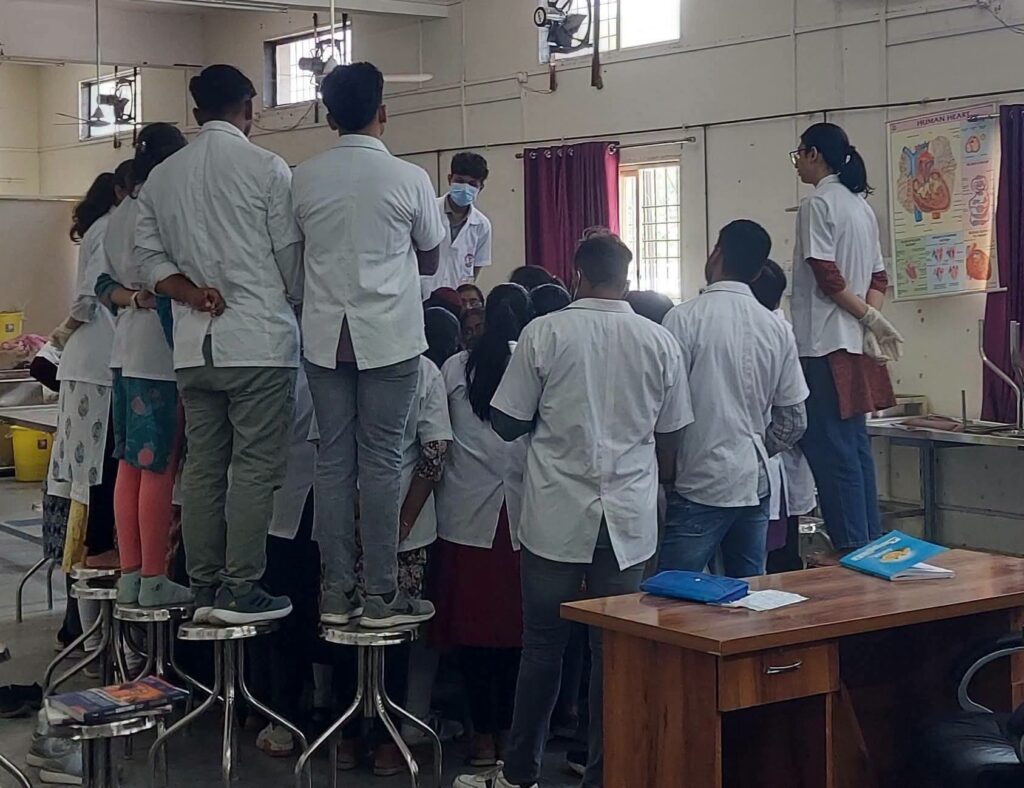
The crisis of medical irreverence is particularly damaging given the chronic shortage of cadavers across India. Human anatomy cannot be mastered through flat textbook diagrams, digital animations, or high-definition screens. The intricate, three-dimensional reality of human vasculature, nerve pathways, and muscular structures requires direct, tactile dissection. While the ideal educational standard dictates a ratio of one body for every ten students, reality paints a bleak picture: in many resource-constrained government medical colleges, 30, 40, or even 75 students are forced to crowd around a single table, standing on stools to glimpse the procedure from a distance without gaining hands-on practice.
The primary barrier to changing these metrics remains traditional superstition. Pervasive beliefs that a body must remain intact for the soul’s liberation or that physical dissection causes congenital defects in the next birth continue to hinder progress. Yet, no major religious philosophy opposes the service of humanity, and body donation represents philanthropy in its most absolute form. When families do overcome these cultural barriers under the framework of the Maharashtra Anatomy Act of 1949, their central concern is always whether their loved one will be treated with dignity. Medical protocols are designed to ensure this; upon arrival, a body is stripped of personal identifiers and assigned a strict registration number to guarantee total anonymity.
Furthermore, the utility of a single donation extends far beyond the first-year anatomy lab. Emerging surgical techniques for complex neurosurgery, orthopedics, and cardiology are validated on cadaveric tissue. The safety testing of critical medical devices such as cardiac stents, pacemakers, and joint prosthetics relies entirely on human tissue models before clinical deployment. In forensic science, donated bodies allow researchers to map decomposition patterns and insect activity, providing critical data that helps law enforcement determine precise times of death in homicide investigations. Globally, cadavers are utilized in impact biomechanics to design safer vehicle seat belts, military helmets capable of absorbing blast shocks, and protective gear for athletes, saving countless living people through the dead.
To counteract institutional cynicism, grassroots organizations continue to work tirelessly to demystify the donation process. In Mumbai, the Jyeshtha Sthanik Nagarik Seva Manch, led by social worker Savita Gharat, has spent 15 years running community awareness campaigns. Operating under the philosophy that it is better to endure after death through science than through ritual, Gharat’s team conducts door-to-door outreach. They recently facilitated the donation pledge of 92-year-old R.K. Sahgal, a retired engineer holding a degree from Melbourne University, who explicitly called his family together to finalize the legal paperwork, stating his desire to give back to society in his final moments without leaving a logistical burden for his children. Similarly, the Maharshi Dadhichi Dehadaan Mandal in Dombivli has operated since 1988 under the foundational philosophy of Gurudasji Tambe, educating the public on how eye and skin donations can restore sight to the blind and provide vital grafts for severe burn victims.
The true impact of this work is best understood through the families of donors. Vinod Davre of Parbhani, who facilitated the donation of his grandfather’s body in 2015, recalls meeting a physician decades later who told him that his entire career rested on that single donation, describing how students formed a bond of respect with the body and performed the final rites with absolute reverence. This testimony highlights the standard expected of the medical profession. Once medical studies are completed, the remains are not discarded as biological waste; they are cremated or buried through formal collective ceremonies or returned to families in accordance with legal protocols.
A mechanic respects his tools; a trader respects his ledger. A physician’s baseline obligation is to respect the human form that granted them a career. When that boundary is blurred for digital validation, the distinction between a medical professional and a commercial butcher begins to erode. Deciding to donate one’s body must remain an act of social defiance, a statement that even in death, the human form can serve the living by lighting the path of scientific progress.
Disclaimer: The views and historical interpretations expressed in this feature article are solely those of the author and do not necessarily reflect the official editorial stance or opinions of this publication. The author can be reached at [email protected]
Leave a Reply