In an ancient northern village, a calm spring mirrors a temple and a mosque side by side without prejudice. As returning Pandits embrace long-parted Muslim neighbors, decades of rupture dissolve into shared memory.
There was a time when Kashmir was not measured or fractured by the names of its communities. Muslims and Pandits lived together, walked the same lanes, drew water from the same fresh springs, visited one another’s homes, and celebrated the turn of seasons and faiths as a shared calendar. Eid, Herath as Shivratri is known locally, Baisakhi, and other occasions were not exclusive boundaries, but invitations that brought people closer. This lived experience was Kashmiriyat: not a hollow political slogan or an abstract academic term, but a practical, daily way of being. Then arrived the harrowing years of conflict and rupture. Thousands of Kashmiri Pandit families were forced to leave their ancestral hearths for Jammu and other distant plains, scattered into exile. Yet the deep, subterranean bond with their native soil never fully withered. Decades later, some still make the pilgrimage back to their old villages, wandering through neglected orchards, searching for overgrown temples, bending over familiar springs, and returning to the very spots where their earliest childhood memories took root. Whenever they return, a sleeping current stirs, and an ancient connection breathes back to life.
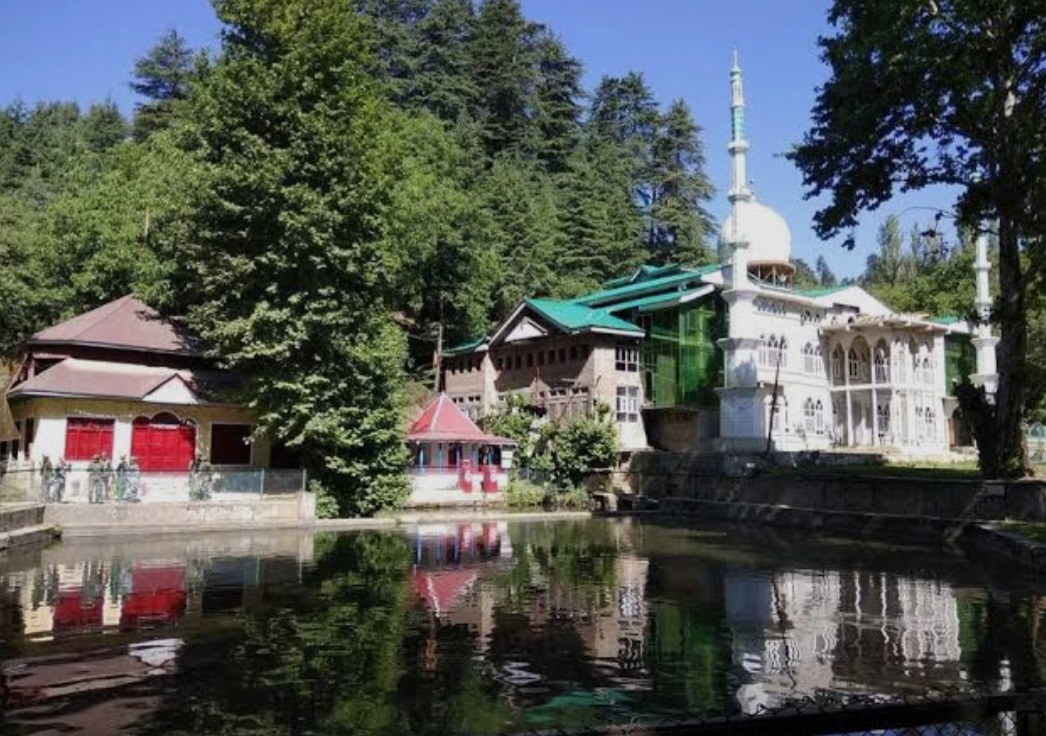
I witnessed that connection firsthand in Trehgam, an old settlement in northern Kashmir. I was standing in the open compound of the Grand Jamia Masjid, framing a photograph through my camera lens, when I turned to look behind me at the ancient, revered spring known as Shivnag. Its waters were crystal clear, cold, and remarkably calm. On its glassy surface, beneath the pale northern sky, I saw an extraordinary visual: the mirrored reflections of the nearby Hindu Mandir and the Muslim Jamia Masjid resting side by side.
While I watched this natural alignment, a Kashmiri Pandit family arrived in the lane beside the water. They had been away for decades. The moment a few local villagers spotted them stepping out of their vehicle, the quiet rhythm of the morning broke. Men and women rushed out from their shops and doorways to greet them. There was no hesitation, suspicion, or awkward restraint. Instead, there were broad smiles, affectionate inquiries, tears, and long, tight embraces. Freshly brewed tea was immediately fetched from a nearby home. For those few unscripted moments, the painful chasms of time, politics, and forced migration collapsed. The visitors had returned to their soil, and the villagers received them not as tourists or estrangements, but as native sons and daughters who still belonged to the ground beneath their feet.
They held each other in lingering embraces. And in that ordinary, quiet village scene, something far larger than dogmatic religion surfaced. I saw memory surviving against history. I saw instinctive belonging. I saw the quiet heartbeat of Kashmiriyat intact. Then I looked down once more at the waters of Shivnag. The spring continued to cradle the Mandir and the Masjid together in its calm depth. The clear water did not divide the structures, negotiate territory, or ask which reflection belonged to which creed. It simply held both in its singular, unjudging expanse, reflecting reality without prejudice.
Perhaps that is precisely what a sacred geography does: it preserves the essential human connections that societies, battered by political storms, too easily forget. Kupwara is routinely defined in newspaper dispatches and travelogues through its stark, physical elements—its dense pine forests, snow-capped ridges, swift mountain torrents, and crisp frontier climate. Yet beneath this familiar exterior lies an older, richer Kupwara. It is a frontier defined by an interwoven network of saints, dargahs, mandirs, asthapans, historic gurdwaras, healing springs, and oral traditions handed down across generations.
Scattered throughout its hamlets are revered Sufi shrines carrying the imprint of legendary mystics: Hazrat Zati Shah Wali (RA), the renowned potter-poet Qadir Saeb-e-Kral (RA), Hazrat Maulana Mohammad Amin Owaisi (RA), Hazrat Baba Abdullah Guzriyali (RA), Hazrat Sheikh Ahmad Chogali (RA), and Aam Saeb Yaroo (RA), among many others whose graves dot the foothills. In the dense woodlands of Shahnagari Mawar in Handwara, the district preserves the sacred memory of an ancient underground cave Khankah, where hermits retreated into solitude and prayer.
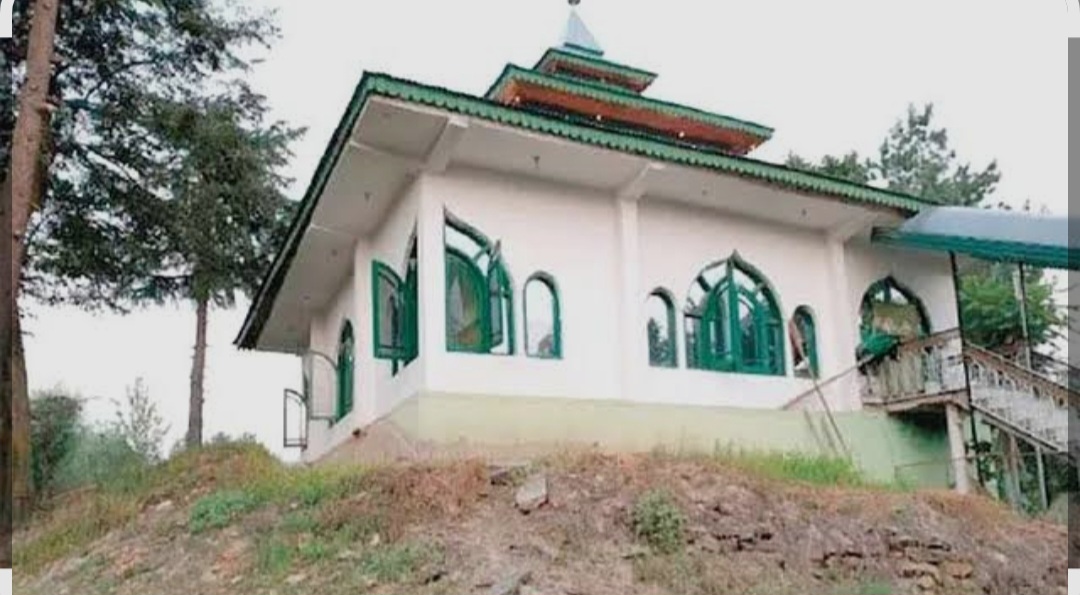
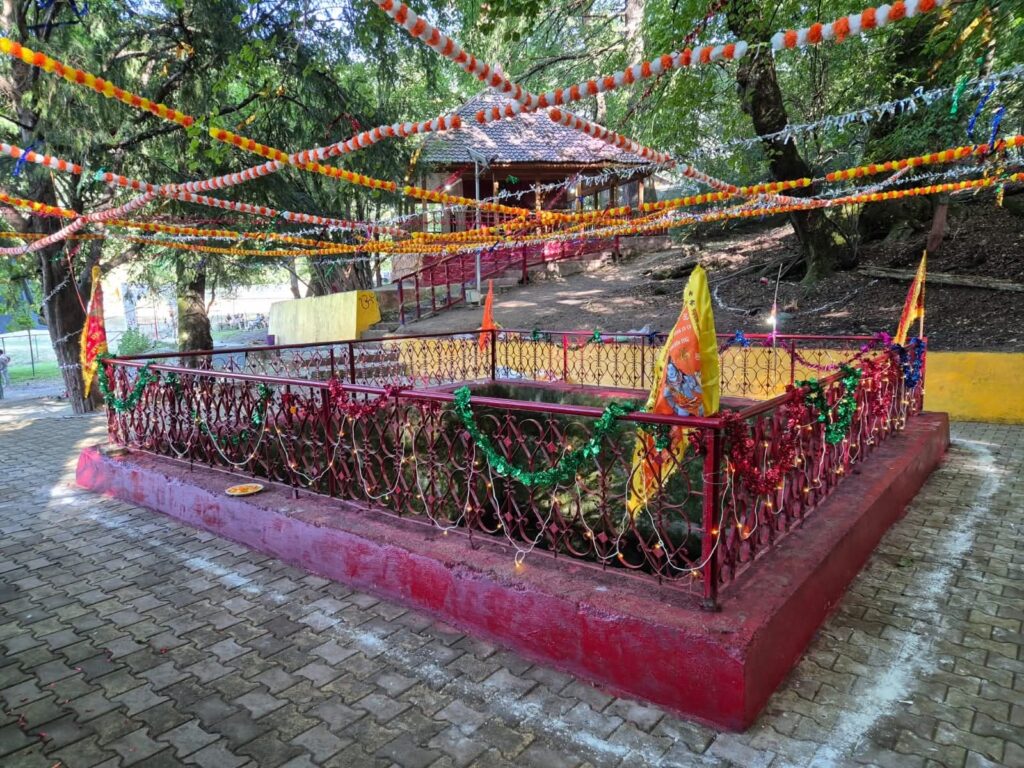
Yet the spiritual cartography of Kupwara cannot be read through any single community’s lens. Near the main town, the sacred Kheer Bhawani Asthapan at Tikkar, dedicated to the Goddess Ragnya, remains a profound pilgrimage site and an enduring anchor of Pandit identity and ritual life. Further into the Handwara–Rajwar belt, the ancient Badrakali Temple marks another venerable node of devotion, standing as a quiet sentinel of the valley’s deep past. At the Sadhu Ganga Asthapan in Kandi, Handwara, natural cold waters, faith, and centuries of collective remembrance continue to meet.
Parallel to this, Kupwara’s rich Sikh history forms an essential thread in the region’s plural fabric. Important gurdwaras established in Kupwara town, Deedarpora, Chogal-Handwara, and out along the frontier in Sumbalpora near Karnah and Teetwal safeguard generations of communal devotion, agrarian kinship, and resilience. Higher up into the valley’s memory, the tradition of Sharada Peeth links this district directly to the epoch when Kashmir was known across Asia as Sharada Bhumi, the land of the Goddess Sharada, a celebrated seat of higher learning, philosophy, and textual scholarship that drew seekers from across the subcontinent. At Gushi in Kupwara, the enduring local memory of Prakash Akhoon, a polymath revered for his effortless command over Arabic, Persian, Urdu, and Sanskrit embodies this unique cultural synthesis, reminding us that knowledge once bridged diverse tongues and rival faiths without contradiction.
These physical landmarks demonstrate that authentic heritage is not built merely of carved wood, sun-dried brick, or dressed river stones. A holy site endures only so long as it is warmed by human memory, emotional investment, living ritual, and the feet of returning pilgrims.
Yet collective memory is notoriously fragile. An elderly village narrator dies without an apprentice. A holy spring grows choked with modern silt and neglect. A shrine falls completely silent behind rusted padlocks. A family name that was spoken with reverence for centuries can fade into absolute obscurity within a single generation. When those quiet links vanish, we lose far more than folklore; we surrender an irreplaceable fragment of our shared cultural foundation. That makes documenting and safeguarding these living histories an urgent, journalistic imperative.
The quiet waters of Shivnag offer an enduring lesson. The spring mirrored the Mandir and the Masjid as a unified whole. It refused to separate them. When the exiled Pandit family stepped back onto the soil of Trehgam, their Muslim neighbors opened their arms and poured tea, bridging decades of separation in a single instant. This is the Kashmir that demands remembering not a nostalgic illusion or an ideological talking point, but a concrete reality that once flourished in everyday courtesies, joint harvests, and shared celebrations. Different faiths never required different hearts. The living soul of Kupwara cannot be claimed by a single community; it is an undivided, shared inheritance.
Disclaimer: The views expressed in this feature article are solely those of the author and do not necessarily reflect the official editorial stance or opinions of this publication. The author can be reached at [email protected]
Leave a Reply