True marriage in Islam requires uncompromised consent, yet cultural expectations continue to trade dignity for social standing. Until families dismantle this silent coercion, the cycle of fractured homes will quietly repeat.
Dr Syed Ubaid Bukhari
Marriage is meant to be a bond of peace, not a prison of silence. Choice in life is never a privilege; it is an inherent right, and where choice is stripped away, human dignity cannot survive. An old, bitter truth captures this reality with painful precision: “Jabr se paida hui zindagi, zindagi nahi hoti, sirf guzarna hota hai.” A life born entirely out of compulsion is not truly lived; it is merely endured.
Across the valley of Jammu and Kashmir, where the natural world reflects tranquility and timeless grace, a stark contradiction festers quietly beneath the domestic surface. Forced matrimony remains a pervasive yet rarely acknowledged crisis, silently shaping the destinies of countless young women and reducing a sacred partnership to a lifetime of silent compromise.
This coercion rarely announces itself through overt physical force. Instead, it operates through subtle, suffocating avenues: emotional pressure, family expectations, and the ever-present dread of societal gossip. In many Kashmiri households, a daughter’s silence is immediately seized upon as willing agreement, while her hesitation is dismissed as youthful naivety. Her personal ambitions and dignity are quietly negotiated away in the name of familial reputation, rendering genuine consent entirely meaningless. When families weaponize affection through emotional blackmail, they commit an irreparable blunder against their own children, sacrificing their long-term well-being to satisfy immediate social standing.
As Hazrat Allama Iqbal (RA) once observed, “Zindagi jabr bhi hai, sabr bhi hai, aur talaash bhi hai.” Yet in its authentic essence, life was never meant to be reduced to an unbroken trial of submission. When the freedom of choice is denied, life itself begins to lose its vital spark.
What makes this social pathology particularly alarming is the frequent misinterpretation of faith to justify control. In reality, Islamic jurisprudence stands unequivocally opposed to coerced unions, demanding mutual desire and explicit consent. The Quran leaves no room for ambiguity: Surah An-Nisa (4:19) forbids the inheritance of women by compulsion, Surah Al-Baqarah (2:232) explicitly commands believers not to prevent individuals from marrying their chosen partners, and Surah Ar-Rum (30:21) defines matrimony as an enduring sanctuary of tranquility, love, and mercy.
These scriptural imperatives are reinforced by clear prophetic traditions. Prophet Muhammad (peace be upon him) mandated that a previously married woman cannot be wed until she is consulted, nor can a maiden be married until her explicit permission is granted, as recorded in both Sahih al-Bukhari and Sahih Muslim. The legal invalidity of coercion was demonstrated definitively in Sunan Abu Dawood and Sunan Ibn Majah, when a young woman approached the Prophet stating that her father had arranged her marriage against her will. Without hesitation, the Prophet granted her the explicit legal right to dissolve the union. By making free consent an absolute prerequisite for a valid nikah and empowering women to reject unwanted unions, Islam dismantled every theological excuse for coerced marriages. Forced matrimony persists not as a religious obligation, but as a cultural distortion sustained by fear, silence, and unchecked patriarchal authority.
The harsh human toll of these unions rarely makes public headlines, but it reverberates powerfully within closed doors. It lives on in hollow rooms, in private grief, and in lives devoid of emotional fulfillment, at times driving individuals into profound depression and tragic suicidal despair. The defiance demanded by this condition is captured in the searing words of Faiz Ahmed Faiz: “Bol ke lab azaad hain tere, bol zuban ab tak hai teri.”
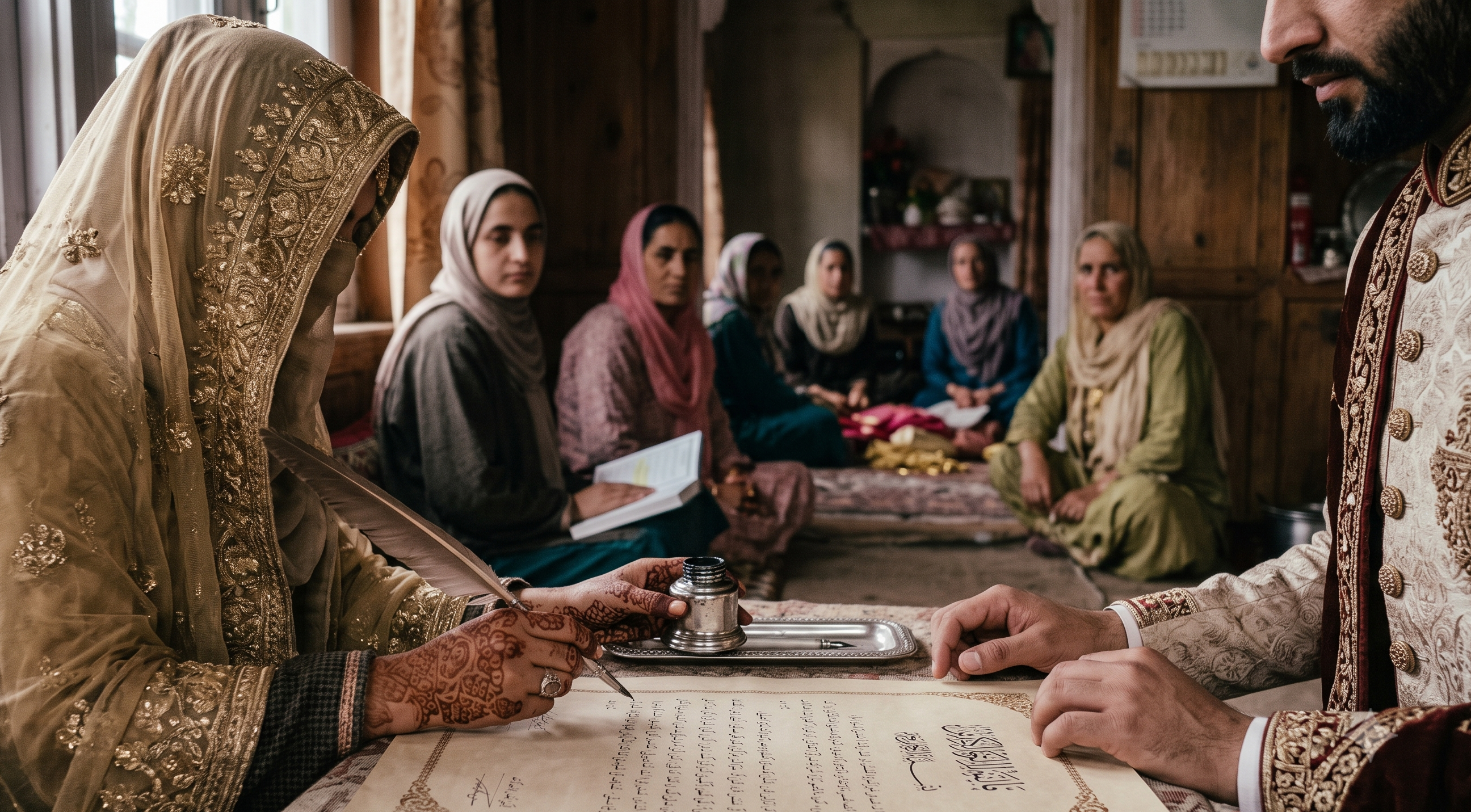
When viewed in its full scope, forced matrimony ceases to be merely an isolated personal tragedy; it becomes an acute generational disaster. Children reared in households devoid of mutual respect and warmth grow up observing emotional estrangement, suppressed voices, and deeply fractured dynamics. Over time, these patterns become normalized, quietly repeating themselves from one generation to the next. The consequences ripple outward for decades, fueling severe mental health crises, abrupt disruptions to education, structural economic dependency, and the erosion of individual identity. A marriage conceived without consent cannot cultivate genuine peace, and without internal peace, families inevitably begin to decay from within.
Halting this cycle requires decisive collective action. Families must urgently redefine honor not as the rigid control over their daughters’ lives, but as unconditional respect for their autonomy and dignity. Religious scholars must confront this crisis from the pulpit, utilizing weekly Friday sermons to dispel cultural fallacies and illuminate the strict Islamic mandate of consent. At the same time, community elders, educators, and civil society leaders must speak out boldly, providing institutional support for young people facing domestic coercion.
Jammu and Kashmir now stands at an urgent moral crossroads: it can continue to preserve a suffocating silence, or it can rise to protect the voices that have for too long been silenced. Marriage, in its truest sense, is never intended to confine; it is meant to provide peace, dignity, and lifelong companionship. When choice is stolen, the tragedy does not stop with a single individual, it leaves generations to quietly break apart.
Disclaimer: The views expressed in this feature article are solely those of the author and do not necessarily reflect the official editorial stance or opinions of this publication. The author can be reached at [email protected]
Leave a Reply