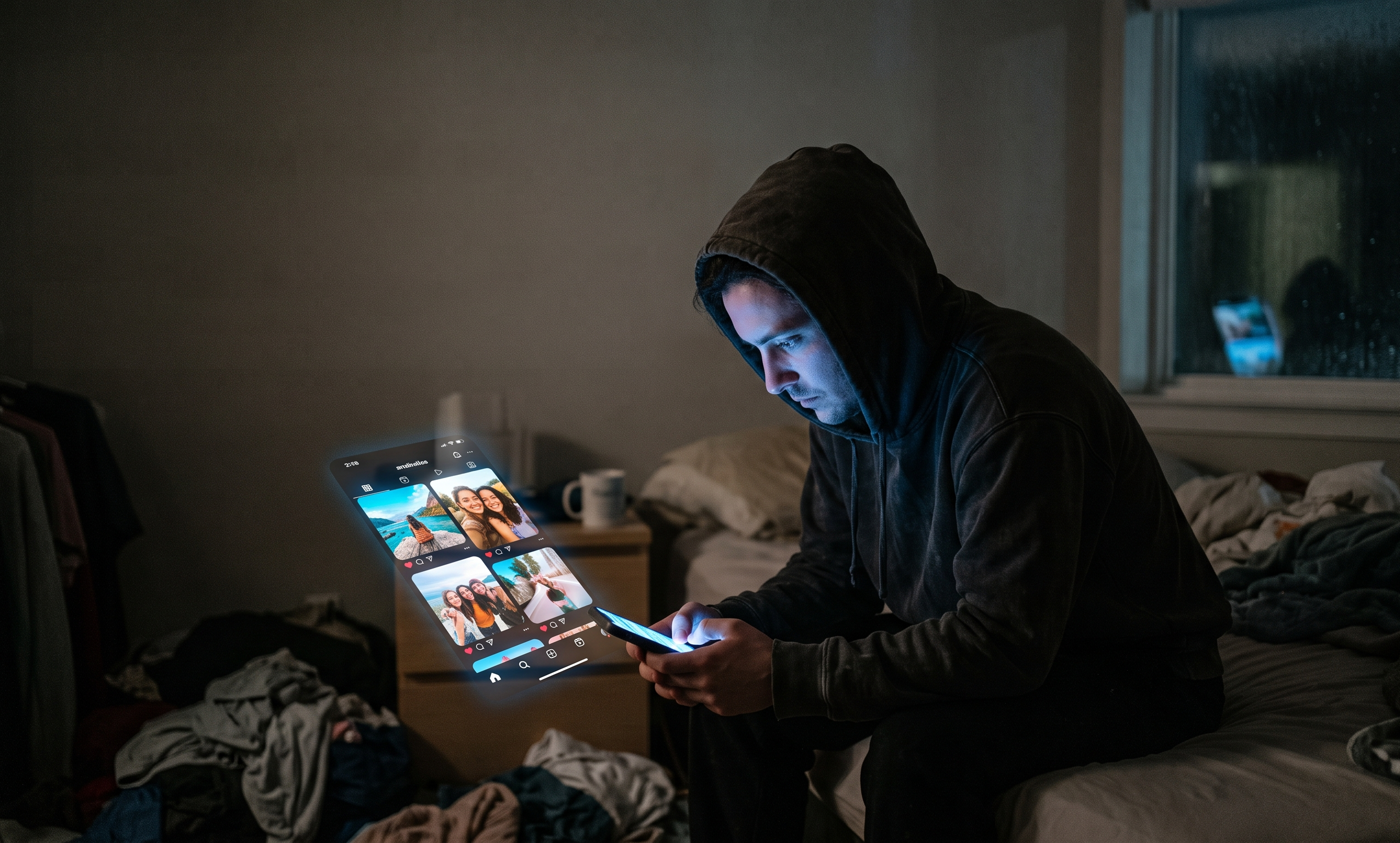
We trade real presence for curated perfection, chasing approval from strangers while drifting away from ourselves. Beneath the endless scroll lies a quiet struggle between authentic living and performative display.
Social media has fundamentally rewritten the architecture of human communication, establishing itself as an undeniable geopolitical, cultural, and economic force. What began as a modest network to link classmates has matured into a vast digital public square spanning billions of lives across every continent. By eliminating geographic friction, it has democratized information, provided marginalized communities with an unmediated megaphone, and brought distant societies into immediate contact. Today, an ordinary citizen equipped with a smartphone wields the publishing power that once belonged exclusively to legacy media conglomerates. From accelerating small businesses and fueling the creator economy to distributing open-access education and exposing human rights abuses in real time, social media can serve as a profound public blessing when deployed with purpose and ethical discipline.
Yet beneath this hyper-connected exterior lies a pervasive shadow that challenges the very fabric of human well-being. The modern social landscape is rarely an unvarnished window into reality; it is an intricately engineered stage where curated appearances reign supreme. Platform architectures, fine-tuned by engagement algorithms, reward the spectacular, the affluent, and the aesthetically flawless while burying the mundane struggles, anxieties, and labor that define ordinary life. When audiences consume these relentless highlight reels, the natural human tendency toward social comparison is hypercharged. Viewers internalize an artificial baseline of universal happiness and effortless luxury, leading to chronic feelings of inadequacy, imposter syndrome, and pervasive envy. What feels like passive entertainment quietly erodes mental tranquility and fuels an ongoing crisis of self-worth, particularly among impressionable youth.
Parallel to this culture of comparison is the monetization of human validation. The digital ecosystem is deliberately constructed around variable dopamine rewards, turning likes, views, and follower counts into the primary currency of modern identity. For millions of users, emotional equilibrium has become outsourced to an interface: high metrics deliver a transient burst of euphoria, while low engagement triggers genuine dejection. In pursuit of quantitative approval, individuals undergo a subtle form of digital self-censorship, gradually reshaping their opinions, aesthetic choices, and values to appease the algorithmic crowd. The authentic self is hollowed out and replaced by a performative persona built solely for public consumption.
This psychological dependency is reinforced by the sheer, aggressive extraction of our time. The transition toward infinite scroll feeds and micro-video formats has engineered an attention economy that actively discourages disengagement. Countless hours disappear into algorithmic rabbit holes filled with manufactured drama, low-value stimulation, and repetitive outrage. The opportunity cost of this frictionless consumption is devastating: creative ambitions are shelved, intellectual depth is compromised, and genuine face-to-face family presence is sacrificed for the ephemeral glow of a glass screen. We find ourselves constantly occupied yet fundamentally unproductive, forfeiting the irreplaceable currency of time without consciously recognizing its departure.
Morally and socially, the digital sphere has exacerbated a dangerous culture of disinhibition. Shielded by the psychological distance of a screen and the protective veil of anonymity, discourse frequently descends into hostility, reflexive mockery, and cruel public shaming. When the immediate emotional feedback of human conversation is stripped away, empathy deteriorates rapidly. Comment sections transform into arenas of dehumanization where nuanced dialogue is impossible, replaced by tribal hostility and polarization designed to harvest clicks through moral outrage. We too often forget that behind every avatar, handle, and video exists a flesh-and-blood individual carrying their own complex emotions, vulnerabilities, and real-world struggles.
This performative impulse has even penetrated the spiritual and ethical dimensions of daily life. While digital networks have enabled the rapid global dissemination of philosophical, charitable, and religious wisdom, they have simultaneously birthed a culture of commodified virtue. Good deeds, philanthropic acts, and spiritual devotion are frequently captured on camera, packaged with high production values, and broadcast for social validation rather than practiced in quiet sincerity. When morality becomes content, the intrinsic nobility of ethical action is corrupted by the hunger for audience applause. True virtue has always demanded discretion and authentic intent, yet the incentives of the digital platform constantly urge users to turn inward convictions into outward spectacles.
Confronting this reality requires a sober and objective assessment. Social media is neither an irredeemable curse nor an unambiguous salvation; it is an exceptionally potent instrument whose ultimate character is determined by the hands that direct it. Abandoning digital infrastructure entirely is neither practical nor necessary in an increasingly interconnected global economy. What is required is rigorous digital hygiene, disciplined literacy, and intentional boundaries. We must reclaim our capacity for deep focus, value physical relationships over virtual praise, and judge our worth by tangible real-world contributions rather than transient digital approval.
Ultimately, we are forced to confront an uncomfortable existential truth: the digital footprints we obsess over are inherently fragile and temporary. Trends will evaporate, algorithms will change, and the likes, shares, and metrics that consume our mental bandwidth today will carry zero significance in the final accounting of our lives. When everything fades, what remains is the integrity of our character, the depth of our human connections, and the sincerity of the actions we undertook in the real world. Social media will always function as a mirror, faithfully magnifying whatever values, insecurities, or virtues we project into it. The fundamental question every individual must answer remains simple yet decisive: are you consciously using the medium, or is the medium quietly using you?
Disclaimer: The views expressed in this feature article are solely those of the author and do not necessarily reflect the official editorial stance or opinions of this publication.
Leave a Reply