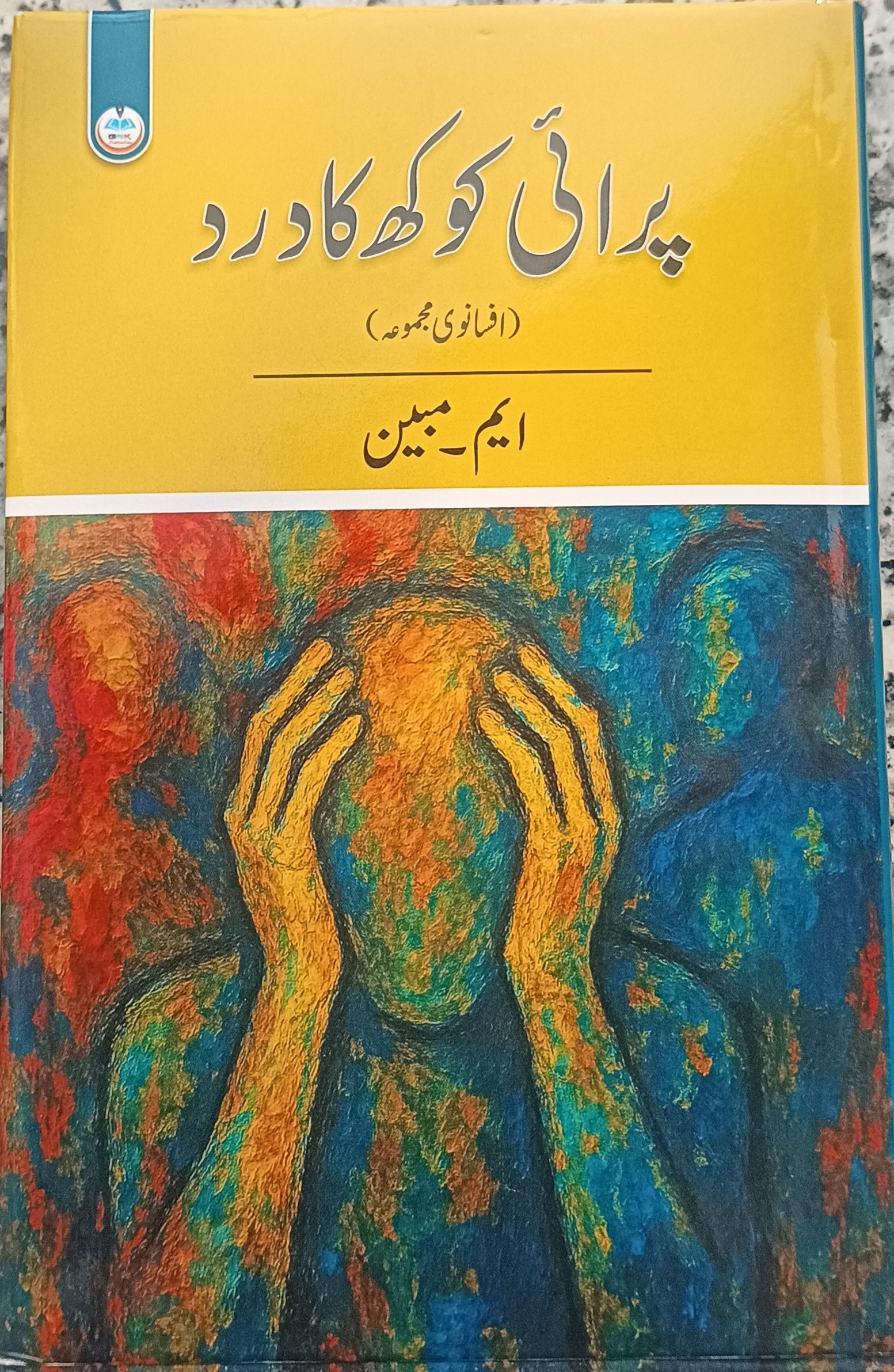
Tackling everything from commercialized surrogacy to the predatory panic of a broken ecosystem, Parayi Kokh Ka Dard strips modern life down to its rawest instincts. It is an urgent, uncompromising portrait of communities struggling under the sheer weight of self-interest.
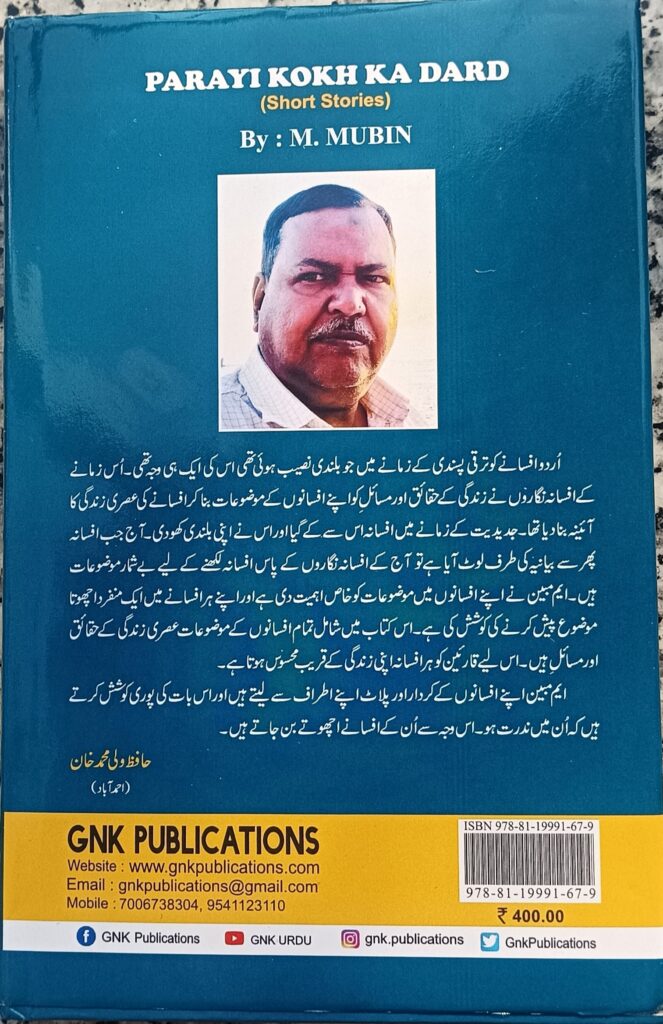
Few contemporary Indian authors command the dual arenas of Urdu and Hindi fiction with the creative stamina of Mohd Mubeen. Writing under his pen name, M. Mubeen, the veteran litterateur has spent decades navigating fiction, drama, and science fiction, assembling a formidable catalog of 44 books in Urdu and 33 in Hindi. His latest offering, Parayi Kokh Ka Dard, marks his sixth short-story anthology in Urdu. Published by GNK Publications across a compact 216 pages, the volume delivers a stark, grounded examination of modern moral decay. Dedicated to Hafiz Wali Mohd Khan of Ahmedabad who aptly observes that the work derives its power from locally rooted characters and everyday occurrences, the anthology arrives at a volatile cultural juncture. In an impassioned preface, Mubeen sounds an alarm over the erosion of literary craft, explicitly citing the rapid rise of generative artificial intelligence, which churns out surface-level prose in seconds while sidelining the lived human experience that takes authentic storytellers months, if not decades, to cultivate.
Mubeen answers that technological encroachment not with theoretical polemics, but with an unrelenting parade of human frailty, resilience, and ethical compromise across twenty carefully textured narratives. The collection wastes no time announcing its moral stakes. Its opening piece, Gonga Boul Raha Hai (The Mute Man Speaks), cuts to the core of institutional silence and societal cowardice. Centered on a speech-impaired protagonist who struggles against a world indifferent to his expressive limitations, the narrative accelerates toward tragedy when he witnesses a local village sarpanch violate a vulnerable young girl and discard her in an open field. Armed only with desperate gestures and unvoiced cries, the mute witness attempts to mobilize his community. The horrifying crescendo of the story lies not merely in the feudal abuse of authority, but in the villagers’ collective retreat. Choosing calculated self-preservation over justice, they quietly slip behind their bolted doors, exposing how public morality routinely bends beneath the weight of local power structures.
The narrative lens broadens in Dakhma ke Gadh (The Vultures of the Tower of Silence), a dark, allegorical dive into cultural rites and ecological disruption. Mubeen explores the centuries-old funerary traditions of the Parsi Zoroastrian community, where the deceased are traditionally placed within the dakhma to be consumed by predatory birds rather than cremated or buried in earth or fire deemed sacred. The story takes an eerie, psychological turn as a sustained shortage of corpses drives the starving vultures into desperate predatory behavior against living citizens. Through this grotesque shift, Mubeen probes the tenuous balance between ancient ritual, environmental catastrophe, and survival instinct, asking what happens to society’s sacred boundaries when ecological chains inevitably rupture.
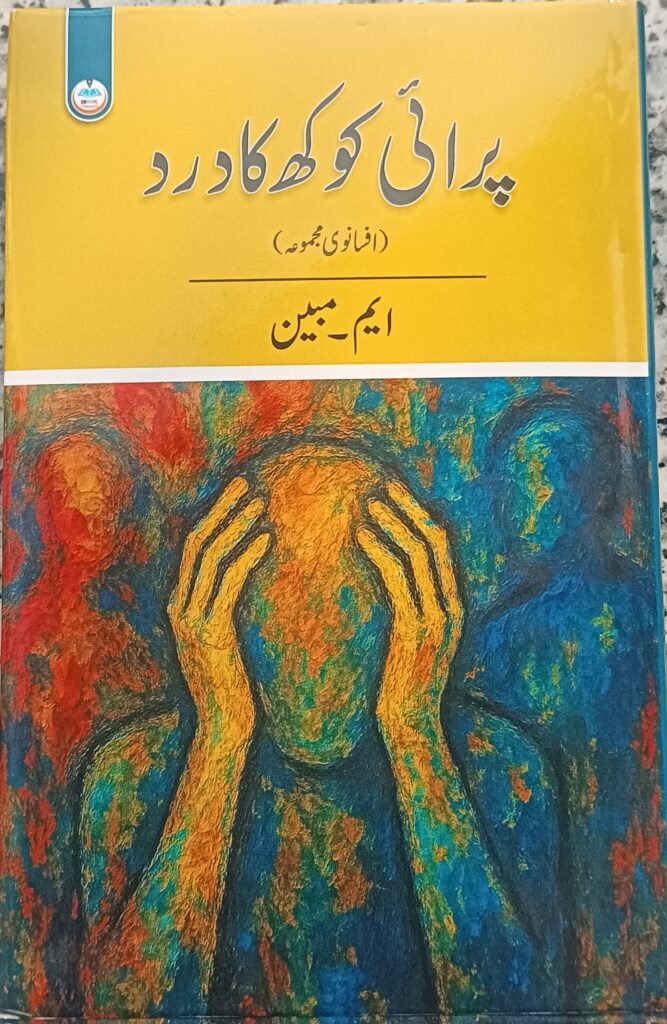
The collection derives its emotional anchor and title from Parayi Kokh Ka Dard (The Pain of a Borrowed Womb), a merciless look into the commercialization of female bodily autonomy. The story dissects an abusive marriage wherein an alcoholic husband commodifies his wife’s fertility, leasing her womb out as a surrogate to secure a financial windfall that he immediately squanders on vice. Forced to bear the psychological and physical weight of pregnancy for nine months, the mother is cast aside the instant delivery is complete, allowed only a momentary glance at the newborn boy before being legally and socially erased from his life. Rather than settling for a portrait of defeated victimhood, Mubeen tracks her agonizing, decades-long emotional pursuit, culminating in fleeting morning and evening glimpses of her grown son. It is a lacerating commentary on exploitative poverty and the unbreakable tether of maternal memory, establishing surrogacy not as a sanitized medical arrangement, but as a battlefield of class oppression.
Mubeen balances systemic critiques with portraits of raw, frontline altruism in Abdul Puncture Wala, set against the grim realities of the COVID-19 pandemic. At a time when societal panic drove neighborhoods into self-centered isolation and despair, the titular working-class protagonist endures unspeakable loss, burying both his mother and his son within days. Instead of succumbing to total paralysis, Abdul transforms his profound grief into dangerous civic service, using his humble resources to transport vital oxygen cylinders to suffocating neighbors across a quarantined town. The story avoids sentimental melodrama, presenting Abdul’s bravery as an instinctive, matter-of-fact duty that shames the indifference of higher social strata.
Greed forms the dark engine of several subsequent pieces, most notably Sone ke Daant (Golden Teeth) and Doulat (Wealth). The former operates as an incisive character study in collective opportunism. Following the cremation of an acquaintance renowned for possessing three gold teeth, ten townspeople quietly sift through funeral ashes in a frantic, undignified scramble for unearned wealth. Their eventual failure underscores the pathetic absurdity of greed strip-mining human remains. In Doulat, Mubeen turns toward biting social satire through the figure of Doulat Chowdry. Tasked by an anxious friend with safeguarding forty lakh rupees overnight, Chowdry is suddenly transformed from a tranquil citizen into a prisoner of phantom threats. Paralyzed by the paranoia of loss, he spends the entire night staring restlessly at his ceiling, held hostage by money that is not even his.
The collection rounds out its social inventory with Waris (The Heir), which untangles the quiet devastation of parental neglect, generational entitlement, and the erosion of domestic filial duty in aging families. Across all twenty pieces, Mubeen relies on sharp colloquial dialogue, realistic pacing, and unvarnished character portraits, leaving little room for ornamental distraction. Parayi Kokh Ka Dard is an urgent, clear-eyed field report on an era increasingly detached from empathy. Mubeen demonstrates that while artificial machines may simulate sentences, the burden of witnessing human grief, systemic failure, and redemptive grace remains the sovereign domain of the serious fiction writer.
Disclaimer: The views expressed in this feature article are solely those of the author and do not necessarily reflect the official editorial stance or opinions of this publication.
Leave a Reply