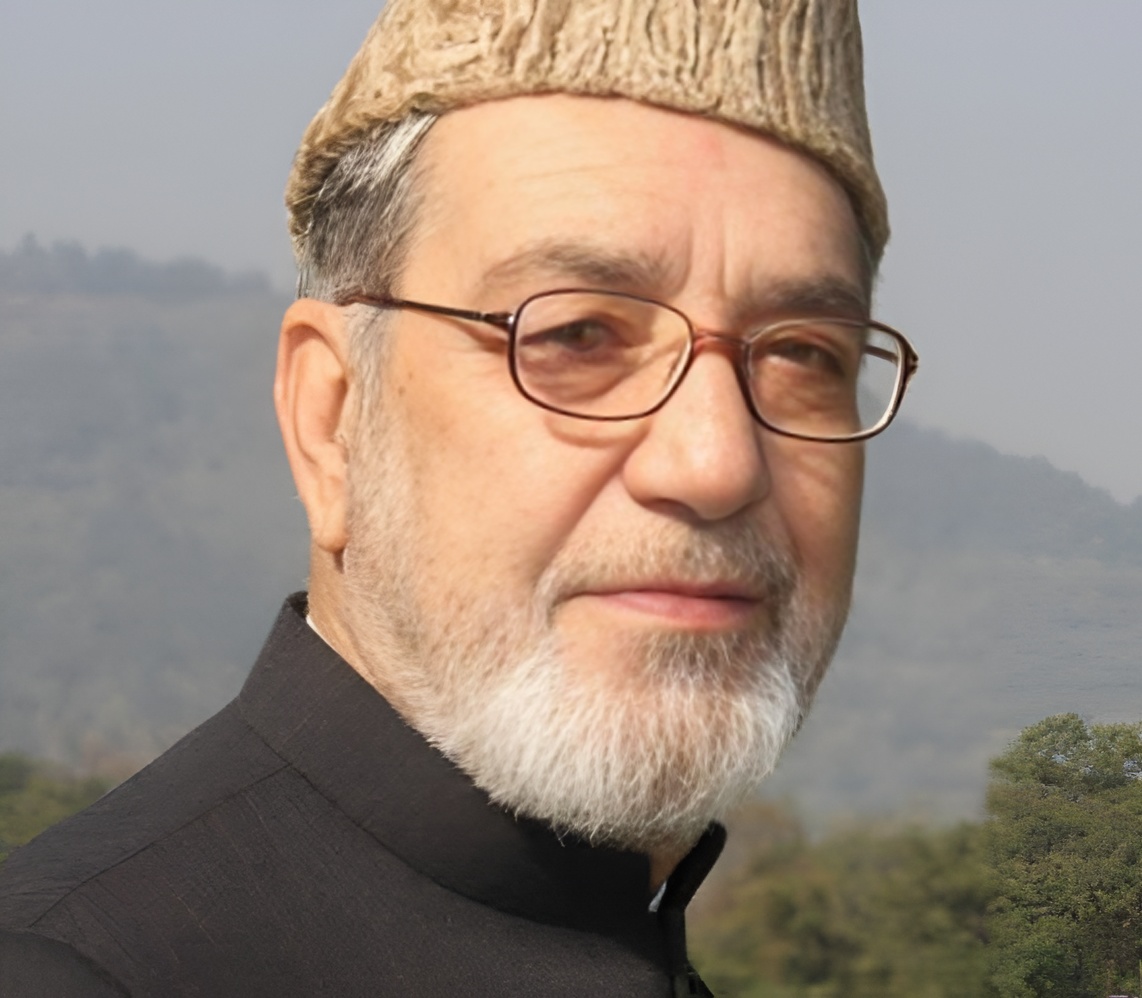
Born into a lineage of spiritual brilliance, Farhat Gilani spent his life weaving together faith, poetry, and relationships. A personal tribute to a man whose words continue to offer solace.
By Syed Majid Gilani
Inside the hallowed silence of the shrine of Hazrat Syed Mirakh Shah Kashani (RA) in Shalimar, the air carries a weight of centuries. On a recent visit, my eyes were drawn to a Persian poem inscribed upon one of the walls. The verses, composed by the late Farhat Gilani in memory of one of the shrine’s Khalifas, possessed a gentle gravity that seemed to anchor the spirit.
Standing there, I felt an immediate, intimate connection to a shared spiritual and literary inheritance. The poem did not merely commemorate a saintly figure; it echoed the soul of its creator—a man who spent his life bridging the gap between the divine and the everyday through the power of the written word.
Farhat Gilani was born Syed Mohammad Aslam Gilani into a lineage where scholarship was not just a pursuit, but a way of life. He was the son of the eminent Persian poet and scholar Maulana Syed Mubarak Shah Gilani, better known by his takhallus (pen name), Fitrat Kashmiri.
Raised in the historic Khanqahi Moulla, Farhat grew up in an atmosphere thick with the scent of old manuscripts and the melodic cadence of spiritual discourse. From his father, he inherited a profound linguistic mastery of Persian and Urdu—languages he would later use to weave a tapestry of beauty, devotion, and moral clarity.
While I did not know him “closely” in the traditional sense, our few interactions were defined by a measured, dignified grace. He was a man who never clamored for the spotlight, yet possessed a natural charisma that commanded the room. He walked with the quiet refinement of someone who knew exactly who he was and where he came from.
True to his name—Farhat, signifying freshness and solace—he emerged as one of the most versatile cultural icons of his generation. His professional life was a kaleidoscope of intellectual engagement: he was a poet, playwright, translator, broadcaster, and news anchor. To the public, he was a familiar and trusted face on television; to the literary community, he was a guardian of Kashmiri heritage.
Through his writings and translations, Gilani made indispensable contributions to the region’s intellectual landscape. He possessed a rare “cultural sensitivity,” ensuring that as Kashmir modernized, it did not lose the linguistic nuances of its past.
However, it was perhaps his Naatiya Kalam (poetry in praise of the Prophet) that resonated most deeply with the public. Regularly aired on radio and television, these verses were far more than mere recitations. They were raw, sincere expressions of humility and spiritual longing. In a world of loud assertions, Gilani’s tone was soothing—a balm for the weary, rooted firmly in unshakable faith.
Beyond the accolades and the airwaves, Farhat Gilani was a man of profound warmth. He viewed human connection as a sacred bond, a philosophy he practiced with egalitarian grace. Whether speaking to a high-ranking official or a young student, his affection remained constant.
He was a vocal advocate for the “old ways”—not out of a stubborn refusal to change, but out of a conviction that younger generations needed anchors. He frequently spoke of the importance of honoring family ties and respecting elders, viewing these relationships as the ethical threads that keep a society from unraveling.
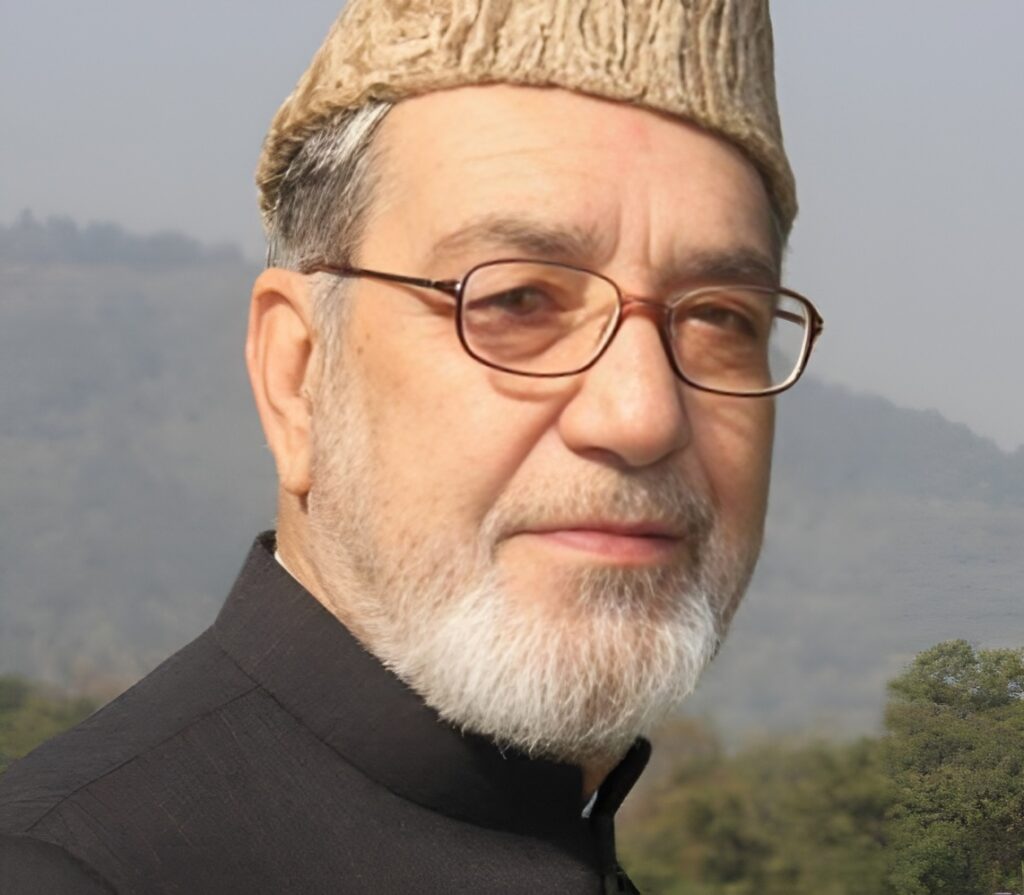
I experienced this generosity firsthand on a quiet winter morning in 2018. He had invited me to his home, Fitrat Abad, in Sheikhpora. During that visit, he presented me with a gift of immense personal value: a handwritten biography of my own great-grandfather, Maulana Syed Mohammad Yasin Shah Gilani, penned by his father, Fitrat Kashmiri.
That gesture was quintessentially Farhat. It was a bridge built across generations, a quiet act of preservation that required no fanfare but carried immense weight. It reflected a man who saw himself not just as an individual, but as a custodian of a collective history.
For Farhat Gilani, poetry was never an exercise in vanity or a mere artistic pursuit. It was a discipline—a way to refine the inner self and express the ultimate Truth. He lived his life in a graceful harmony, balancing a sharp intellect with a humble heart.
Men of his caliber do not truly depart the stage. Their physical presence may fade, but they continue to live through the values they instilled and the words they left behind. In the verses on a shrine wall, in the archives of a broadcast station, and in the quiet memories of those he touched, Farhat Gilani remains. He is a reminder that even in a fast-paced world, there is still a place for the quiet, the refined, and the deeply devoted.
The views expressed in this article are solely those of the author and do not necessarily reflect the opinions or views of this Magazine.
Leave a Reply