From chasing down a notorious trans-border bandit in the snows of Gulmarg to being requested by Washington after the JFK assassination, his career reads like a spy thriller. But in the arena of mid-twentieth-century Kashmir, his actual achievements were eventually eclipsed by the ghost of his own legend.
By Ajaz Rashid
In the volatile theatre of mid-twentieth-century Jammu and Kashmir, where history was frequently rewritten by whispers and political upheavals, few figures loomed as large or as profoundly misunderstood as Sheikh Ghulam Qadir. Known colloquially to the masses as “Qadir Ganderbali,” his life was a chronicle of sharp-witted detective work, high-stakes political arrests, and legendary frontier justice.
Yet, as is often the case in the Kashmir Valley, where fact and fiction intertwine like ivy, the true legacy of this pioneering lawman has long been obscured by a thick fog of folklore, rumour, and myth. To understand the man behind the myth is to journey through the birth of modern Indian policing in one of the world’s most sensitive borderlands.
Sheikh Ghulam Qadir was born in 1911 into a family of landlords in the Valley’s Saloora village. He joined the police force at the age of 19 in 1930 as a Tafteshi (investigating) Sergeant, appointed directly by His Highness Maharaja Hari Singh.
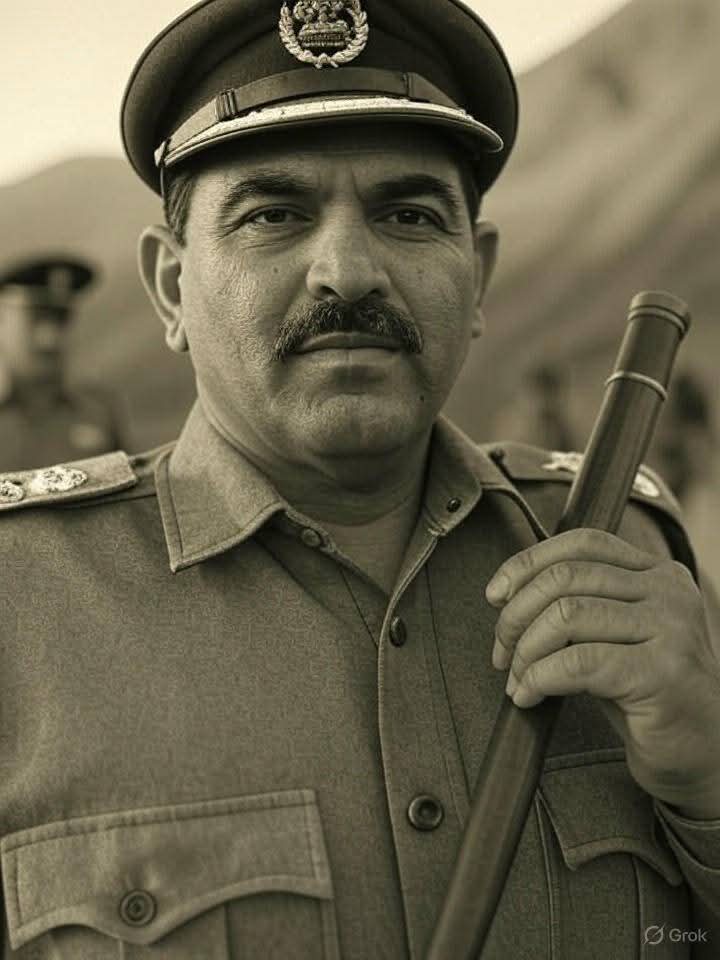
He worked at the then-Shergarhi police station as a sergeant and assistant sub-inspector, and was later promoted to sub-inspector and posted to the Awantipora police station in South Kashmir. At the time, Srinagar was part of the Anantnag district. His investigative talent first came to light while he was resting outside the police station as a herd of nomadic Bakarwals passed by on the road.
Sheikh Ghulam Qadir stopped the herd and asked the head of the Bakarwal family where he had acquired a particular horse in the herd, one that had caught the officer’s eye. The officer’s investigative instincts recalled a description published four years prior regarding a missing foal belonging to His Highness.
The foal had gone missing from the royal stables while grazing in the Dachigam meadows. The publication had detailed the exact markings of the missing animal, and four years later, the hawk-eyed officer recognised the grown horse as the Maharaja’s missing foal.
Upon questioning, the Bakarwal admitted that the foal had joined his herd in the meadow and had remained with the family for over four years. The horse was restored to the royal stables, and the Maharaja personally made an entry of appreciation in the officer’s character roll.
In 1953, Qadir was posted as ASP Srinagar when he accompanied the then-SSP, L.D. Thakur, to Gulmarg to arrest Prime Minister Sheikh Mohammad Abdullah. The arrest warrant had been signed by the Karan Singh, the Sadr-i-Riyasat (Head of State), and Thakur was tasked with executing it.
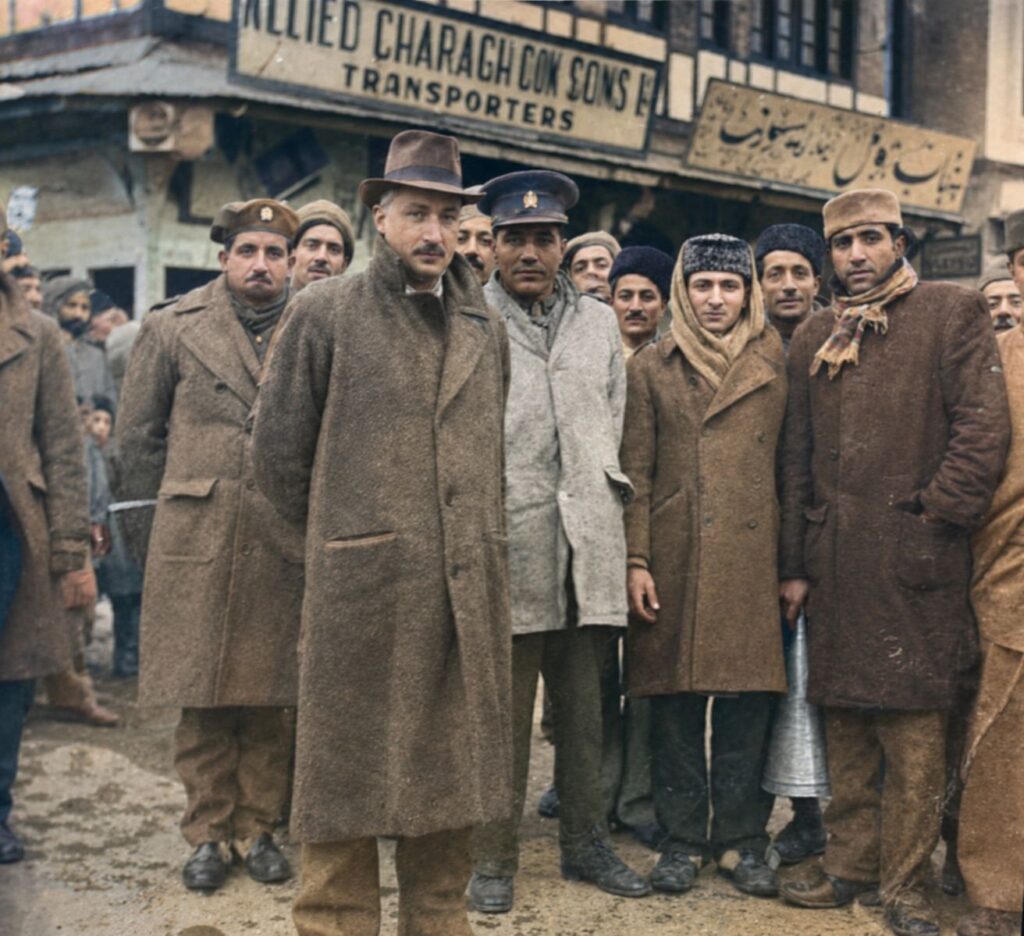
Though Qadir was merely accompanying the SSP, irony dictated that history would remember it differently: today, popular memory credits Sheikh Ghulam Qadir with arresting the Prime Minister, while few accurately recall that it was actually SSP L.D. Thakur, who made the arrest.
The Government of India, through the director of the Intelligence Bureau (IB), B.N. Mullik, initiated an investigation into the conduct of Sheikh Mohammad Abdullah that had led to his dismissal and subsequent arrest. Qadir was appointed the chief investigating officer of the case, which later became known as the Kashmir Conspiracy Case. Sheikh Mohammad Abdullah was tried alongside Mirza Afzal Beg, but the Government of India ultimately decided to withdraw the case and release Abdullah in 1963.
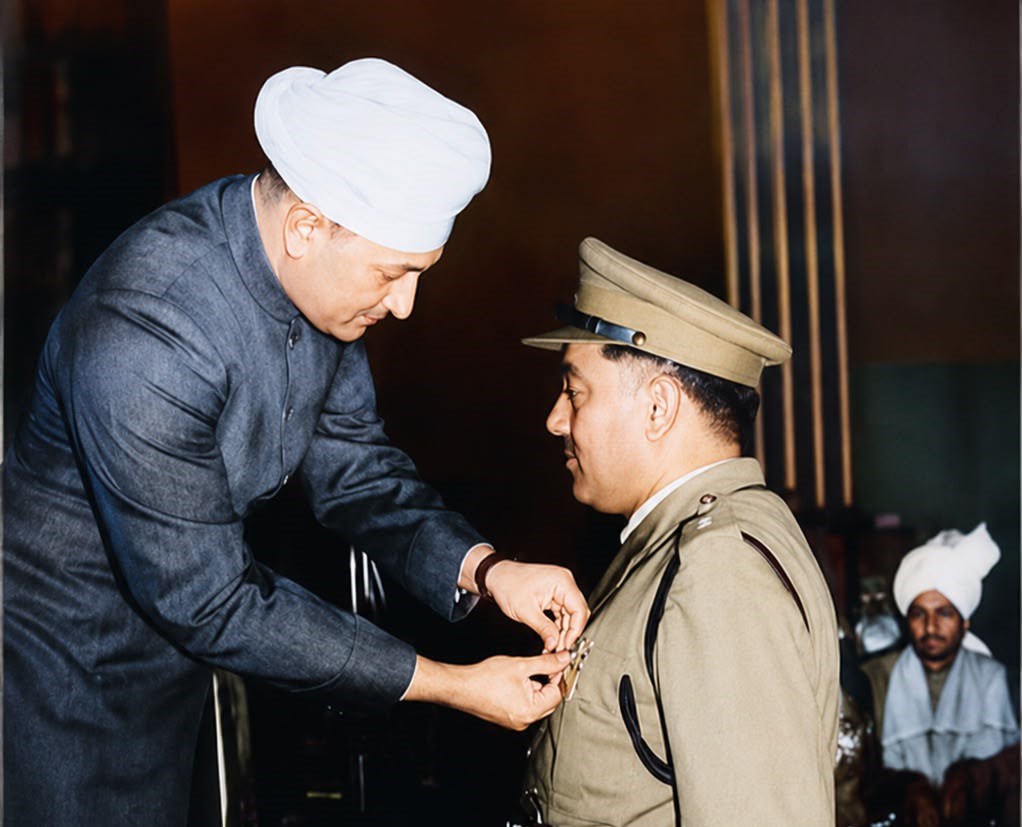
By 1963, Qadir was serving as DIG Kashmir, having been inducted into the Indian Police Service (IPS) as the very first officer from Jammu and Kashmir. He was also the state’s first recipient of the President’s Police Medal for Gallantry (PPMG).
He was awarded the PPMG for capturing the notorious trans-border bandit, Munawar Doku. The dacoit operated on both sides of the border, committing offences in both Pakistan-occupied Kashmir (PoK) and the Indian side of J&K.
Pakistan had announced a reward of Rs 50,000 for Munawar’s capture, while India had declared him its most-wanted dacoit. In a cinematic, Bollywood-style operation, Qadir arrested Munawar in the higher reaches of Gulmarg. Upon his capture, the dacoit demanded to know the name of the police officer who had dared to apprehend him. Hearing the name, Munawar Khan, alias Munawar Daku, remarked, “Mard ko mard ne Geriftar kiya” (A brave man has been arrested by a brave man).
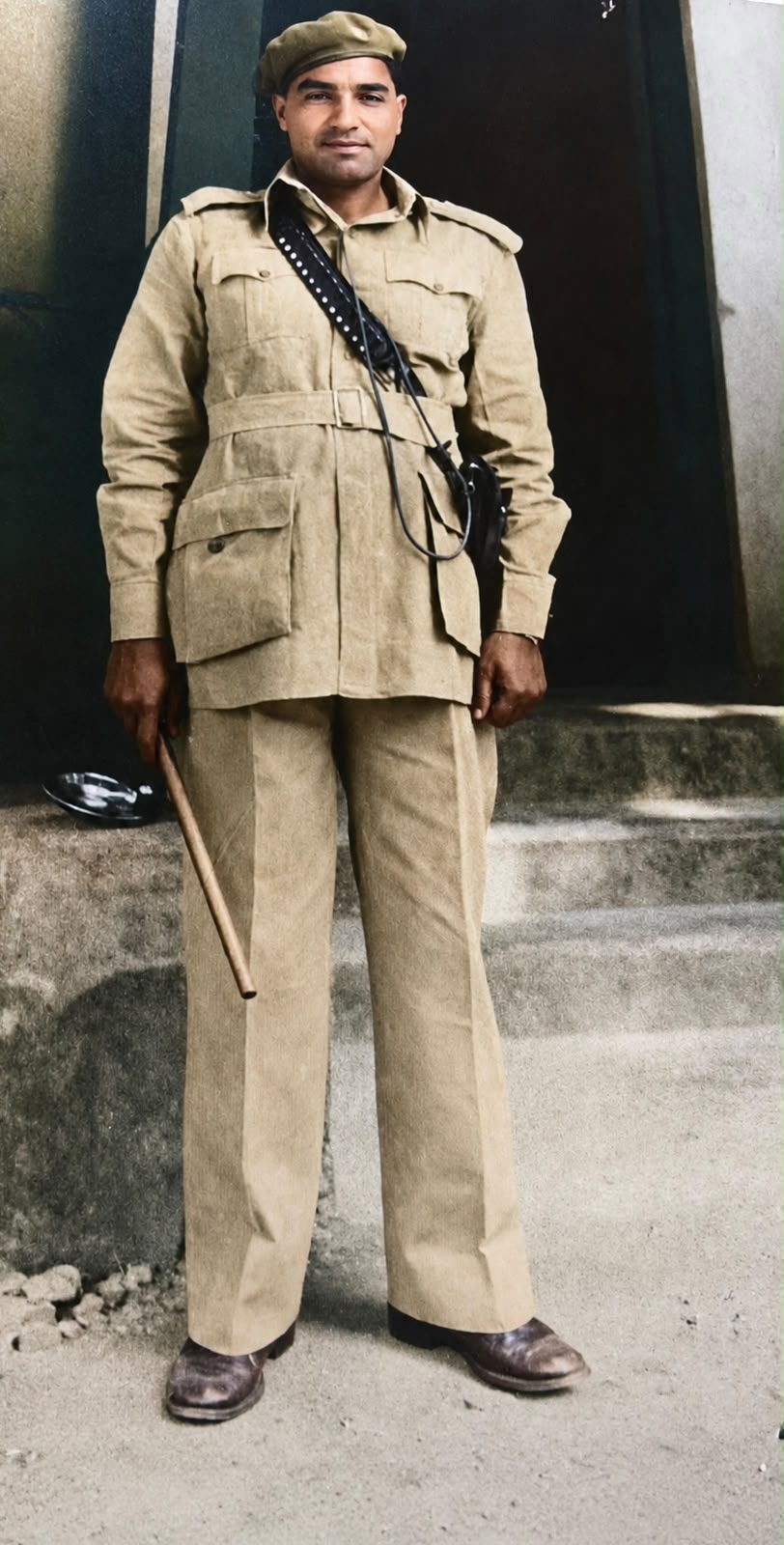
Munawar was sentenced to life imprisonment, but he reportedly broke out of the Poonch jail and fled back to Pakistan. Many myths were woven around this police officer, fueled primarily by his brilliant career and extraordinary professional talents.
For instance, it was rumoured that he was part of the “Peace Brigade” formed by Sheikh Mohammad Abdullah. In reality, Qadir was an officer of the territorial police and was never stationed with or part of the Peace Brigade, which was a non-territorial, voluntary force.
Another widely circulated and generally believed myth claimed that the officer used hot irons on the bellies of criminal suspects and anti-national elements, or stuffed hot potatoes into their mouths. Those who spread and believed these rumours never bothered to ask how many people had actually died from such torture.
In truth, not a single custodial or extrajudicial killing was reported during the officer’s entire career. In fact, when a death in custody occurred at the Pulwama police station, Qadir immediately recommended the suspension of the entire station staff.
Serving as Deputy Inspector General of the Jammu and Kashmir Police, Ghulam Qadir Ganderbali operated at the epicenter of one of the region’s most volatile political eras. His subsequent tenure in the Criminal Investigation Department (CID) focused heavily on countering cross-border psychological warfare launched by Pakistan-administered Kashmir’s Radio Azad Kashmir. In response, the station initiated a targeted vilification campaign against him, broadcasting graphic claims that Ganderbali forced hot potatoes into the mouths of pro-Pakistan dissidents and rolled heated irons across their abdomens. While local Plebiscite Front members and anti-India factions frequently accused him of systemic torture, senior police contemporary figures dismissed these accounts as highly inflated rumors. Quoted by a digital portal Chinar Shade, Captain S.K. Tikoo, a close acquaintance of the Ganderbali family, strongly contested the narrative:
“The stories of third-degree torture by Ghulam Qadir Ganderbali are highly exaggerated and emerged mostly from local propaganda by vested interests and Radio Azad Kashmir based in POK. Some pro-Pakistan elements in Kashmir tried to demonise him. Ganderbali’s visible ruthlessness was his sudden appearance at a Paan shop in the evening, where a motley crowd would be listening to Pakistan news, and whereat he would make good use of his baton, and the radio set would be silenced forever.”
In 1963, he was appointed to the Special Investigation Team (SIT) formed by the government to investigate the disappearance of the Holy Relic from the Hazratbal Shrine. The SIT was headed by IB Director B.N. Mullik. The Holy Relic was recovered within 15 days, an achievement Mullik later wrote in his memoirs was “an intelligence operation never to be disclosed.”
Qadir was later posted as DIG Border J&K, where he organised and headed the state’s first Home Guards. He passed away in February 1970 at AIIMS, New Delhi. Prime Minister Indira Gandhi and Union Home Minister Y.B. Chavan personally saw his body off at the Delhi airport.
In a rare acknowledgement of the officer’s singular service to the nation, the Union Home Ministry issued special orders allowing his body to be flown immediately to Srinagar without the delay of embalming.
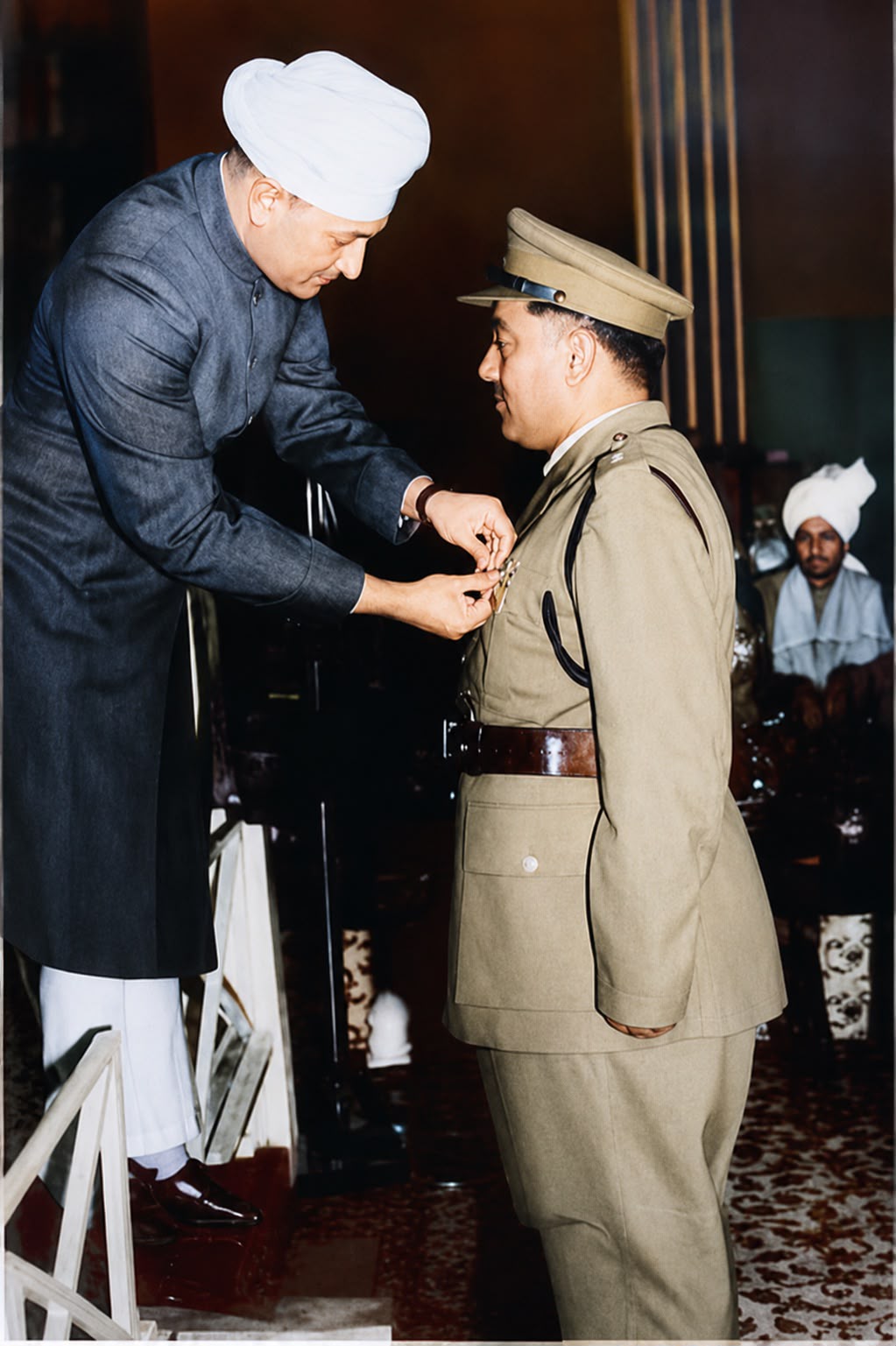
He was survived by his son, Sheikh Abdul Qayoom, and his wife, Saja Begum. Yet, in another cruel twist of the rumour mill, popular myth claimed he had married the famous Kashmiri singer Raj Begum. There was no truth to the story, but like the tales of the hot irons and potatoes, the report of his marriage to Raj Begum was widely accepted as fact.
Throughout his illustrious, tumultuous career, only those who knew the officer personally could accurately describe the man. The formidable “persona” of “Qadir Ganderbali” was largely manufactured by rumour-mongers and believed by a gullible public, a public for whom fact and fiction became so hopelessly entwined that truth became the first casualty.
When US President John F. Kennedy was assassinated on November 22, 1963, Qadir was the only Indian officer recommended by the Ministry of Home Affairs (MHA) to travel to the United States to consult with investigators. Because the Kennedy assassination probe relied heavily on human intelligence, MHA officials naturally looked to Qadir, who was renowned among his superiors for his razor-sharp investigative instincts. However, due to his pressing duties as DIG Kashmir, the officer politely declined the invitation.
Sheikh Abdul Qayoom is a veteran journalist and former banker whose career uniquely bridges finance and media. After transitioning from a successful banking career, he established himself as one of Jammu & Kashmir’s most credible voices for objective reporting and sharp political analysis. Currently, he serves as the Bureau Head of the Indo-Asian News Service (IANS), directing coverage from the region and shaping the national discourse on critical regional issues.
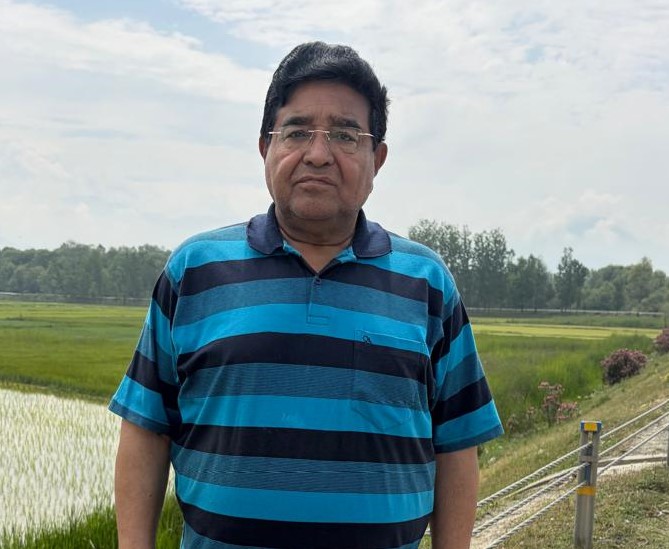
With decades of experience covering J&K’s complex landscape, Qayoom has reported for premier national and international news organizations during its most challenging historical periods. Beyond the press, he is a prominent broadcast commentator, regularly analyzing political, security, and economic developments on leading national television networks.
Qayoom remains actively engaged in public discourse and continues to contribute to informed journalism, mentoring younger journalists while upholding the highest standards of the profession. His long-standing service to the field of journalism has established him as one of the most respected media personalities from Jammu & Kashmir.
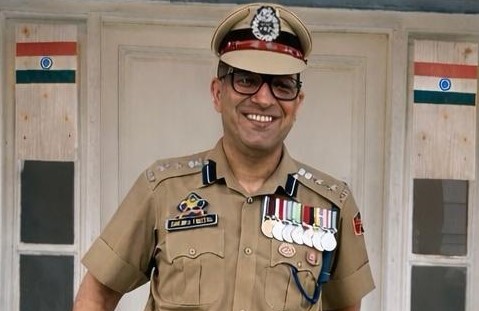 A 2004-batch KPS officer, SSP Sheikh Faisal Qayoom isn’t just carrying forward the formidable legacy of his grandfather. As his batch’s very first recipient of both the Gallantry and Wound medals, Qoyoom’s frontline bravery has earned him high praise and numerous decorations from central police forces.
Leave a Reply