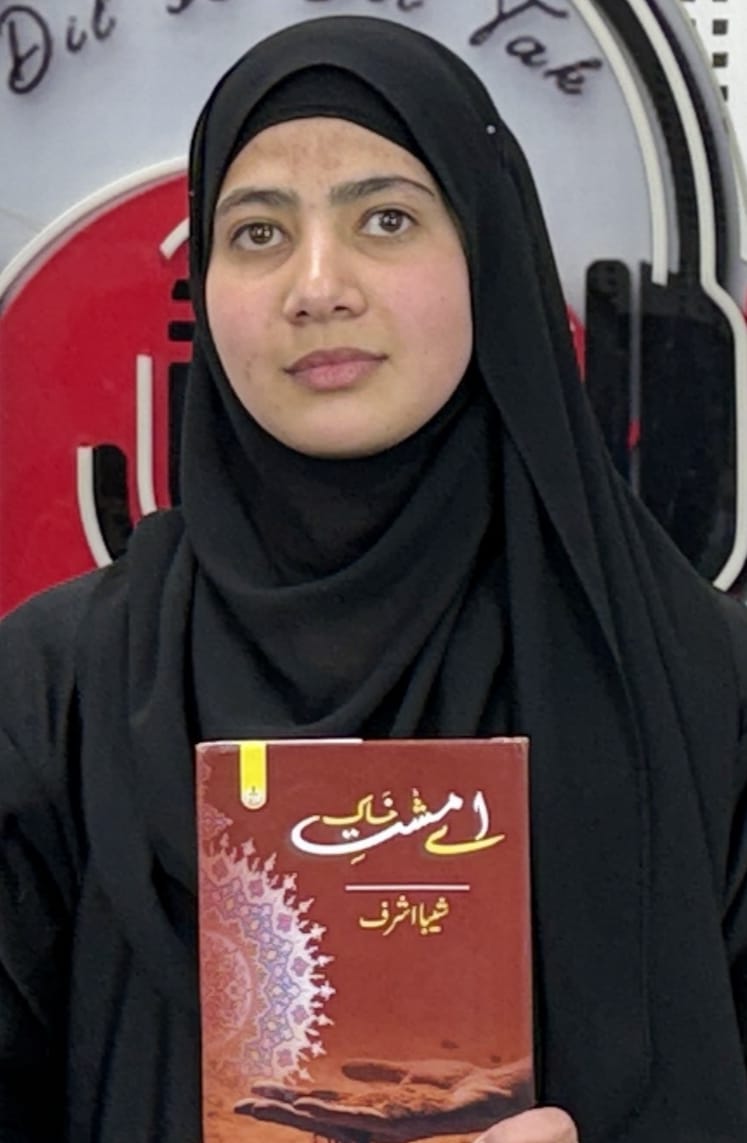
How Sheeba Ashraf Became the Youngest Author of Kashmir’s Literary Heartland
South Kashmir’s Anantnag district has long been celebrated for its postcard-perfect landscapes. Its winding rivers, pine-forested valleys, and half a dozen enchanting health resorts like Pahalgam and Kokernag have historically served as a muse for generations of thinkers. Over the centuries, this fertile soil has produced a steady lineage of politicians, administrators, authors, and philosophers.
Recently, however, the spotlight shifted away from the district’s established elite and focused intently on Kandiwara Sagam, a quiet village nestled within the Kokernag subdivision. The catalyst for this sudden attention is Sheeba Ashraf, a 14-year-old girl who has stunned the region by transforming from a quiet school student into an emerging literary voice.
By publishing her debut book at an age when most children are struggling to navigate the standard school curriculum, Sheeba has officially carved a niche for herself as the youngest author in the Kashmir Valley.
In an era where social media is dominated by fleeting trends, Sheeba’s achievement struck a rare chord. News of her book created a massive wave across digital platforms in Jammu and Kashmir. Her story went viral, prompting local cultural forums and Facebook news pages to feature her in extended interviews.
For the regional audience, the fascination wasn’t just with her age, but with the sheer contrast of her pursuits. In Kashmir, school students—particularly young girls—face intense academic pressure to master core subjects under rigorous examination systems. Amid these standard expectations, Sheeba was quietly managing a dual life: balancing her schoolwork with the solitary, disciplined craft of writing a book.
Her debut work, titled Aye Musht-e-Khaak (O Handful of Dust), is a collection of philosophical essays spanning 112 pages. Published by GNK Publications, the book has been officially dedicated to her parents, whom she credits as her foundational pillars of support.
In the proem (preface) of the book, Sheeba sets a deeply mature tone, writing that the text is intended to “give voice to silent cries and offer answers to age-old questions buried deep within the heart.” She explicitly states that her work is designed for a specific kind of reader: those who maintain a smiling exterior in public, yet converse with their tears in profound silence and solitude.
“This book is not merely a book,” Sheeba reflects in her introduction. “It is neither a storybook nor a romantic tale. It does not seek to instruct; rather, it is written through breath and lived experience, not merely with ink on paper. To delve into its meaning, a reader must possess not only eyes to read, but a heart to feel.”
Mapping ‘Aye Musht-e-Khaak’
The volume is structured into eighteen meticulously composed chapters, each tackling distinct spiritual, metaphysical, and psychological themes.
Insaan ka Wajood
The book opens with a profound meditation on the sheer scale of creation. Sheeba uses this maiden chapter to vividly portray the sovereignty and omnipotence of the Divine. She expands her scope beyond the immediate human experience to discuss the creation of planets, stars, galaxies, and ecosystems. The chapter serves as a reminder of human dependence, pointing to the natural order—like the falling of rain—as an act of divine sustenance. Sheeba argues that a deep introspection of our own biological and cosmic creation naturally leads to an unshakeable faith.
Aye Insaan Kis Baat Ka Guroor?
Here, the author tackles the psychological vice of arrogance, grounding her critique heavily in Islamic theology, which states that a person harboring even a grain of pride will not enter paradise. Sheeba breaks down the modern catalysts of pride:
- Accumulation of wealth
- Academic or intellectual superiority
- Physical beauty and youth
- Political or social power
She reminds the reader that these attributes are temporary and mortal. In a journalistic sweep, she notes that all major world religions uniformly reject arrogance, reserving absolute supremacy for the Creator alone.
Khuda aur Mohabbat / Ishq-e-Haqeeqi
This section acts as the emotional core of the book, exploring how divine love dispels internal darkness to illuminate the mind, body, and soul. Sheeba writes with a sense of optimism, portraying a theology of grace where even the flawed and sinful find redemption through sincere devotion.
Khak ki Sada
In this chapter, Sheeba adopts a historical perspective to highlight the transience of worldly ambition. She invokes the names of emperors and tyrants who once dominated the earth:
- Pharaoh & Nimrod: Symbols of absolute political defiance.
- Qarun (Korah): The historical archetype of limitless wealth.
- Alexander the Great & Genghis Khan: Conquerors of continents.
She contrasts these fallen empires with legendary lovers from Eastern folklore—Farhad and Shirin, Majnun and Laila, Heer and Ranjha—noting that both the powerful and the passionate ultimately lie buried beneath the same earth. However, she draws a sharp distinction for saints, philosophers, and poets. She argues they are shaped from a “blessed soil” that carries a lasting fragrance, allowing their ideas to remain immortal long after their bodies return to dust.
Ruḥ ki Azan
The eleventh chapter serves as an exploration of human conscience. Sheeba defines the soul as an internal moral compass that actively reprimands a person for unlawful acts while encouraging righteousness. She asserts that without this inner voice, the concept of humanity would be entirely meaningless.
Taqdeer ki Thakan
In one of her most complex chapters, Sheeba navigates the delicate balance between human agency and fate. She writes that while humans must strive toward their goals, ultimate outcomes are dictated by divine decree. It is a comforting take on acceptance, suggesting that what is meant for an individual will find them through unforeseen paths, while what is not destined cannot be forced by sheer effort alone.
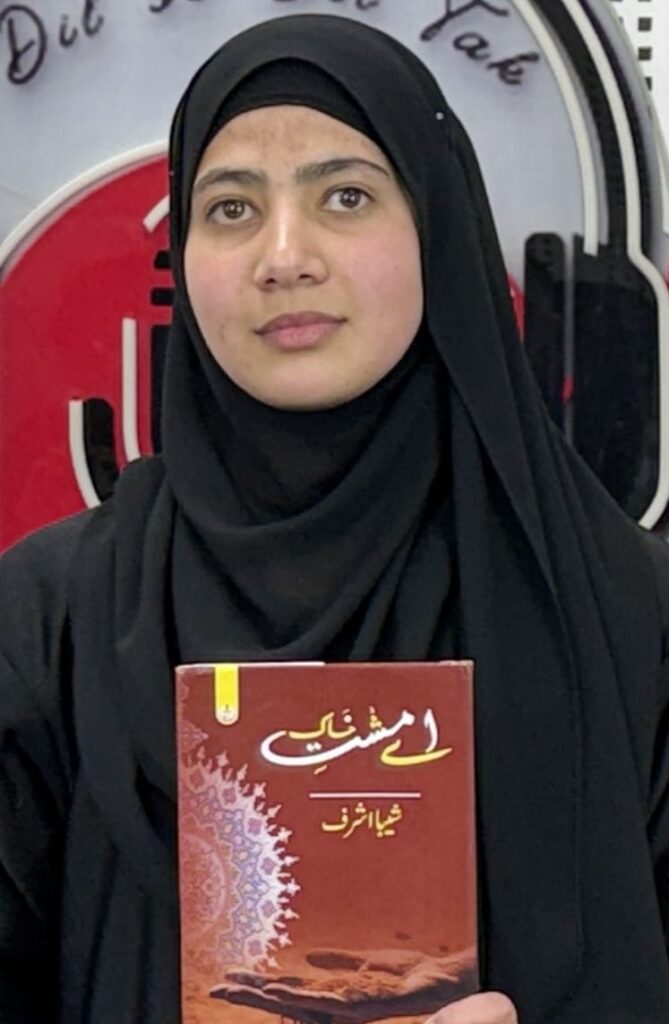
What makes Aye Musht-e-Khaak a compelling piece of regional literature is the age of its creator. The essays reveal that Sheeba has grasped existential truths that many individuals spend decades trying to comprehend. Her writing style avoids superficiality, choosing instead to deliver long-lasting moral lessons with clarity.
The core message of her literary debut is straightforward yet profound: humanity is forged from the earth and destined to return to it. Therefore, there is no logical room for arrogance, moral compromise, or spiritual unfaithfulness.
For readers looking for a fresh, introspective voice from the Kashmir Valley, Sheeba Ashraf’s work offers an opportunity to pause and reflect. Aye Musht-e-Khaak is more than a creative exercise by a teenager; it is an invitation to reform, reconnect with higher moral values, and view the world through a lens of deep spiritual awareness.
Disclaimer: The views and historical interpretations expressed in this feature article are solely those of the author and do not necessarily reflect the official editorial stance or opinions of this publication.
Leave a Reply