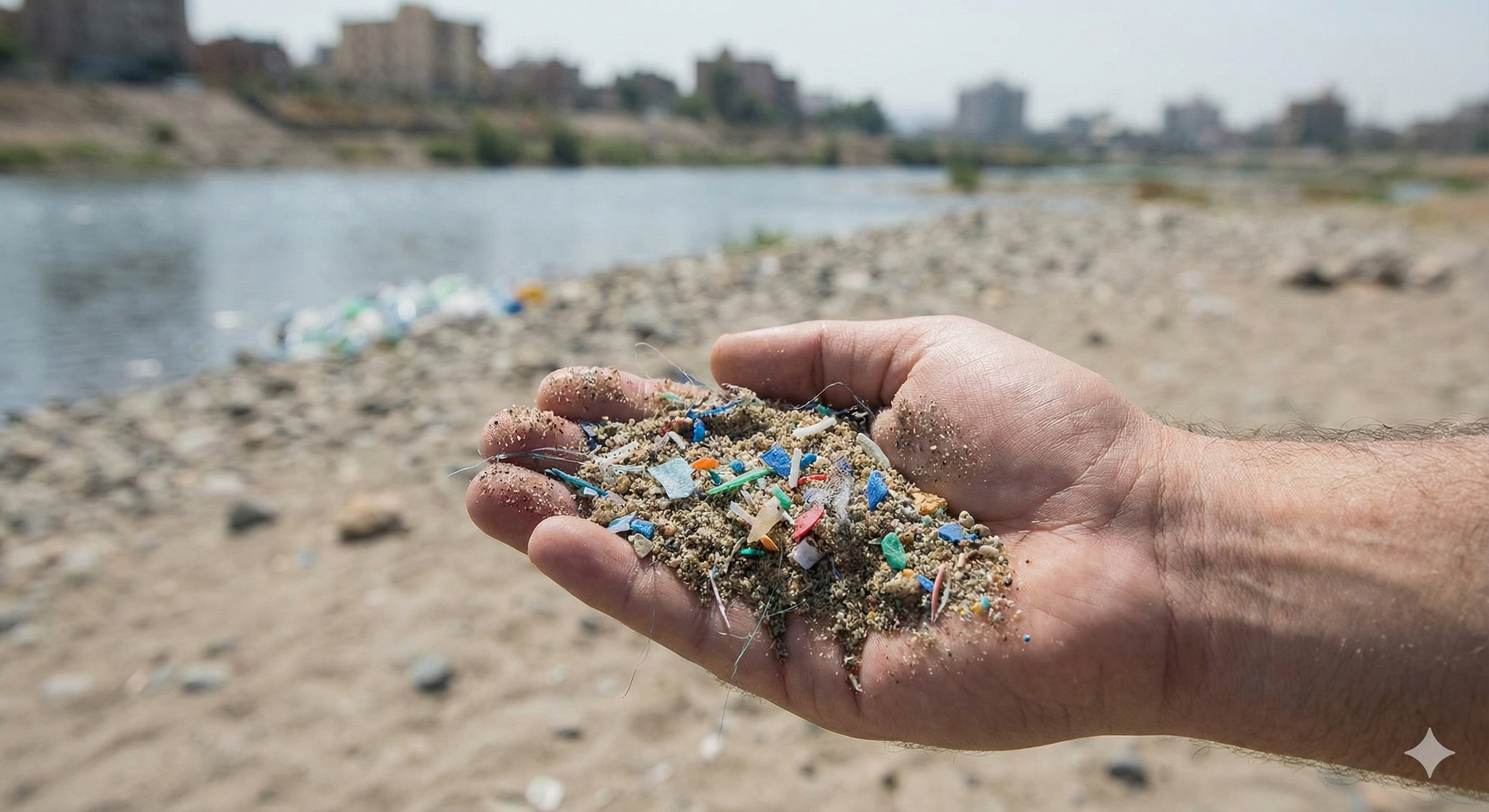
From the deepest oceans to the human bloodstream, microplastics have infiltrated every corner of our existence. As research reveals the devastating impact on health and the environment, the cost of our single-use culture is becoming impossible to ignore.
By Qysar Ul Islam Shah
You may not always see them, but that does not mean they are not there. We are currently living in the age of the invisible enemy: microplastics. These microscopic particles are choking our environment and proliferating at an alarming rate, driven not only by massive industrial production but by the catastrophic mismanagement of materials once they become waste. It is a widespread, global contamination crisis, characterized by tiny plastic fragments that pose severe risks to both ecological stability and human health. While plastic has undoubtedly added value to modern existence, offering a cheap, versatile, and sterile material for everything from home appliances and medical instruments to toys and food packaging, its unchecked legacy is now coming back to haunt us.
The mismanagement of this material has resulted in tons of plastic accumulating in our oceans, lakes, and soil, fundamentally altering wildlife habitats and ecosystems. However, the crisis goes deeper than visible litter. We are facing a phenomenon where the degradation of larger plastic items, due to sunlight, wind, and wave action—breaks them down into micro and nano-plastics. These particles persist in the environment for hundreds of years, infiltrating every corner of the planet, from the deepest marine trenches to the agricultural soils that grow our food.
The rapidly increasing levels of plastic pollution are impacting the social, economic, and health dimensions of sustainable development with terrifying precision. People and communities across the world are eventually waking up to the sobering fact that plastic pollution affects absolutely everything. It is found in the water we drink, the food we eat, the air we breathe, and, increasingly, inside our own bodies. Research is beginning to unveil the long-term effects on human health, and the findings are grim. These particles do not merely pass through us; they can ache the internal mechanisms of our biology and disrupt metabolism.
The prevalence of plastic in daily life, while convenient, carries heavy consequences. In almost every household, consuming food from plastic packets has become a common practice. Yet, this convenience is one of the most pressing environmental issues of our time. We witness the increasing volume of disposable plastic products everywhere, particularly in public spaces such as hospitals, schools, playing fields, and health resorts. People unwittingly throw plastic refuse into streams, roadsides, and parking lots, inviting innumerable types of diseases. This negligence leads to the pollution of water bodies, which in turn associates directly with a rise in water-borne diseases.
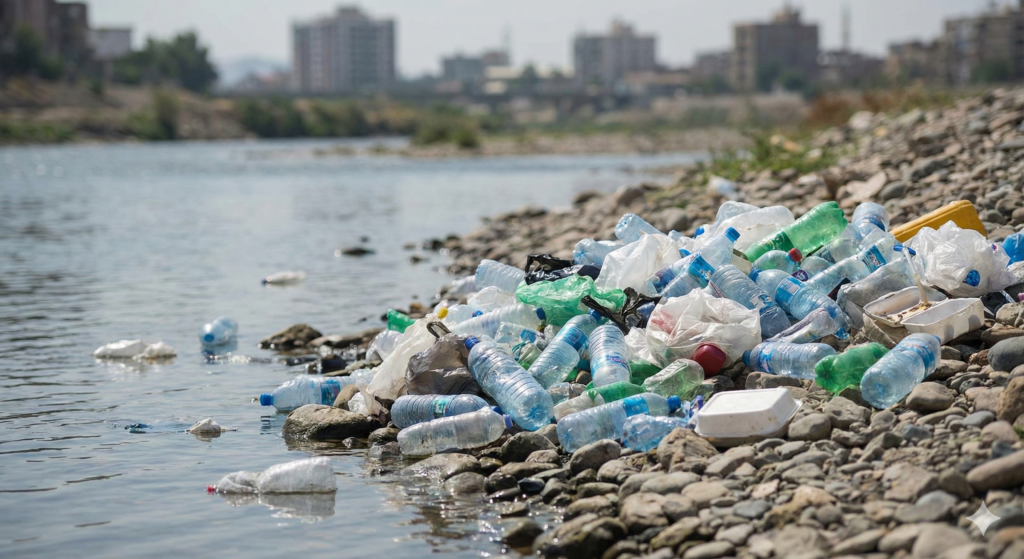
How exactly do microplastics enter the environment? The pathways are manifold. They are released when people use products laced with these particles, but one of the main points of entry is wastewater, both residential and commercial. Once in the system, research has shown that they can move seamlessly through the food web and soil. This contamination causes serious damage to the biota living within these ecosystems and significantly reduces economic productivity. For example, plastic pollution inflicts immense damage on fisheries, which remain the primary source of protein for millions of people globally. In many rural areas, entire communities rely on fisheries for their livelihood. When aquatic ecosystems collapse under the weight of pollution, it is not just a conservation issue; it is a humanitarian one. According to the World Health Organization, more than 170 million people lack access to potable water near their homes, and 850 million rural people are without safe water, a crisis exacerbated by the infiltration of pollutants like plastic.
The dilution of microplastics has even disturbed the lifespan of flora and fauna. We cannot ignore the transition of urbanization, which has also profoundly affected the environment. The metabolism of the city increases with its growth, resulting in a higher generation of metabolic byproducts such as wastewater, non-degradable items, noise, and other forms of pollution. The various factors of a well-developed city, the density and height of buildings, the size of the human population, the breadth of roads, and the heaps of polythene products, modify the climatic conditions of the urban landscape. This generates a typical “urban climate” that traps heat and pollutants. The release of chemicals from these plastics creates a long-lasting, harmful ecological impact. In tropical coastal waters, this waste threatens the ecosystem, endangering seabirds and turtles that easily fall victim to entanglement or ingestion.
The health implications of this ubiquity are terrifying, particularly for the most vulnerable among us. Do we truly understand who suffers the most? Children and infants in the womb are most vulnerable to the harmful effects of plastics. Early stages of human development are particularly sensitive to hazardous chemicals in the environment. Exposure to plastics and the chemicals they leach has been found to increase the risks of birth complications, impaired lung growth, and childhood cancer. The adverse impacts are particularly acute for the unborn and young children, with increased risks of prematurity, stillbirth, and birth defects of the reproductive organs. Researchers have also revealed that microplastics can act as vessels for pathogens to enter our systems, increasing the spread of infectious diseases.
Furthermore, a recent study found that consumers who drank bottled water instead of tap water ingested substantially more microplastics every year. People who drink beverages in plastic packaging are also more likely to have higher levels of microplastics in their stool. It would be wise to avoid such beverages when possible, yet the irony remains that many turn to bottled water seeking purity, only to ingest the very pollutant they hope to avoid.
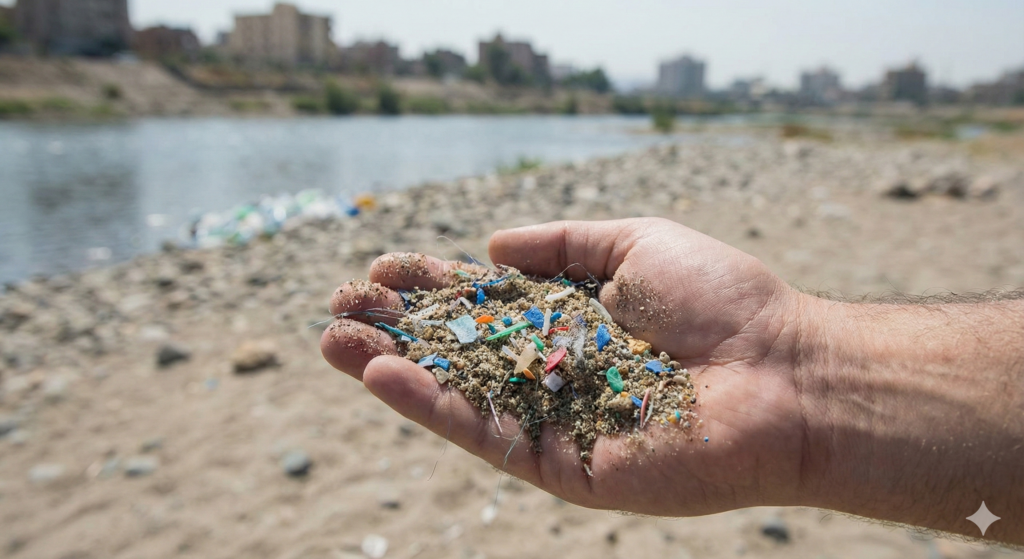
Plastic production is a complex problem that requires immediate attention and action. Its reduction will only be visible if it is actively replaced with sustainable alternatives like gunny bags or eco-friendly cloth bags. However, the solution requires more than just swapping bags; it requires a paradigm shift. Schools and colleges must act as crucial agents to create awareness among students about the plastic menace. Students carrying placards to highlight these repercussions is a start, but deep education is better. Teachers can make a significant impact by organizing clean-up events, hosting educational talks on plastic pollution, and incorporating sustainability into the curriculum through creative projects. By cultivating sustainable behaviors early, eco-conscious habits can be ingrained in the next generation.
Campaigns against microplastic pollution have clearly gained momentum, especially in the past few years. Although enhanced recycling can help to address the larger issue of plastic production, we cannot recycle our way out of this crisis. There are many ways to reduce plastic waste in daily life. One of the most effective ways is to avoid single-use plastics entirely—shunning drinking straws and plastic bags in favor of reusable options.
Ultimately, while you cannot completely avoid microplastics—and indeed, it should not be solely the individual’s job to solve a systemic industrial crisis, there are actions you can take to reduce the amount you are exposed to every day. We must acknowledge that the sustainability of our wildlife and our own lives seems to cease under the weight of this pollution. The time for passive observation is over; the plastic is already in our soil, our water, and our blood. The only way forward is a rigorous, collective rejection of the single-use culture that brought us here, curbing the dangerous contamination of microplastics before the damage becomes irreversible.
The views expressed in this article are solely those of the author and do not necessarily reflect the opinions or views of this Magazine.
Leave a Reply