For decades, runaway menus, midnight baraats, and ruinous gift rituals have priced a generation out of marriage in the Valley. Now, an unlikely alliance of master chefs, clerics, and community leaders is forcing a long-overdue reckoning.
By Ajaz Rashid
In Kashmir, a wedding is rarely just the union of two individuals; it has increasingly become a high-stakes financial performance. Across the Valley, a decades-long culture of competitive spending, sprawling guest lists, and endless pre- and post-wedding rituals has quietly turned a basic social milestone into an unaffordable luxury. While affluent families use lavish celebrations to display wealth and social standing, the ripple effects are devastating for middle- and low-income households, pushing thousands of young women past conventional marriageable ages and trapping parents in cycles of lifelong debt.
Now, however, an unexpected group of stakeholders has stepped forward to force a reckoning. In a watershed moment for the Valley’s social landscape, the Kashmir Waza Association, the union representing the traditional master chefs who prepare Kashmir’s famed multi-course Wazwan feast has drawn a hard line against late-night excess and runaway menus. Coupled with renewed calls from civil society leaders and community elders to cap dishes and revive statutory guest controls, Kashmir may finally be on the cusp of reclaiming its weddings from ruinous ostentation.
The Anatomy of a Financial Trap
For most parents in the Valley, the roadmap for raising a child is built on sacrifice. Families invest their hard-earned income into securing a quality education for their children so they can stand on their own feet and build stable careers. Yet, the moment those children reach adulthood and parents begin searching for a suitable life partner, financial prudence is routinely abandoned at the altar of social pressure.
Kashmir historically celebrated as Pir Vaer, the Valley of Saints, where simplicity and community solidarity were once prized virtues has witnessed the rapid proliferation of expensive, non-essential customs. What used to be modest, intimate gestures of goodwill between two households have mutated into mandatory, budget-breaking spectacles:
Thaph Travin: Traditionally the initial step toward formalizing a match, this ritual now involves a delegation from the groom’s side visiting the bride’s home for elaborate meals, accompanied by heavy exchanges of cash and gifts that strain both families before wedding preparations have even truly begun.
Pialas Trawun: Decades ago, this custom required only a handful of relatives from the groom’s family to visit the bride’s household with a symbolic token of Rs 1,100 to seal the agreement. Today, it has been inflated into a costly affair padded with expensive gift hampers and lavish hospitality.
Pachhi: A tradition involving large delegations of men and women from both sides visiting one another’s homes, placing a disproportionate financial and logistical burden on the bride’s parents.
Eidian: The expectation that both families must exchange elaborate gift packages and festive items after every Eid leading up to the wedding, a recurring expense that quietly drains household savings over months or years.
Layered atop these rituals is the persistent, corrosive curse of dowry. Despite widespread awareness of its social harm, material demands both explicit and unspoken continue to escalate. While wealthy households routinely outfit their daughters with luxury appliances, vehicles, houses, and even residential plots, families of modest means are left scrambling to match an impossible benchmark. The human cost is visible in every town and village across the Valley, where thousands of women in their mid-thirties and forties remain unmarried simply because their parents cannot liquidate a lifetime of savings to fund a socially “acceptable” wedding.
The Wazas Draw the Line
For years, appeals for wedding reform came largely from social commentators and community elders, often met with polite nods and little behavioral change. That changed decisively in November 2026, when the people who actually power Kashmir’s wedding economy decided they had enough.
At a landmark conference held in Srinagar’s Rajouri Kadal area, the registered Kashmir Waza Association representing roughly 40,000 traditional chefs and culinary workers unanimously announced strict, time-bound regulations for wedding feasts. Under the new directive, Wazas will no longer serve wedding lunches after 3:00 PM or wedding dinners after 10:00 PM. If a groom and his baraat (entourage) fail to arrive on schedule, the chefs will pack up and leave once the clock strikes ten.
Association president Ghulam Nabi Baba (widely known as Ghulam Nabi Waza) highlighted a troubling trend that had taken root across the Valley: arriving fashionably late often past midnight or even near dawn had become a bizarre status symbol. Chefs reported grueling, inhumane working conditions, cooking through the night, serving lunch from 1:00 PM to 6:00 PM, and then waiting endlessly into the early hours of the morning for delayed marriage processions, often without basic facilities to rest before the next day’s assignments. The delays had become so extreme that officiating clerics had occasionally walked out of venues at 1:00 AM without solemnizing the marriage.
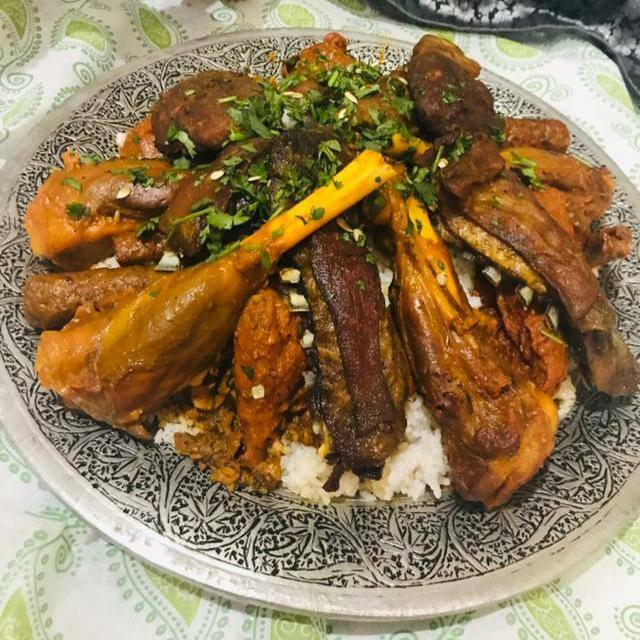
To enforce punctuality, the Waza Association announced it will introduce formal, binding service agreements that host families must sign in advance, clearly stipulating meal timings and working conditions. Furthermore, the association has turned its sights on menu inflation. Historically, an authentic Wazwan consisted of a dignified seven- or eight-course meal. In recent years, however, competitive hosts have pushed menus to 20, 30, or even 36 dishes, incorporating processed additives and theatrical meat presentations. The association has pledged to standardize menus back to the traditional seven-to-eight-dish framework, declaring that anything beyond that threshold is not cultural heritage, but sheer extravagance.
A Broader Push for Civic Reform
The chefs’ revolt has galvanized a wider civic movement across Jammu and Kashmir. Prominent social activists, community leaders, and religious figures, including the Grand Mufti and Mirwaiz Umar Farooq have publicly backed the 10:00 PM curfew and called for wrapping up marriage functions even earlier, with proposals to conclude evening ceremonies by 8:00 PM and strictly cap Wazwan at seven dishes.
Civil society voices are also demanding structural and administrative intervention. Veteran social activist Nighat Shafi Pandit has urged the J&K administration and the Divisional Commissioner of Kashmir to revive and strictly enforce a formal Guest Control Order similar to measures once championed by late IAS officer Mohammad Shafi Pandit to curb food wastage, standardize chef rates, and penalize excessive spending. Meanwhile, local neighborhood committees (Mohalla committees) across several districts have begun drafting community-level codes of conduct, discouraging ostentatious gift exchanges and urging families to keep ceremonies brief and dignified.
Reclaiming a Healthier Society
True hospitality has never been measured by the number of mutton dishes crowded onto a copper trami or the number of hours guests and workers are kept awake past midnight. When a community turns marriage into an arms race of wealth, everyone loses: hosts sink into debt, workers are denied basic dignity, mountains of food go to waste, and an entire generation of young adults is priced out of starting families.
Reversing this trend requires more than rules enforced by chefs or administrators; it demands a fundamental shift in social values. Affluent families carry a particular responsibility to lead by example by choosing modest, punctual weddings for their own children and redirecting surplus wealth toward supporting underprivileged youth, education, and community welfare. By embracing punctuality, limiting feasts, and dismantling outdated gift rituals, Kashmir can transform weddings back into what they were always meant to be: joyful, accessible milestones that strengthen social bonds rather than break them.
(With inputs from various news agencies)
Leave a Reply