Introduced through ancient Central Asian trade routes and perfected by local bakers, Routh has anchored Kashmiri milestones for centuries. Today, it stands as an enduring symbol of Kashmiriyat, bridging sacred rituals and domestic celebrations.
Along the narrow lanes of downtown Srinagar, where copper samovars hiss in the morning chill and the rhythmic patter of the local kandur (traditional baker) echoes off cedar lattice windows, culinary heritage survives not as a static museum exhibit, but as a living pulse. Among the valley’s celebrated assortment of morning loaves—from the dimpled girda to the crusty chochwor—one delicacy stands singularly poised between sustenance and sanctification: Routh.
Neither ordinary daily bread nor a western confection, Routh is an enduring emblem of Kashmir’s shared civilizational ethos, known historically as Kashmiriyat. Baked with ghee, sweetened with memory, and sealed with supplications, this gilded ceremonial bread bridges food, faith, and family, serving as a fragrant witness to major transitions across generations.
The historical trajectory of baking in Kashmir is intricately bound to ancient trade channels. Traversing the rugged passes that once tethered the Kashmir Valley to Khorasan, Central Asia, and Asia Minor, merchants, wandering scholars, and mystics introduced distinct culinary techniques to the region. The word tandoor itself traces directly to the Persian tanur. Cultural historians note that the art of underground clay baking blossomed in the valley following the arrival of the 14th-century Persian Sufi saint, Mir Syed Ali Hamadani (popularly revered as Shah-i-Hamdan), who along with hundreds of accompanying craftsmen transformed Kashmir’s arts, crafts, and foodways.
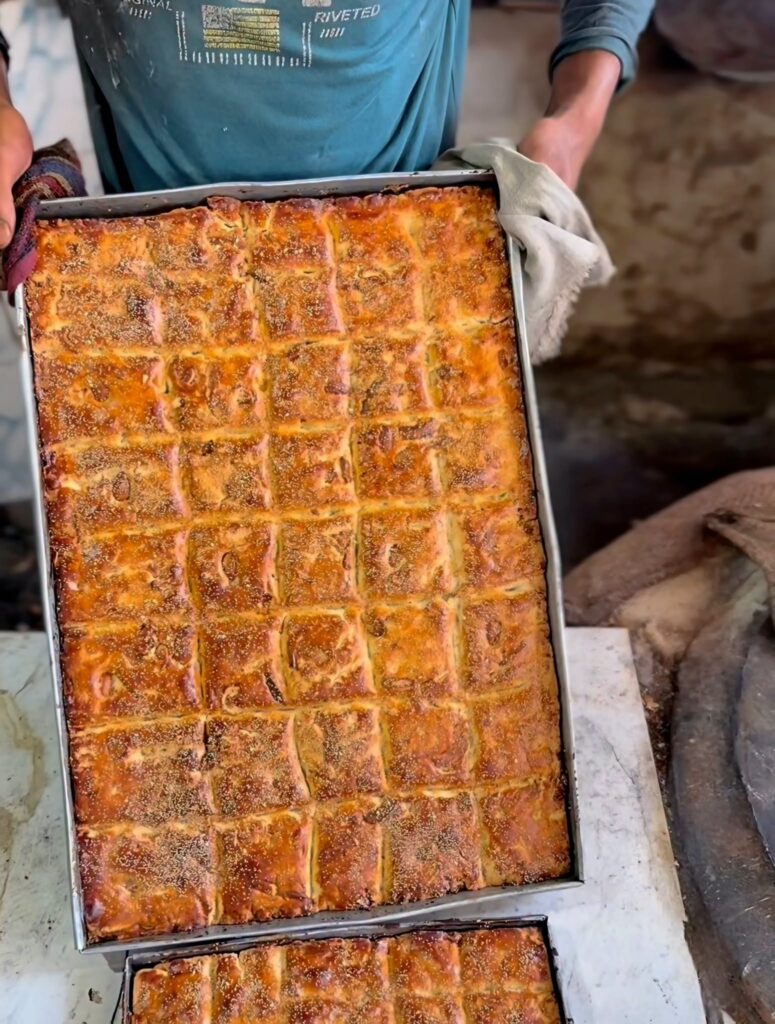
Kashmir’s indigenous guild of bakers, the Kandurs, adopted and refined these foreign oven technologies, creating a rich catalog of breads suited to harsh Himalayan winters. Out of this lineage emerged Routh: conceived essentially as a luxurious, celebratory variant of everyday flatbreads like tchot, elevated through rich dairy fat and aromatic spices.
In architectural contrast to the round, pocketed breads sold at dawn, authentic Routh is prepared in large, deep metal trays and baked slowly inside the ambient embers of the subterranean clay oven. Its structure mirrors a dense, golden tea cake—crisp and lightly blistered on its crust, yet moist, crumbly, and tender within. The formulation demands indulgence: finely milled wheat flour (maida) or fine semolina (sooji), generous measures of clarified butter (pure desi ghee), whole milk, and raw sugar, all perfumed with crushed green cardamom pods and strands of Pampore saffron. Before entering the embers, the surface is pressed with blanched almonds, cashews, shredded dried coconut, and an unmistakable dusting of ivory poppy seeds (khashkhash). The resulting scent—caramelized sugar and toasted ghee wafting into the lane—serves as an unmistakable public announcement that a neighborhood home is marking good fortune.
Beyond its sensory appeal, Routh carries an enduring socio-spiritual weight across communal boundaries. While Kashmiri Muslims associate Routh with shrine offerings and the Islamic calendar, Kashmiri Pandits have historically preserved a parallel sacred custom—Routh Chhab or the ritual offering of Roths baked on hot griddles and coals—dedicated to domestic peace and divine protection. It embodies a shared language of thanksgiving.
In traditional life, Routh marks every inflection point of personal destiny: the birth of a newborn, the solemnizing of an engagement (Nishani), moving into a newly built home, or fulfilling an answered prayer (nazr). Devotees carry freshly portioned pieces directly to regional spiritual centers. Step into the courtyard of the Dastgeer Sahib shrine in Khanyar, and you will routinely encounter families distributing warm wedges wrapped in silver foil to strangers in gratitude for a relative’s recovered health or a child’s university admittance. At the marble precincts of Dargah Hazratbal, seated pilgrims still divide the rich bread among visiting families, weaving personal joy into collective grace.
The bread also retains strong ethnographic resonance as travel fare. Decades ago, prior to modern roadways, when bridal parties embarked on arduous journeys over high mountain passes or across rural districts, parents packed large slabs of Routh for the bride’s retinue. High in caloric density, naturally preserved by ghee and sugar, and resilient against spoiling, it sustained the travelers over multi-day journeys, operating as a maternal benediction for an unfamiliar threshold.
In contemporary Kashmir, where packaged pastries and mechanized bakeries have increasingly occupied high streets, traditional Routh is undergoing a conscious urban revival. This resurgence is particularly noticeable during the holy month of Ramadan, when downtown and suburban Kandurs receive advance orders hours before twilight so that freshly baked, warm Routh can grace the family dastarkhwan at Iftar alongside cups of salted, pink Noon Chai.
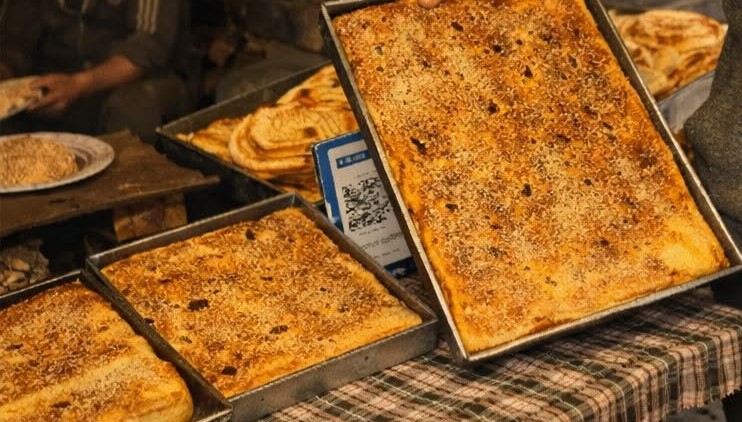
Even as modern pastry shops attempt to re-engineer the loaf with commercial ovens, baking powders, and decorative icing, discerning locals remain loyal to the authentic version: sliced straight from a heavy sheet pan, infused with woodsmoke from a traditional tandoor, and savored with piping hot tea.
Reflecting on this persistent craft, the prominent Kashmiri poet, folklorist, and cultural historian Zareef Ahmad Zareef observed that Routh served as the valley’s quintessential indigenous feast long before modern confections arrived. It was the celebratory cake of our domestic world—crafted to mark quiet personal triumphs, shared across fences with neighbors without ostentation. Zareef notes that while domestic bread-making rhythms have shifted under the pace of contemporary life, the communal memory attached to standing by a local kandur’s pit, waiting for the festive tray to emerge, remains indelible.
Routh remains far more than sweetened dough. In its golden crust and cardamom-scented crumb, it holds the shared memory of migration, the spiritual warmth of community shrines, and the timeless, generous sweetness of Kashmiriyat.
Disclaimer: The views expressed in this feature article are solely those of the author and do not necessarily reflect the official editorial stance or opinions of this publication. The author can be reached at [email protected]
Leave a Reply