For decades, Jammu and Kashmir was merely a picturesque backdrop for outside filmmakers. The debut of IFFJK marks the historic moment the valley claimed authorship of its own story.
By Ajaz Rashid
In an era dominated by algorithmic feeds and solitary living-room streaming, the communal ritual of cinema is staging a defiant comeback. Nowhere was this cultural awakening more vivid than at the maiden International Film Festival of Jammu & Kashmir. For decades, the valley was reduced to an idyllic postcard—a breathtaking backdrop for outside directors. Today, with films from forty nations and packed auditoriums along Dal Lake, that narrative has fundamentally shifted. Film festivals are no longer mere red-carpet spectacles; they are vital cultural engines restoring regional authorship, igniting youth ambition, and reminding us why we gather in the dark to dream together.
For generations, Kashmir was Indian cinema’s ultimate escapist postcard. But this September, the four-day maiden edition of the International Film Festival of Jammu & Kashmir (IFFJK), mounted under the theme ‘Rang-e-Cinema’, proved that the region is no longer content remaining a passive backdrop. Instead, it has stepped forward to claim its place as an author of global narratives.
Bringing together cinematic works from over 30 countries, a roster of industry veterans, and a generation of young storytellers, the festival marked both an emotional homecoming and a calculated economic pivot.
The Grand Opening
The festival kicked off on September 7, 2026, at the SKICC auditorium with a red-carpet gala overlooking Dal Lake. In attendance was a rare gathering of political leaders, international jurors, and Bollywood royalty including Ramesh Sippy, Vidhu Vinod Chopra, Santosh Sivan, and Sriram Raghavan.
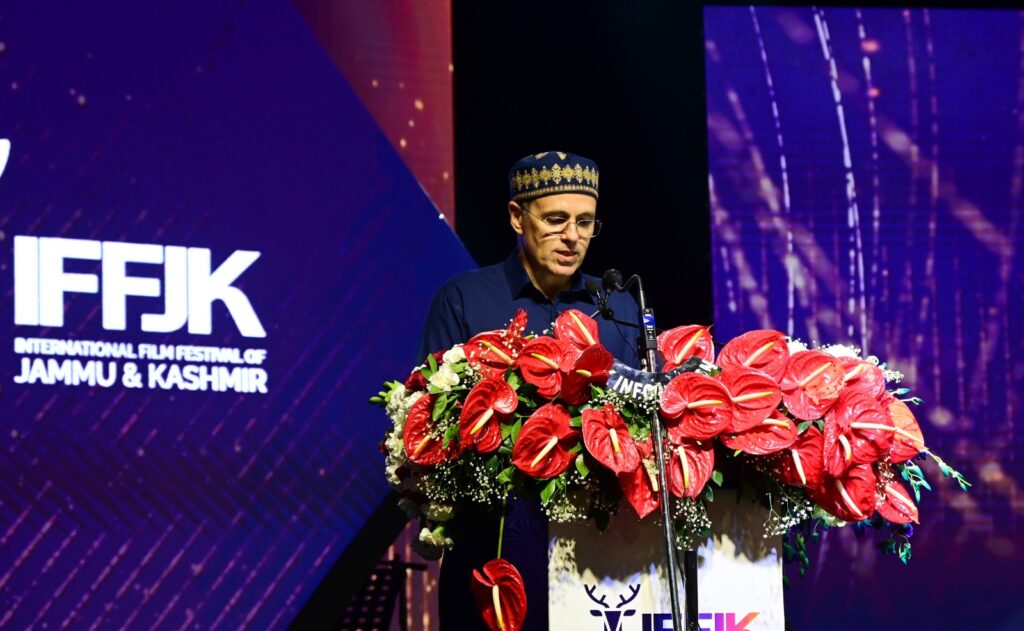
Chief Minister Omar Abdullah set an urgent, reflective tone in his inaugural address:
“To stand here today, under the majestic shade of the Chinar trees, surrounded by the sentinel peaks of the Himalayas, is to be reminded that some places on earth do not merely host stories, they are born of them. Today, as we launch this festival, bringing together filmmakers from over 30 countries and showcasing extraordinary films, we are not just opening a cinema event. We are opening a new chapter in the longstanding romance between Jammu & Kashmir and the silver screen.”
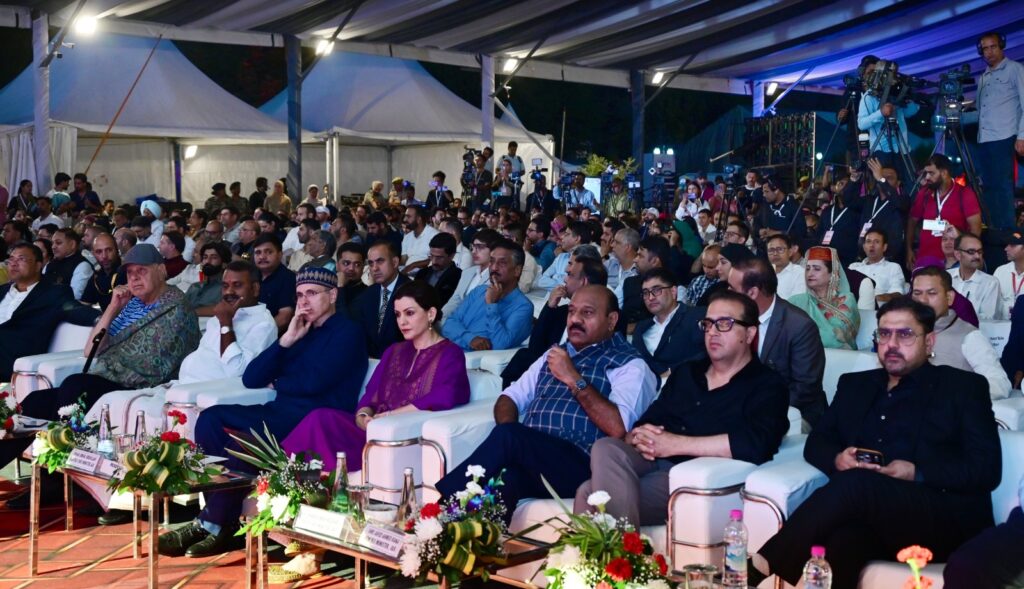
Abdullah invoked iconic film memories shot in the valley from Junglee, Kashmir Ki Kali, and Aandhi to Haider, Highway, and Bajrangi Bhaijaan. But he delivered a clear caveat to the visiting fraternity:
“We are declaring to the world that Kashmir is not just a location on a call sheet; it is a creative sanctuary, a home for global storytellers. When you bring your cameras to Jammu and Kashmir, do not just film our mountains. Seek out our stories. Cinema is more than landscapes; cinema is culture. We are building a robust local workforce of cinematographers, line producers, sound engineers, and actors so that you can arrive with a script and find everything else right here.”
Flanked by Union Minister of State Dr. Jitendra Singh and former Chief Minister Dr. Farooq Abdullah, Omar Abdullah highlighted the administration’s single-window clearance mechanism and lucrative production subsidies designed to rival international shoot locations. “Before filmmakers ran to Switzerland and Europe, films were made right here in Kashmir,” Abdullah reminded the press.
Veteran director Vidhu Vinod Chopra, who grew up along Dal Lake and filmed Mission Kashmir and Shikara in the valley, reflected on the emotional weight of the gathering:
“Kashmir doesn’t just offer light and framing; it gives a film soul. To see world cinema screened here, where I first dreamed of making movies, is deeply moving. But the future belongs to local Kashmiri kids who pick up cameras to shoot their own realities.”
Four Days on the Edge
Between September 7 and September 10, the valley transformed into a cinephile’s haven. Screenings ran simultaneously at SKICC, INOX multiplexes in Srinagar, and Waves Cinema in Jammu.
- The International Lens: International jury members including German film curator Dorothee Wenner, Japanese producer Keiko Bang, and celebrated Indian cinematographer-director Santosh Sivan evaluated 120 curated feature films, documentaries, and shorts. Sivan noted: “The natural light in this valley possesses an ethereal, soft-contrast quality found nowhere else on earth. Pairing that light with modern visual techniques creates magic.”
- Masterclasses: Across four days, students from the University of Kashmir and aspiring regional writers filled auditoriums for technical sessions led by Sriram Raghavan on screenwriting, Santosh Sivan on framing, and Imtiaz Ali on character development.
- The Dal Lake Floating Cinema: The crown jewel for the public was the open-air floating cinema. Dozens of traditional Shikaras assembled around the screen each evening, filled with local families and foreign tourists watching remastered classics under the open sky.
Actor Sanjay Suri, a native of Srinagar, spoke passionately during a panel on local infrastructure:
“A film festival provides the sparks, but infrastructure builds the fire. For decades, crews flew in from Mumbai with everything from cameras to caterers, shot for ten days, and flew out. IFFJK must catalyze permanent soundstages, rental gear houses, and regional dubbing studios so local creative capital stays in J&K.”
A Star-Studded Finale
On the evening of September 10, the festival drew to a close inside a packed SKICC hall. If the opening was defined by political ambition, the finale was anchored in cultural celebration.
The closing ceremony opened with musical showcases featuring Kashmiri Sufiyana compositions by Dr. Jaan Nissar Lone and folk maestro Gulzar Ganai, before veteran singer Usha Uthup took the stage in her trademark Kanjeevaram sari and sneakers. Moving seamlessly from Adele’s Skyfall to retro Bollywood medleys, Uthup delivered the festival’s most electric moment when she sang the Kashmiri folk song “Hukus Bukus”, bringing the entire auditorium to its feet. She closed her set with an emotional rendition of “Saare Jahan Se Achha”.
“Music and cinema share one language: love,” Uthup told the audience. “To bring these songs to Srinagar and hear this hall sing every word back to me is an experience I will carry for the rest of my life.”
Honoring Local and Global Voices
The jury handed out nine official awards, with home-grown filmmakers demonstrating that local cinema has outgrown its amateur phase:
| Category | Winner / Recipient | Film / Work |
| Best Film (J&K Category) | Kapil Mattoo | Tasrufdaar (The Djinns of Kashmir) |
| Best Cinematography | Baba Tassaduq Hussain | Naqsh-e-Daur (The Story of Ghulam Nabi Dhar) |
| Best Emerging Filmmaker | Ajit Singh Bhasin | Askini |
| Best Actress | Tanya Maniktala | Arifa |
| Closing Feature Showcase | Siddarth Koul & Ankit Wali | Batt Koch (The Lost Lane) |
Union Minister of State for Information & Broadcasting, Dr. L. Murugan, underscored this shift in perspective during his closing address:
“For decades, the camera saw only our saffron fields, our snow-peaked mountains, and the temples of Jammu. Today, Jammu and Kashmir is transforming from a mere location into an active creator and partner in global storytelling.”
“The Screen Came Back”
Delivering the final valedictory address, Chief Minister Omar Abdullah emphasized that the festival’s real test begins after the lights dim:
“For decades, Kashmir travelled to audiences through a cinema screen. This week, in a very real sense, the screen came back to Kashmir. But the success of IFFJK a decade from now should not be measured merely by the number of films screened or the celebrities attending. It will be measured by the careers launched, the scripts written, the collaborations forged, and the local stories that reach the world.
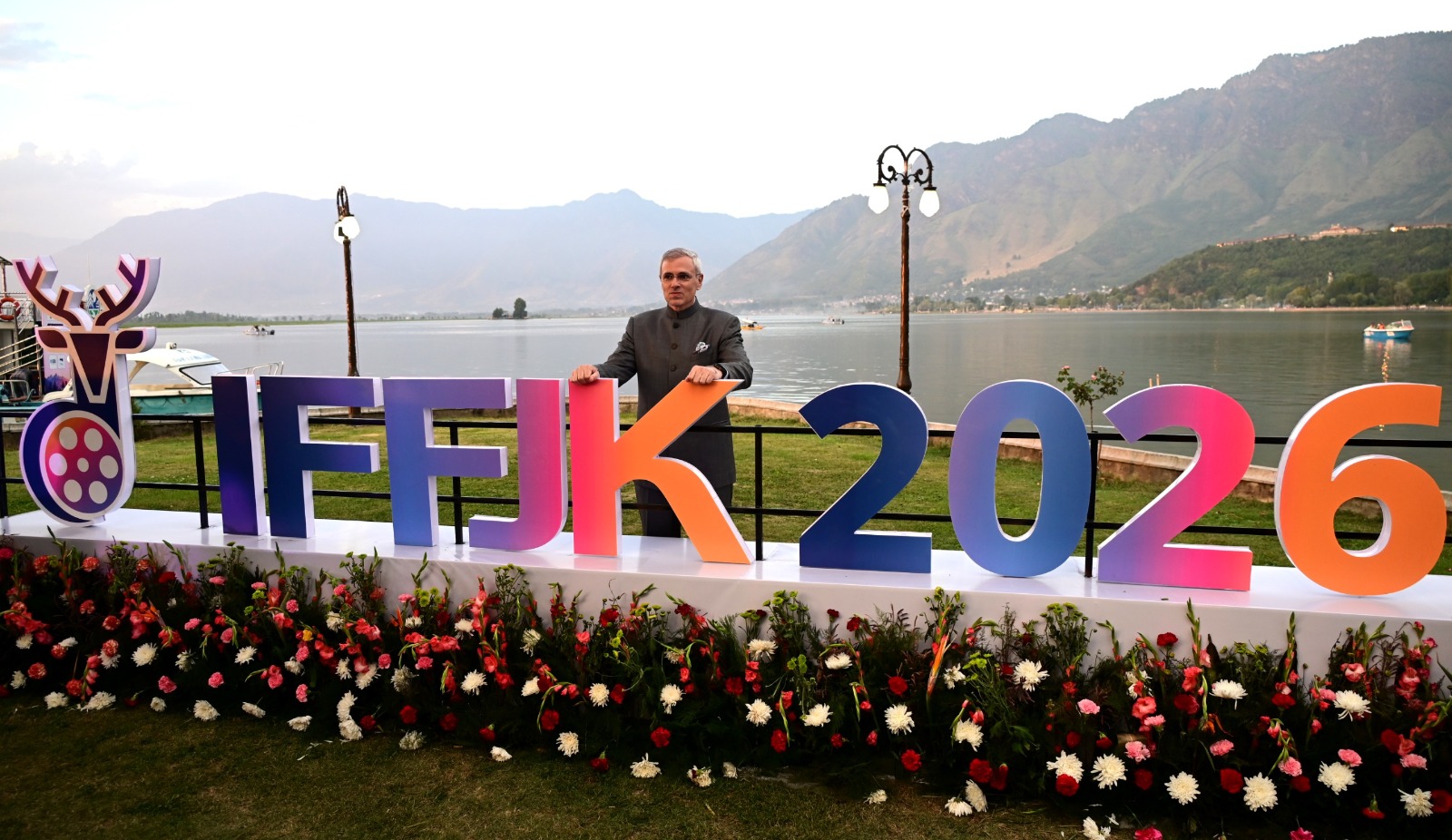
The curtain comes down tonight, but not the idea. To every young filmmaker in this room: do not wait for Mumbai or London. Pick up your camera, tell the story of your alley, your river, your family. The world is finally listening.”
Leave a Reply