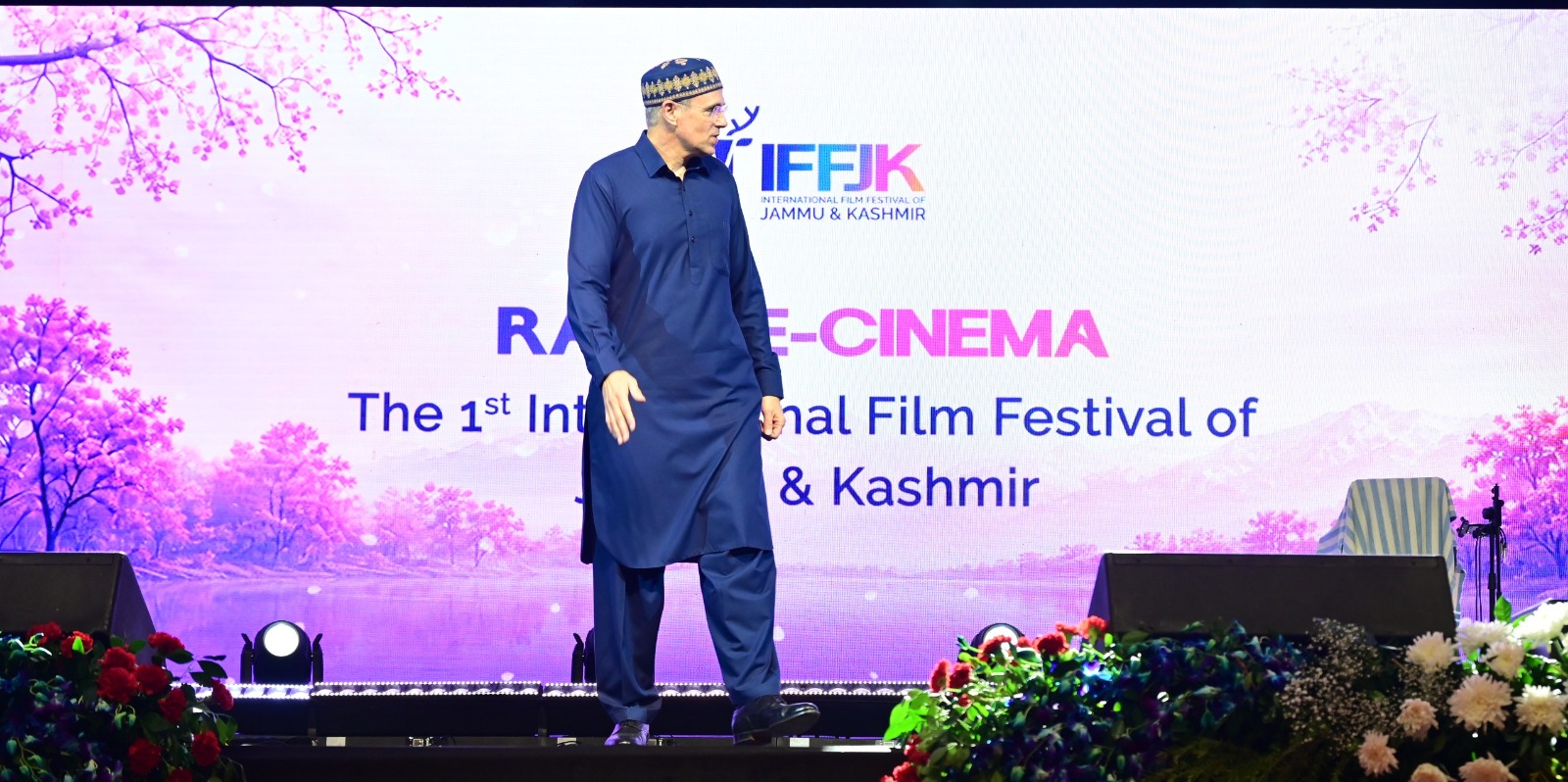
The maiden IFFJK proved Jammu and Kashmir can stage a sophisticated global event, but high production values masked deeper structural gaps. Moving from administrative triumph to genuine cultural empowerment requires balancing polished optics with long-term local investment.
By Ajaz Rashid
The inaugural International Film Festival of Jammu & Kashmir (IFFJK) arrived on the shores of Dal Lake carrying the heavy freight of political expectation and cultural symbolism. Staged against the sweeping silhouette of the Zabarwan range, the four-day event sought to project normalisation, celebrate artistic enterprise, and reconnect a long-isolated territory with the global cinematic circuit. From a strategic perspective, the festival achieved several unmistakable public diplomacy and logistical triumphs. Yet, evaluated through an analytical lens that balances institutional outcomes against long-term grassroots development, the maiden edition revealed sharp structural shortcomings that must be addressed if the festival is to become a transformative engine of regional empowerment rather than a seasonal bureaucratic pageant.
On the positive ledger, the execution of IFFJK must be acknowledged as a formidable logistical and symbolic achievement. For a region whose cinema halls were silenced for decades, the mere act of mounting an international film festival featuring curated works from dozens of nations is a profound psychological pivot. The festival demonstrated robust administrative machinery, capable of handling complex hospitality, international travel protocols, and multi-venue projection systems without public disruptions. By drawing established names from Mumbai and international jury members to Srinagar, the administration sent an unmistakable message to the wider film industry: Jammu and Kashmir is open, functional, and ready to host high-stakes international cultural events.
Equally significant was the festival’s capacity to spark civic curiosity, particularly among the regional youth. In a territory where community-wide artistic gatherings have been historic casualties of conflict, open-air screenings and technical masterclasses provided a rare public commons. Sessions conducted by veteran industry professionals offered aspiring local writers, editors, and students from the University of Kashmir a rare, immediate window into the craft. Cinematographer and director Santosh Sivan captured the visual gravity of the gathering, noting, “The natural light in this valley possesses an ethereal, soft-contrast quality found nowhere else on earth. Pairing that light with modern visual techniques creates magic.”
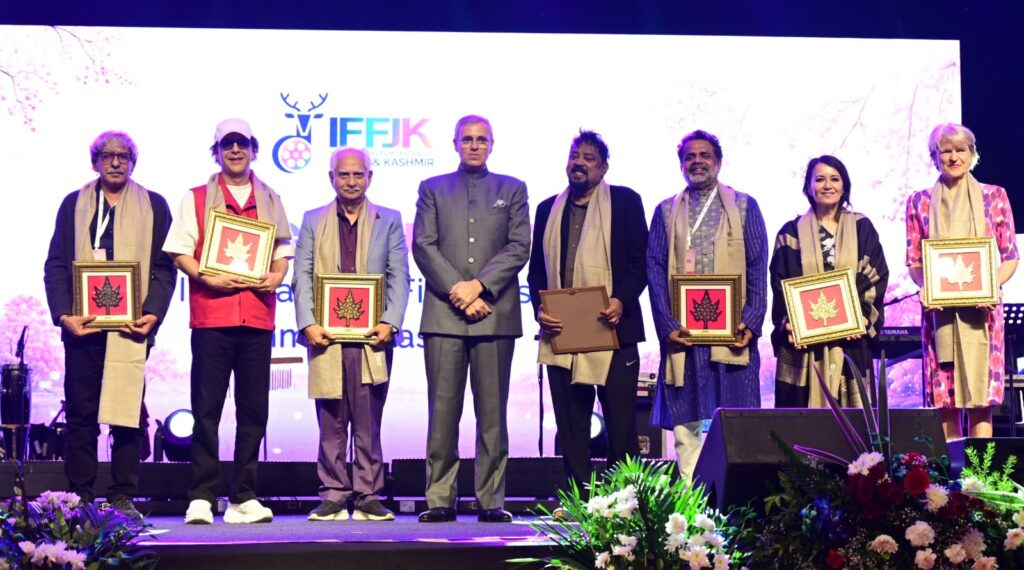
For a younger generation reared almost entirely on algorithmic smartphone screens and fragmented social media feeds, sitting in crowded auditoriums and outdoor projections along Dal Lake revitalized cinema as a collective, shared ritual. That communal energy reached its peak during the closing ceremonies, as veteran singer Usha Uthup bridged generations and geography from the stage. “Music and cinema share one language: love. To bring these songs to Srinagar and hear this hall sing every word back to me is an experience I will carry for the rest of my life,” she said.
Furthermore, the festival signalled a crucial policy awakening regarding the economic viability of the creative sector. Chief Minister Omar Abdullah’s public rhetoric during the festival underscored a conscious desire to move beyond the traditional “single-window shooting permit” paradigm. “To stand here today, under the majestic shade of the Chinar trees, surrounded by the sentinel peaks of the Himalayas, is to be reminded that some places on earth do not merely host stories, they are born of them. Today, as we launch this festival, bringing together filmmakers from over 30 countries and showcasing extraordinary films, we are not just opening a cinema event. We are opening a new chapter in the longstanding romance between Jammu & Kashmir and the silver screen,” he said.
Addressing visiting filmmakers, Abdullah directly articulated that the valley must transform from an exotic call-sheet location into an integrated ecosystem capable of providing local line producers, technicians, sound recordists, and actors. “We are declaring to the world that Kashmir is not just a location on a call sheet; it is a creative sanctuary, a home for global storytellers. When you bring your cameras to Jammu and Kashmir, do not just film our mountains. Seek out our stories. Cinema is more than landscapes; cinema is culture. We are building a robust local workforce of cinematographers, line producers, sound engineers, and actors so that you can arrive with a script and find everything else right here.”
By framing cultural production not as an ornamental luxury but as an economic driver capable of absorbing educated youth into skilled employment, the leadership demonstrated that it grasps the economic stakes.
However, a rigorous critique reveals that the actual structural design of IFFJK frequently ran counter to these progressive aspirations. The most glaring drawback was the festival’s physical and social insularity. By centralising the bulk of screenings, celebrity addresses, and delegate gatherings inside the heavily fortified perimeter of the Sher-i-Kashmir International Convention Centre (SKICC), the festival inadvertently operated as an elite administrative enclave. Stringent security cordons, accreditation tiers, and limited public ticketing mechanisms created formidable psychological and physical barriers for ordinary citizens. A film festival derives its vitality from democratic messiness from packed city theatres, passionate debates on roadside tea stalls, and uninhibited access for neighbourhood youth. By sealing cinema inside a sanitised convention complex, the festival prioritised institutional optics over authentic public participation.
A deeper conceptual flaw lay in the curatorial obsession with nostalgia. Throughout the inaugural addresses and programming showcases, there was an over-reliance on vintage commercial cinema from the 1960s and 1970s. While celebrating this romantic heritage is understandable, it risked reinforcing an outdated, extractive gaze that has historically reduced Jammu and Kashmir to a visual wallpaper for song-and-dance escapism. Pristine landscapes, chinar leaves, and shikaras do not constitute a living cinematic tradition. Veteran filmmaker Vidhu Vinod Chopra touched upon this precise tension between cinematic nostalgia and indigenous narrative ownership. “Kashmir doesn’t just offer light and framing; it gives a film soul. To see world cinema screened here, where I first dreamed of making movies, is deeply moving. But the future belongs to local Kashmiri kids who pick up cameras to shoot their own realities,” Chopra said.
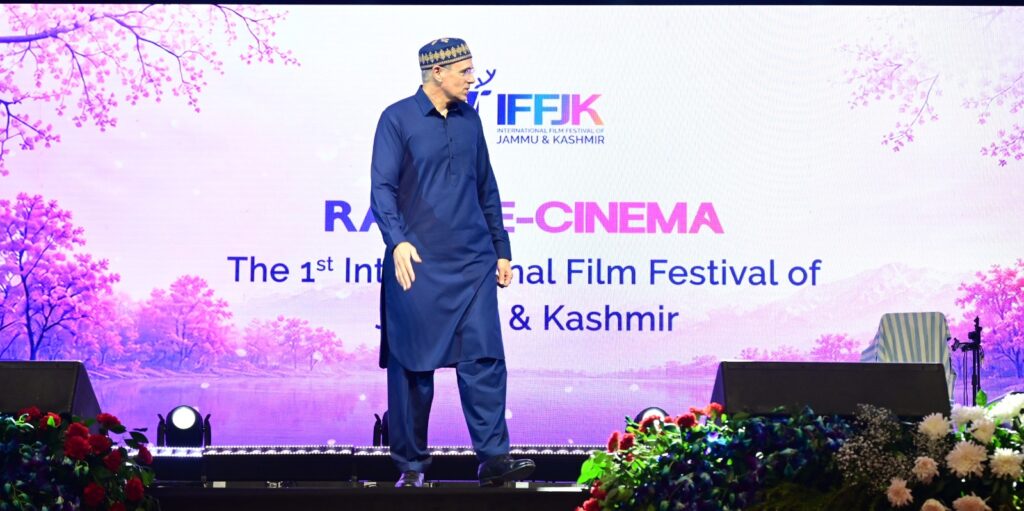
This conceptual disconnect translated into tangible economic oversights, most visibly in the notable lack of a formalised project co-production market. Established international festivals, such as the Busan International Film Festival or the NFDC Film Bazaar in Goa, derive their enduring industrial authority not from their red carpets, but from their project incubation labs. A truly fruitful IFFJK should have featured structured pitch platforms where Kashmiri, Dogri, Gojri, and Ladakhi writers could present unproduced treatments directly to commissioning editors, OTT buyers, and international sales agents.
Actor Sanjay Suri pointed directly to this missing industrial foundation during the festival discussions. “A film festival provides the sparks, but infrastructure builds the fire. For decades, crews flew in from Mumbai with everything from cameras to caterers, shot for ten days, and flew out,” he said, adding, “IFFJK must catalyse permanent soundstages, rental gear houses, and regional dubbing studios so local creative capital stays in J&K.”
Without funding pipelines, script doctoring clinics, and distribution incubators, native talent is left stranded with raw ideas. Offering students a brief forty-five-minute lecture inside an auditorium provides transient inspiration, but it fails to teach the technical mechanics of project financing, digital audio restoration, or intellectual property rights.
Moreover, the festival exposed an acute structural irony: celebrating global cinema in a territory that lacks accessible, permanent film exhibition infrastructure. Across the valley and several districts of Jammu, commercial movie halls and functional film societies remain virtually non-existent for the average resident. An annual four-day international gathering cannot function as an isolated cultural oasis; without year-round momentum, its impact evaporates the moment the delegates depart.
To create a sustainable impact, the festival needed to announce a permanent regional film archive, support community-run film clubs, and establish decentralised screening circuits in district towns like Baramulla, Anantnag, and Udhampur. Union Minister of State for Information and Broadcasting, Dr. L. Murugan, underscored this shift in vision during his closing remarks. “For decades, the camera saw only our saffron fields, our snow-peaked mountains, and the temples of Jammu. Today, Jammu and Kashmir is transforming from a mere location into an active creator and partner in global storytelling.”
Finally, the organisational hierarchy remained overly dependent on state bureaucracy. To earn enduring artistic credibility and avoid the trap of becoming an ideological showcase, the festival’s curation must be handed over to an autonomous directorate comprising independent filmmakers, historians, and humanities scholars. Bureaucracy can execute logistics and secure venues, but it lacks the artistic daring and critical edge required to build a world-class cultural institution.
In the final analysis, the maiden International Film Festival of Jammu & Kashmir was a vital, necessary beginning, proving that the territory can stage an event of global ambition. But staging an event is fundamentally different from building an ecosystem. The positive groundwork has been laid in visibility and administrative capacity; the negative traps remain in elitism, nostalgia, and the absence of a financial pipeline for native storytellers.
As Chief Minister Omar Abdullah observed in his concluding valedictory address, the true test begins after the projectors shut down. “For decades, Kashmir travelled to audiences through a cinema screen. This week, in a very real sense, the screen came back to Kashmir. But the success of IFFJK a decade from now should not be measured merely by the number of films screened or the celebrities attending,” Abdullah said, adding: “It will be measured by the careers launched, the scripts written, the collaborations forged, and the local stories that reach the world. The curtain comes down tonight, but not the idea. To every young filmmaker in this room: do not wait for Mumbai or London. Pick up your camera, tell the story of your alley, your river, your family. The world is finally listening.”
Moving forward, the ultimate verdict on IFFJK will not depend on the celebrity stars that grace its red carpets, but on whether it grants that rising generation the independence, capital, and technical mastery to point the camera at their own world and speak with their own voice.
Leave a Reply