By replacing historic policy hesitation with bold infrastructure and cutting-edge artificial intelligence, New Delhi has successfully turned its vulnerable frontiers into impenetrable strategic assets.
By Satish Mahaldar
In an era when the world’s wealthiest developed nations are visibly struggling to control illegal migration, cross-border crime, human trafficking, and sophisticated narcotics smuggling, India has quietly engineered one of the most ambitious border-management transformations in modern history.
Under the strategic direction of Union Home Minister Amit Shah, India has dismantled the archaic, purely reactive concept of border guarding. In its place stands a proactive, technology-driven, infrastructure-led, and intelligence-integrated model of sovereign security. The absolute scale of this transformation becomes globally remarkable when juxtaposed against Western superpowers that continue to face systemic border gridlocks despite boasting far greater per-capita resources.
The Crucible of India’s Frontiers
Unlike nations dealing with a single primary land border or uniform terrains, India manages a staggering array of distinct frontiers. Its security forces must simultaneously secure high-altitude Himalayan peaks, shifting desert sands, dense northeastern jungles, complex riverine belts, and heavily populated plains.
For decades, these borders were treated as distant, vulnerable peripheries. Difficult geography was frequently compounded by historical policy hesitation and inadequate infrastructure. However, over the past decade, New Delhi completely inverted this mindset. The focus shifted from merely defining borders to actively managing them as critical national assets worthy of the state’s total focus.
The “Smart Border” Paradigm
The core of India’s modern defense architecture rests on a transition from isolated border outposts to a highly connected Quadrangular Security Grid. As Amit Shah outlined at the Land Border Districts’ Superintendents of Police Conference, this grid seamlessly fuses border-guarding forces, state administrations, intelligence agencies, and local populations into a singular, responsive network.
At the heart of this operational shift is the Smart Border Project, an AI-driven ecosystem built upon the Comprehensive Integrated Border Management System (CIBMS). Where physical fencing is rendered impossible by rushing rivers or vertical cliffs, India has deployed a multi-layered tech blanket:
- DRDO’s Border Surveillance System (BOSS): Ensures 24/7 unmanned, thermal, and sensor-based monitoring in sub-zero alpine zones.
- Aerospace Reconnaissance: Utilizes India’s indigenous NavIC satellite constellation and RISAT radar imaging for real-time tracking.
- Counter-Drone Interception: Deployed along western corridors to completely shut down low-altitude narco-trafficking and weapon drops.
Reflecting this unyielding stance on territorial integrity, the government has launched a massive ₹31,000 crore project to completely fence the 1,610-kilometer India-Myanmar border, closing historical loopholes used by insurgent groups and smuggling syndicates.
The Arteries of Sovereignty
A border cannot be defended if your defenders cannot reach it. To address this, funding for strategic frontier infrastructure under the Modi government has skyrocketed by a massive 400 percent.
The spearhead of this physical transformation is the Border Roads Organisation (BRO). In the 2024–2025 financial year, the BRO achieved its highest-ever expenditure of ₹16,690 crore, a momentum that has expanded into an ambitious ₹17,900 crore target for the 2025–2026 fiscal year.
Between 2024 and 2025 alone, a staggering 356 strategic infrastructure projects comprising bridges, high-altitude airfields, and tunnels were dedicated to the nation. Engineering marvels like the Sela and Nechiphu tunnels in the east, alongside the under-construction Shinku La tunnel in the north, have guaranteed all-weather, rapid troop mobilization capability along previously isolated stretches of the Line of Actual Control (LAC).
Perhaps the most visionary aspect of India’s new doctrine is the Vibrant Villages Programme (VVP). Historically, economic isolation caused severe migration away from border areas, creating demographic vacuums that hostile neighbors could exploit. India has flipped this script completely.
The launch of Vibrant Villages Programme-II (VVP-II) features a dedicated central outlay of ₹6,839 crore running through 2028–29. VVP-II actively targets 1,954 strategic villages across 15 States and 2 Union Territories.
“Our border villages are not the last villages of India; they are the country’s first villages.”
By ensuring 100% saturation of modern necessities all-weather roads, 24/7 solar electrification, satellite telecom, and robust local livelihood schemes the state is checking migration. The program empowers border residents to act as the permanent, patriotic “eyes and ears” of the nation, providing an invaluable layer of grassroots human intelligence that no digital camera can fully replicate.
A Model for the Modern World
While traditional Western powers remain bogged down in political polarization and bureaucratic gridlock over their frontiers, India’s experience offers a masterclass in strategic clarity.
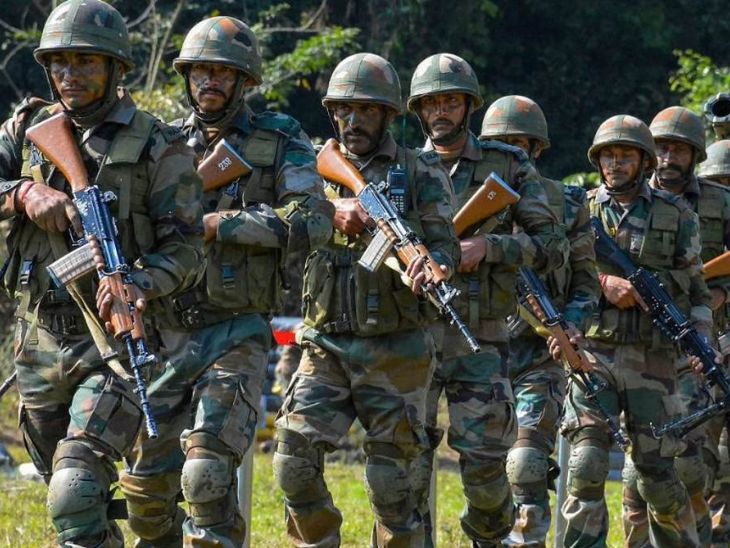
By seamlessly blending cutting-edge electronic surveillance, unyielding political will, massive financial commitments, and inclusive community-centric development, India has successfully converted a historical vulnerability into a position of distinct geopolitical strength.
Threats will continue to evolve, and adversaries will adapt. Yet, India’s unified border management paradigm stands out as a highly effective case study for the 21st century. It proves that a determined state can decisively secure its frontiers while driving rapid socio-economic growth, setting a new global benchmark for territorial integrity and national pride.
Disclaimer: The views expressed in this feature article are solely those of the author and do not necessarily reflect the official editorial stance or opinions of this publication.
Leave a Reply