This gripping narrative follows three interconnected lives shattered by unrequited love, sudden abandonment, and the cruelty of fate. It is a heart-wrenching tribute to lost dreams that will leave readers deeply moved.
By Rayees Ahmad Kumar
The world of contemporary literature is frequently enriched by voices that cross professional boundaries to bring fresh perspectives to fiction. Rafia Rasool Magmoom stands prominently among these rare writers, having carved out a distinct identity within Urdu literary circles in a remarkably short period. Known primarily for her sharp insights as a journalist and her visual storytelling as a cartoonist, she has transitioned into the realm of literature with an artistic maturity that commands attention. Hailing from Buchwara, Dalgate, in Srinagar, her journey reflects the unpredictable nature of creativity. While she grew up dreaming of entering the medical profession, destiny steered her down a different path. Today, she seamlessly balances her identities as a successful cartoonist, an active journalist, and a deeply sensitive author.
Her debut literary work, a novel titled Pehchan Aansoo Ki, serves as a powerful testament to this creative evolution. Spanning ninety-six pages, the book is a thoughtful, emotionally resonant narrative that carries a profound personal weight. It is dedicated to the memory of the author’s late father and to all those individuals who lost their lives after brave battles with cancer. The cultural and artistic value of this work was recognized early by the Jammu and Kashmir Academy of Art, Culture and Languages, which provided financial support for its publication. The book opens with an introductory note titled Harf-e-Chand, written by the noted literary figure Dr. Farid Parbati. In his analysis, Dr. Parbati praises the narrative voice, observing that the language is simple, fluent, and highly engaging, perfectly mirroring the sensibilities of modern fiction. Alongside this critical introduction, the author includes a personal section titled Apne Bare Mein, where she pays a heartfelt tribute to her father and recounts her own educational and professional path. In these pages, she candidly explains how the shifting circumstances of life gracefully re-routed her from her childhood dream of studying medicine toward the worlds of cartooning, journalism, and ultimately, fiction writing.
The narrative itself is built upon a delicate foundation of human relationships, tracking the contrasting lives of two close friends, Qainat and Ghazala. The two young women share a deep bond, having studied together from their early school days through their college years, yet their characters and life circumstances could not be more different. Ghazala, raised in an environment of extraordinary luxury and parental indulgence, is blessed with striking physical beauty. However, this privilege leaves her proud, aloof, and intensely self-centered. Throughout her college years, she is admired by almost every young man on campus, yet she remains completely indifferent to the attention, viewing those around her through a lens of superiority. Qainat stands in stark contrast to her friend. Having lost both of her parents in a tragic road accident during her youth, she was raised by her maternal uncle. This early encounter with grief instills in Qainat a deep sense of empathy, humility, and compassion for the suffering of others. Driven by this innate kindness, she holds fast to her childhood dream of becoming a medical doctor, wanting nothing more than to heal those in pain.
The emotional tension of their college days heightens when Salim, a brilliant, hardworking student who is a year senior to the women, falls deeply in love with Ghazala. After harboring his feelings in silence, Salim decides to confess his love during a meeting at a local coffee house, sincerely expressing his desire to make Ghazala his lifelong partner. Ghazala’s response is incredibly harsh. Instead of a polite refusal, she chooses to humiliate him publicly, telling him that he should have considered his lower social and financial status before daring to propose to someone like her. The rejection leaves Salim deeply wounded. Although Qainat later steps in as a voice of reason, gently advising Salim to let go of his unrequited love and focus entirely on his studies, he finds himself unable to erase his feelings, continuing to quietly cherish his affection for Ghazala.
As time moves forward, the paths of the three characters naturally diverge. Salim channels his energy into his studies and becomes a highly successful physician. Qainat fulfills her lifelong ambition, successfully graduating from medical school to become a practicing doctor. Ghazala, meanwhile, pursues a degree in engineering. As professional responsibilities take over, the friends drift apart, and Ghazala gradually disappears from the daily lives of Qainat and Salim.
Years later, fate intervenes, bringing the characters back together under incredibly tragic circumstances. A critically ill, unconscious woman is admitted to the emergency ward of the hospital where Dr. Qainat is serving. When Qainat steps forward to treat the patient, she is astonished to recognize the woman as Ghazala. However, the proud, vibrant beauty of their college days is gone, replaced by a frail woman broken by severe illness and the hardships of life. When Ghazala finally regains consciousness, she shares the painful history of her lost years. During her engineering studies, she had fallen deeply in love with a senior student named Wasim. Their friendship quickly blossomed into a profound relationship, culminating in a beautiful letter where Wasim confessed his love. Ghazala, entirely devoted, believed she had found her true soulmate, and the pair exchanged promises of lifelong loyalty. Yet, immediately after graduation, Wasim abruptly cut off all contact, offering no explanation and showing complete indifference to her wellbeing. This sudden abandonment shattered Ghazala’s spirit. Despite medical consultations and the support of her family, her emotional wounds refused to heal, causing her to reject every subsequent marriage proposal. The final blow came when Wasim’s friend, Aamir, revealed the devastating truth: Wasim had willingly married a close relative at the insistence of his parents, prioritizing family tradition over his promises to Ghazala. Not long after this revelation, Ghazala’s parents passed away, leaving her completely alone in the world. The crushing weight of grief, loneliness, and a broken heart eventually triggered a total physical and emotional collapse.
As Dr. Qainat tenderly cares for her ailing friend, she discovers that Dr. Salim has remained unmarried all these years, still holding a quiet affection for Ghazala. Sensing an opportunity for healing, Qainat begins to hope that the two might finally find companionship and peace together. However, the story takes another dark twist. During a routine visit to the hospital, Salim’s sister-in-law passes away. As a mourning crowd gathers, Ghazala looks out at the faces, catches sight of a familiar man, and exclaims in absolute shock, recognizing the long-lost Wasim among the grieving family members.
The narrative rushes toward a devastating conclusion. A month after these intense events, Dr. Salim returns to the hospital to visit Dr. Qainat, only to be met with heartbreaking news: Qainat has succumbed to the very cancer she fought so hard against. The novel closes with Salim standing in profound silence beside her fresh grave. In that quiet cemetery, he reflects on the cruel irony of life, which so often tears away the people and dreams that individuals hold most dear. Beneath the still earth, the unfulfilled hopes, loves, and aspirations of their youth are laid to rest forever.
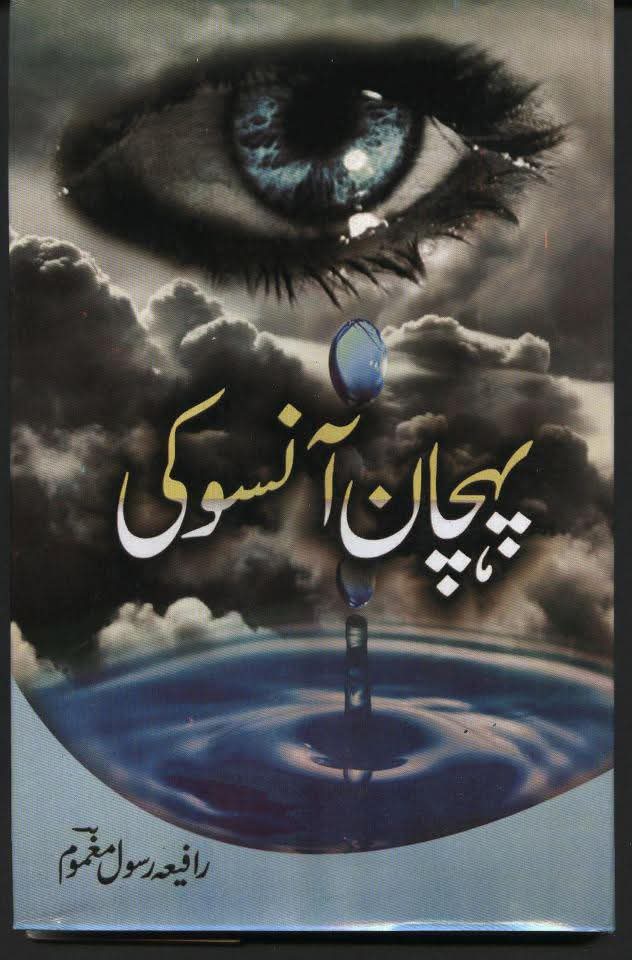
Through Pehchan Aansoo Ki, Rafia Rasool Magmoom has crafted a story that goes far beyond a simple narrative of love and loss. The book serves as a mirror to modern society, offering a sharp critique of growing materialism, the rapid decline of core human values, and the intense psychological struggles that define contemporary life. The work beautifully illustrates that the women writers of Kashmir possess an incredible depth of creativity, intellectual insight, and artistic maturity. By utilizing graceful language, compelling pacing, and highly realistic character development, Magmoom ensures that readers remain emotionally invested from the opening page to the final sentence. Her absolute command over prose style and narrative structure shines brightly throughout the book. The inherent simplicity, rhythmic fluency, and emotional weight of her writing style elevate this debut, making it a genuinely valuable contribution to modern Urdu literature. Creations of this caliber deserve widespread appreciation, as they enrich the cultural landscape and inspire the next generation of storytellers to write with honesty and heart.
Disclaimer: The views expressed in this feature article are solely those of the author and do not necessarily reflect the official editorial stance or opinions of this publication.
Leave a Reply