Lolab’s true wealth lies not in its soil, but in the towering intellectual giants it has gifted to the world. Foremost among them is Hazrat Allama Maulana Anwar Shah Kashmiri, whose profound contributions fundamentally reshaped Islamic scholarship across South Asia.
Dr Syed Ubaid Bukhari
“Pani tere chashmon ka tarapta hua seemaab
Murghan-e-sahar teri fazaon mein hain betaab
Ae Waadi-e-Lolab…”
(The water of your springs ripples like restless quicksilver,
The birds of the dawn are ecstatic in your skies,
O Valley of Lolab…)
When the Shayar-e-Mashriq (Poet of the East), Allama Muhammad Iqbal, penned these immortal verses in his masterpiece Zarb-e-Kaleem, he was not merely romanticizing a landscape. He was capturing the spiritual and existential pulse of a valley that stands as a testament to nature’s architectural brilliance. Located in the northern frontier of Jammu and Kashmir’s Kupwara district, the Lolab Valley remains a pristine, emerald-green sanctuary where towering mountains guard ancient secrets, and crystal springs whisper tales of mystics, scholars, and revolutionaries.
To understand Lolab is to understand its etymology. Local folklore and linguistic history suggest that the word draws its roots from “Lolo“, an ancient Kashmiri term used by generations past to describe a place inhabited by beloved, love-spreading people. Literally translated, Lolab is the “Land of Love and Beauty.”
Today, as sustainable tourism and geopolitical stability reshape the narrative of Jammu and Kashmir, this forgotten paradise is undergoing a profound cultural and economic renaissance.
The ‘Hundred Mohallas’
Geographically, Lolab is a breathtaking stretch of land punctuated by dense pine forests, vast fruit orchards, and rice paddies that shift colors with the seasons. The valley comprises a cluster of historic villages including Lalpora, Khumriyal, Chandigam, Dever, and Sogam each carrying names deeply rooted in their historical characteristics.
Consider Sogam, the socio-political heartbeat of the valley. Derived from the Kashmiri words ‘Sou’ (hundred) and ‘Gam’ (village/mohalla), Sogam literally signifies a sprawling congregation of a hundred neighborhoods.
In recent years, under the Jammu & Kashmir Tourism Department’s aggressive rural and offbeat destination drive, Lolab has emerged from the shadow of more commercialized hubs like Gulmarg and Pahalgam. Government initiatives focusing on homestays have allowed travelers to experience the authentic hospitality of Lolab firsthand. Infrastructure developments have connected these remote hamlets to mainstream travel itineraries, bringing sustainable economic growth to a region that relies heavily on walnut cultivation, apple farming, and cattle rearing.
Islamic Scholarship and Global Legacy
Beyond its breathtaking topography, Lolab’s true wealth lies in its intellectual and spiritual legacy. It has consistently birthed minds that reshaped Islamic jurisprudence, literature, and administrative excellence across South Asia.
Hazrat Allama Maulana Anwar Shah Kashmiri (R.A.)
The crowning jewel of Lolab’s scholarly heritage is undoubtedly Hazrat Allama Maulana Anwar Shah Kashmiri, born in the tranquil, remote village of Varnow. A prodigy of unparalleled caliber, Maulana Kashmiri began his journey of sacred knowledge under the tutelage of his father, Maulana Muazzam Ali.
- The Journey to Deoband: In 1889, driven by an insatiable thirst for knowledge, he traveled to the prestigious Darul Uloom Deoband, graduating in 1896.
- The Mentorship: He was groomed under the watchful eyes of the legendary Shaikh-ul-Hind Hazrat Mahmood-ul-Hasan. In 1915, he was rightfully nominated as his successor.
- The Academic Epoch: For twelve years (11917–1927), Maulana Kashmiri served as the Dean (Shaikh-ul-Hadith) of Darul Uloom Deoband, ushering in a golden era of Hadith commentary in the Indian subcontinent.
A versatile genius, philosopher, orator, and poet, his contributions to Hadith literature fundamentally altered how prophetic traditions were analyzed and taught in South Asia. His legacy did not fade with his passing in Deoband in 1933; his descendants and institutions like Darul Uloom Bilalia continue to disseminate his profound religious insights across the globe.
A Confluence of Mysticism and Literature
Lolab’s soil remains deeply intertwined with Sufism and classical poetry. Figures such as Hazrat Syed Sikander Shah Kashmiri (R.A.) and the widely revered saint Hazrat Syed Mehmood Shah Bukhari (R.A.) provided the spiritual anchor that defined the valley’s peaceful ethos.
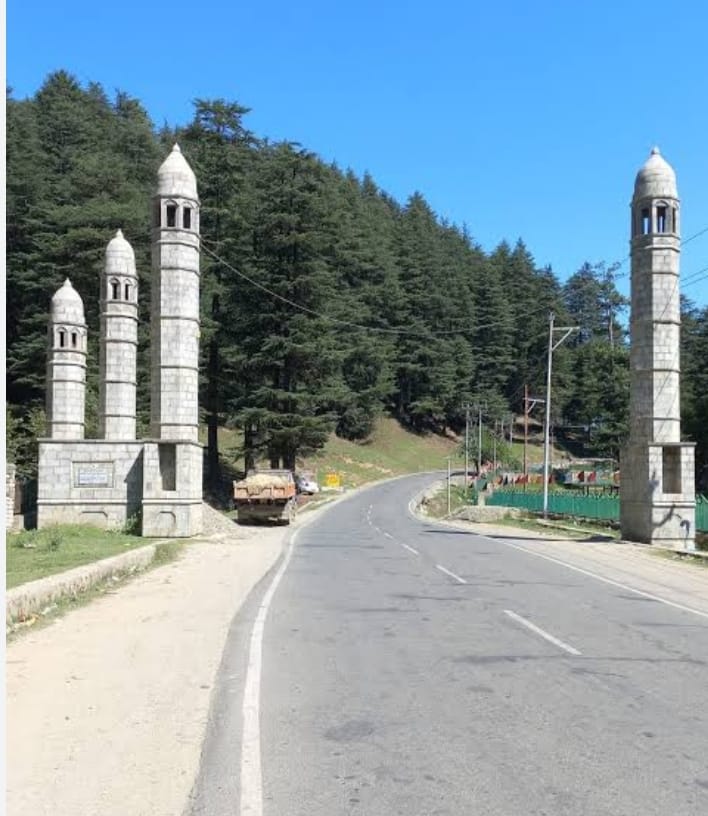
Similarly, Syed Kamal-ud-Din Bukhari, a luminary of Kashmiri poetry and Islamic scholarship, translated the metaphysical beauty of the valley into verses that continue to be recited in traditional Sufi gatherings.
The Bureaucratic Trailblazer
Hailing from the quiet lanes of Sogam, Dr. Shah Faesal etched his name into modern Indian history by becoming the first civil services aspirant from Jammu and Kashmir to top the prestigious UPSC Civil Services Examination in 2009.
Faesal’s journey from a conflict-ridden childhood in Lolab to the absolute zenith of the Indian bureaucracy served as a massive catalyst for an entire generation of Kashmiri youth. After a highly publicized stint in regional politics and academic pursuits abroad at Harvard University, Dr. Faesal returned to the Indian Administrative Service. His career remains a powerful testament to the transformative power of education and institutional engagement.
The Political Paradigm
Lolab’s contemporary history is also deeply tied to the governance of Jammu and Kashmir. The late Mushtaq Ahmed Lone, who served as the Minister of Law under the National Conference government, is remembered for his dedication to regional development before his tragic assassination.
Carrying the mantle forward, leaders like Qaiser Jamsheed Lone (MLA Lolab) and Nasir Aslam Wani (senior leader and Advisor to the Chief Minister of Jammu and Kashmir) continue to navigate the complex socio-political waters of the region, advocating for infrastructural funding, youth employment, and ecological preservation for their home turf.
Preserving the Sublime
As the sun sets over the peaks surrounding Chandigam, casting long golden shadows over the pine trees, one cannot help but recall the warning in Iqbal’s verse: “Dheele hon agar taar to bekaar hai mizraab” (If the strings of the instrument are loose, the plectrum is useless).
Lolab stands at a critical historical crossroads. The modern world is arriving rapidly. Tourism is booming, roads are being paved, and digital connectivity is reaching the furthest corners of Varnow. Yet, the challenge for journalists, policymakers, and locals alike is to ensure that this modernization does not come at the cost of Lolab’s pristine ecology or its rich cultural fabric.
The “Land of Love and Beauty” must not become just another crowded tourist resort. It must remain what it has always been: a sanctuary for the thinker, a refuge for the spiritual seeker, and a home to a resilient people who carry the legacy of Anwar Shah Kashmiri in their hearts and the brilliance of Shah Faesal in their aspirations.
Disclaimer: The views and historical interpretations expressed in this feature article are solely those of the author and do not necessarily reflect the official editorial stance or opinions of this publication. The author can be reached for feedback and inquiries at [email protected].
Leave a Reply