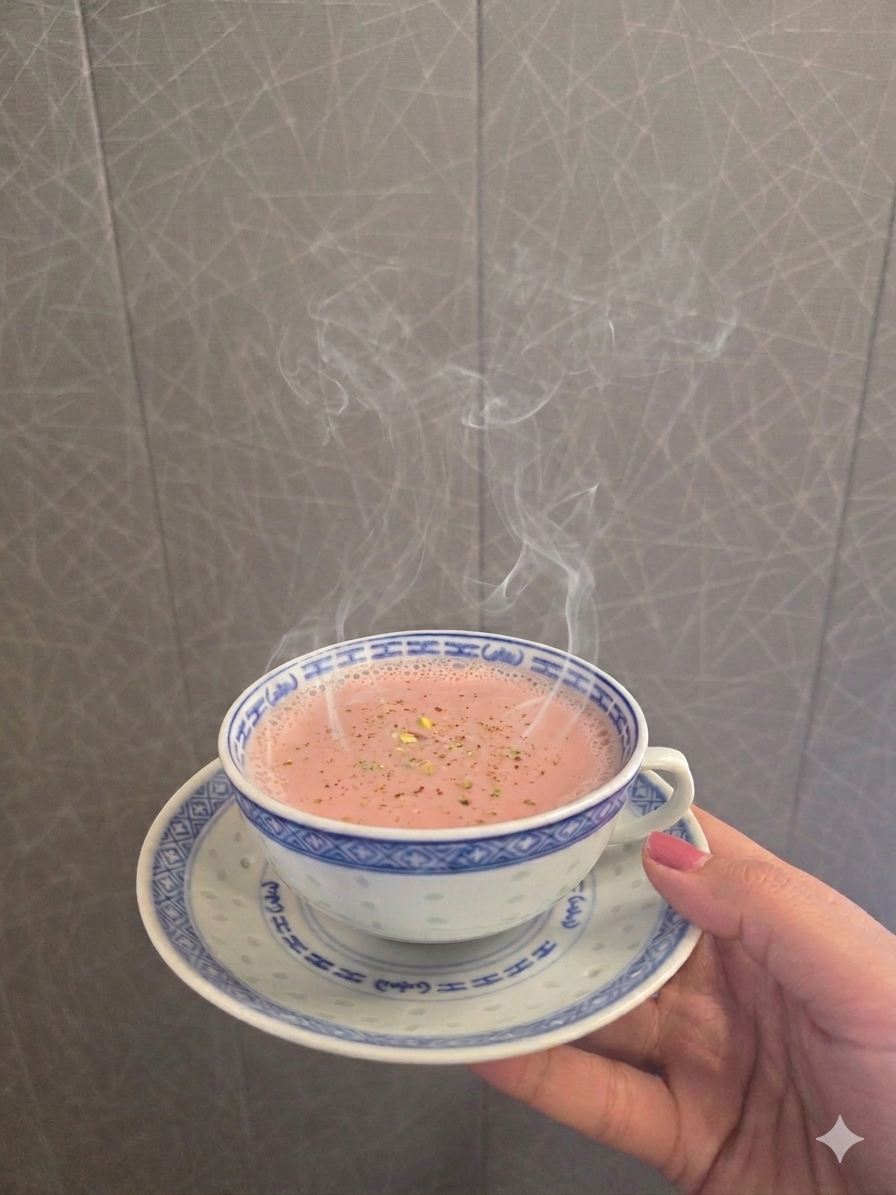
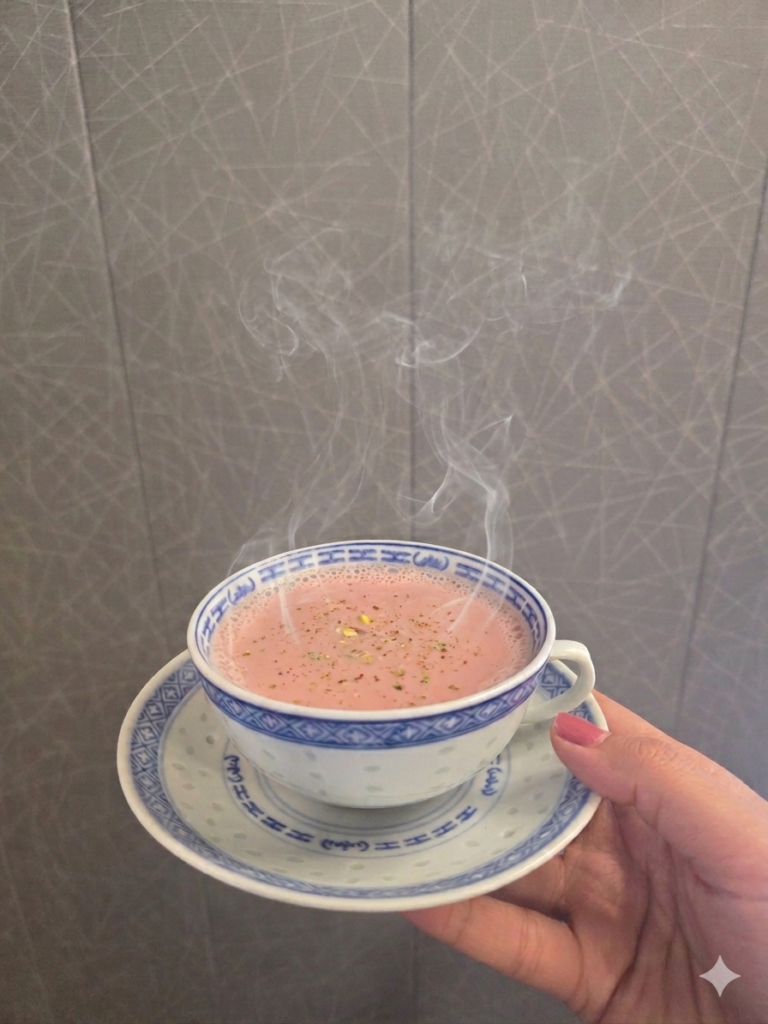
It is pink, salty, and steeped in history. Nun Chai is more than just “pink tea”; it is a complex alchemy of green leaves, sea salt, and traditional craftsmanship.
By Manzoor Akash
The ritual of brewing tea in Kashmir transcends the seasons, serving as a constant cultural anchor that defines the rhythm of daily life from the bustling markets of Srinagar to the high-altitude meadows of Gurez. Known variously as Nun Chai, Gulabi Chai, or Sheer Chai, this salt-tinged, pink-hued beverage is the heartbeat of Kashmiri hospitality, as essential on a balmy summer morning as it is on a brisk autumn evening.
While global tea culture often leans toward sweet infusions, the Kashmiri palate is rooted in the savory. “Nun” translates to salt in the local Shina and Kashmiri languages, and for the people of the Valley, a day does not truly begin until the first sip of this saline elixir. It is a drink that connects the modern Kashmiri to a lineage of silk-road traders and Sufi saints, acting as a liquid map of the region’s history.
The history of Nun Chai is as rich and complex as its preparation. Local lore and historical accounts frequently trace its introduction to the 14th-century Sufi saint and polymath, Mir Syed Ali Hamadani (RA). Known affectionately as Shah-e-Hamadan, the saint arrived in Kashmir accompanied by hundreds of artisans from Central Asia and Persia. While they revolutionized the region’s economy through crafts like papier-mâché, wood carving, and carpet weaving, they also brought their culinary habits.
Modern culinary historians suggest the tea likely traveled via the Silk Road, influenced by the nomadic traditions of Central Asia and Tibet, where butter and salt are added to tea to combat dehydration and provide electrolytes. In Kashmir, this utilitarian drink was refined into a sophisticated cultural staple. For the Kashmiri Pandit community, it is often referred to as “Sheer Chai,” emphasizing the milk (sheer) that gives the tea its creamy consistency.
The most striking feature of Nun Chai is its color, a dusty, elegant rose. Achieving this shade is a labor of love and a lesson in chemistry. It begins with special green tea leaves (Camellia sinensis) sourced predominantly from the gardens of Himachal Pradesh or Darjeeling.
The leaves are brewed for an extended period with a pinch of fulh (sodium bicarbonate or baking soda) and salt. The baking soda acts as a catalyst; when it reacts with the polyphenols in the tea leaves under heat, it triggers a chemical change that turns the liquid a deep maroon.
In decades past, the process involved a technique called khaal waal, the rhythmic pouring of the concentrated tea (tyoth) from a great height to aerate it. This oxygenation deepened the flavor and the pink intensity. While the frantic pace of modern life has made khaal waal a rarer sight in urban kitchens, the addition of cold milk to the tyoth remains the magical moment when the dark concentrate instantly transforms into the iconic pink Gulabi Chai. For a truly decadent experience, a dollop of fresh malai (cream) is floated on top.
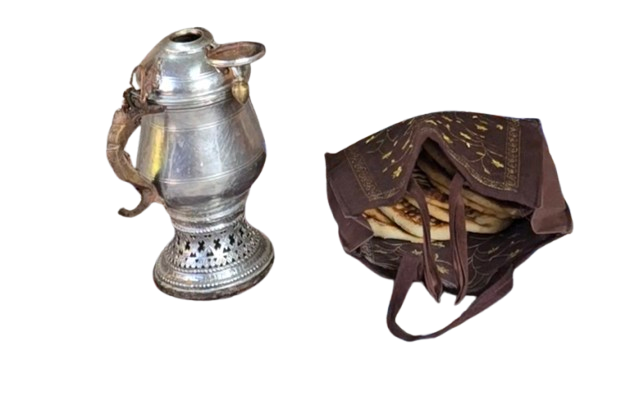
Nun Chai is rarely consumed in isolation; it is the centerpiece of the “soph” (breakfast or tea time). The tea is almost always accompanied by traditional Kashmiri breads, or Kandur Tchot, sourced fresh from the local neighborhood bakery. The pairing of the salt tea with these diverse breads creates a culinary experience that is uniquely Kashmiri.
The variety of accompaniments is staggering:
- Girda and Lavasa: Soft, everyday breads used for dipping and wrapping.
- Bakarkhaeni: A flaky, puff-pastry-style bread often enriched with ghee.
- Kulcha: Small, crumbly, and dry biscuits that offer a salty-sweet contrast.
- Routh: A dense, cake-like bread topped with poppy seeds and dry fruits. While once a daily staple, Routh is now increasingly reserved for the holy month of Ramadan or special family gatherings.
Historically, the most authentic way to prepare Nun Chai was in a Samavar, a copper vessel of Russian origin (Samovar meaning “self-boiler”). These ornate kettles feature a central chimney filled with glowing charcoal, surrounded by a water jacket where the tea brews slowly. The copper material is central to the flavor, as it maintains a consistent heat that coaxes the essence from the tea leaves.
Today, the Samavar has largely been relegated to weddings (Maenzraat), community feasts, or commemorative gatherings (Fatiha Khwani). In everyday homes, the convenience of gas stoves and stainless steel pots has replaced the charcoal-fired copper, yet the craving known locally as Nun Chai Teth, remains undiminished.
In recent years, the health profile of Nun Chai has been a subject of discussion among Kashmiri medical professionals. On the positive side, the tea is known to act as a digestive aid, particularly helpful in a region where the diet is rich and heavy. It is often cited for its ability to reduce bloating and combat lethargy. Some believe the pinch of baking soda helps in alleviating acid reflux and heartburn.
However, modern data suggests a need for moderation. The high salt content and the use of sodium bicarbonate can be problematic for individuals with hypertension or gastric issues. Contemporary health advisories in the Valley often suggest limiting intake to one or two cups a day to balance traditional enjoyment with cardiovascular health.
What was once a localized tradition has now reached across the globe? From the “Pink Lattes” trending in London and New York to the bustling tea stalls of Delhi and Lahore, Nun Chai has become a symbol of Himalayan identity. For the Kashmiri diaspora, a cup of pink tea is more than a beverage; it is a sensory bridge to home, a reminder of their rich culture, and a testament to a society that finds beauty and comfort in a pinch of salt and a shade of rose.
The views expressed in this article are solely those of the author and do not necessarily reflect the opinions or views of this Magazine. The author can be reached at [email protected]
Leave a Reply