From 14th-century roots to a modern crisis of fakes, Kashmir’s copper industry is at a breaking point. As “smart” development reshapes the valley, can we save the craftsman’s hammer before the shine fades forever?
By Sahil Manzoor Bhatti
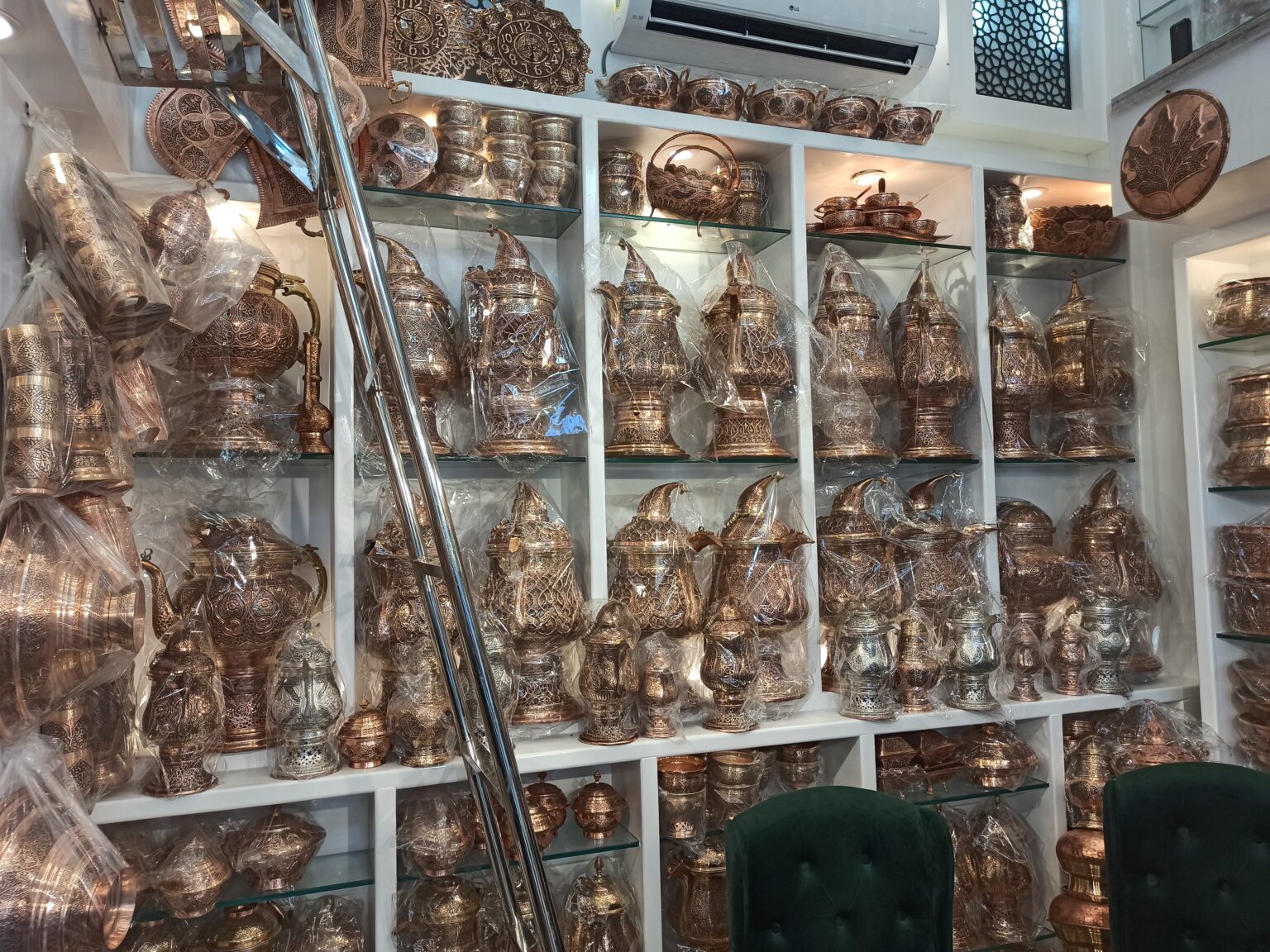
In the labyrinthine alleys of Zainakadal and the bustling workshops of Shehar-e-Khaas, the rhythmic thwack-thwack of the craftsman’s hammer has long been the heartbeat of Kashmiri culture. Introduced in the 14th century by the Persian saint Mir Sayyid Ali Hamadani (RA), copperware or Traam is more than just kitchenware; it is a historical ledger of the valley’s artistic soul.
However, as we move through 2026, this storied industry is gasping for air. Caught between the gears of rapid, often reckless urbanization and a market flooded with deceptive imitations, the copper trade serves as a canary in the coal mine for Kashmir’s broader economic and environmental health.
The Crisis of Credibility
The most significant threat to “Brand Kashmir” isn’t a lack of talent, but a deficit of trust. Whether it is pashmina, walnut wood, or copperware, the shadow of adulteration looms large.
In the copper market, the traditional hand-carved Naqashi is being decimated by machine-pressed replicas. These factory-made items are often sold as authentic handmade pieces to unsuspecting tourists at a fraction of the cost, forcing genuine artisans out of the market. Furthermore, reports of “adulterated” copper—where the purity of the metal is compromised with cheaper alloys—have tarnished the reputation of the trade.
To combat this, the implementation of Geographical Indication (GI) tagging must be accelerated and modernized. We need:
- Digital Authentication: Scannable QR codes on every major copper piece that link to the artisan’s profile and a purity certificate.
- Strict Enforcement: The Jammu & Kashmir Pashmina/Handicrafts (Quality Control) Act needs more teeth to penalize those passing off machine-made copper as handmade.
The Copper Industry: Challenges at a Glance
| Threat | Impact |
| Machine Encroachment | Devalues the labor-intensive hand-carving process. |
| Price Undercutting | Cheap, thin-gauge imitations make authentic work seem overpriced. |
| Generational Shift | The youth are abandoning the craft due to low wages and lack of prestige. |
| Technological Gap | Artisans lack access to modern e-commerce platforms to sell directly to global markets. |
Innovation Over Imitation
The industry cannot survive on nostalgia alone. While the traditional Samovar (tea kettle) and Kandkari (engraved) plates remain staples, the market is demanding contemporary utility.
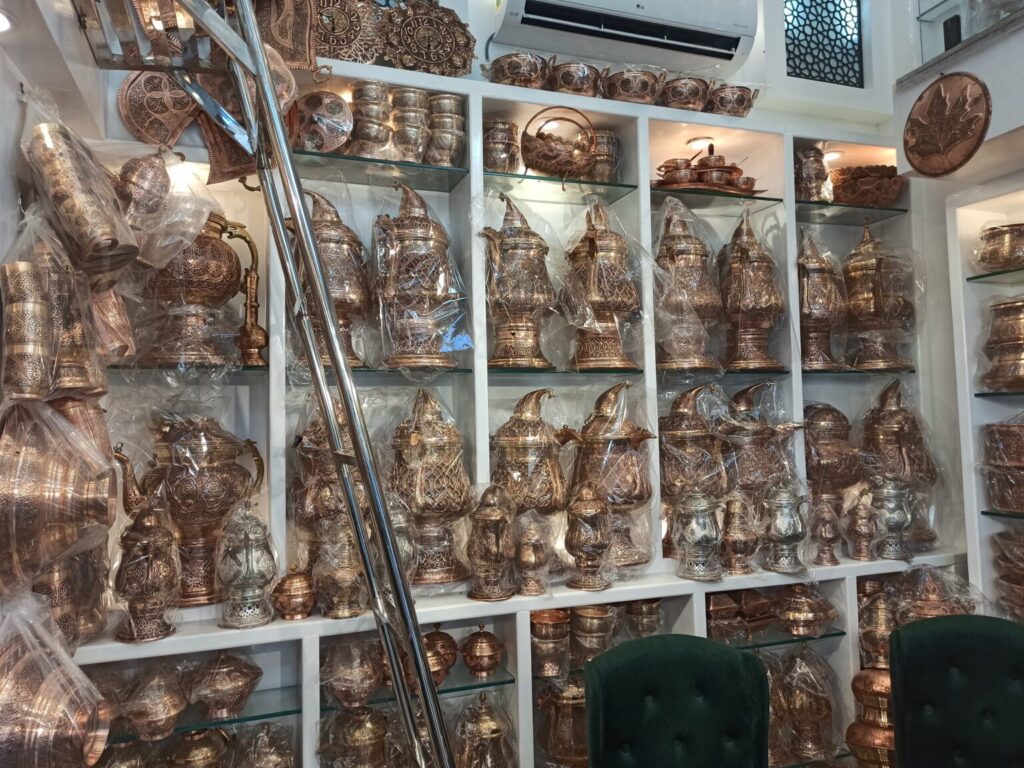
We are seeing a glimmer of hope in Product Diversification. The recent trend of gifting copper “Samovar Trophies” at local sporting events is a prime example of how traditional motifs can be adapted. To truly scale, the industry must pivot toward:
- Home Décor: High-end copper wall clocks, minimalist lamps, and floral vases.
- Corporate Gifting: Customized trophies and stationery sets for the growing business sector in India.
- Wellness: Capitalizing on the global trend of “copper-infused” water vessels, marketed with a Kashmiri aesthetic.
The government must treat the copper industry not as a relic, but as a viable economic engine. This requires a three-pillar approach: Financial Incentives, Infrastructure, and Education.
Artisans need low-interest “Artisan Credit Cards” that actually reflect the cost of raw copper, which has seen volatile price hikes in the global market. Furthermore, dedicated “Craft Clusters” should be established where artisans can access high-quality tinning (Kalai) facilities and modern design workshops.
Kashmir stands at a crossroads. We can either allow our heritage to be diluted into cheap souvenirs, or we can fortify it through quality assurance and sustainable planning. The copper industry is a test of our collective resolve. If we can protect the integrity of the craftsman’s hammer, we protect a piece of Kashmir’s identity that is truly like no place else in the world.
The views expressed in this article are solely those of the author and do not necessarily reflect the opinions or views of this Magazine.
Leave a Reply