From the vibrant melodies of Wanwun to the modern clinical theater, explore how Kashmir’s sacred rite of Khatanhal has evolved. This is the story of the “little bridegroom” and a tradition that remains the heartbeat of the Valley’s cultural identity.
By Manzoor Akash
In the heart of Kashmir, the religious practice of circumcision, known locally as Khatanhal or Khutna, stands as a defining rite of passage that merges spiritual devotion with a profound sense of communal identity. This tradition, observed with deep reverence across the Muslim world, carries a distinct resonance in the valley, where it is often tenderly referred to as Sonat. While the rustic charm of the villages might see it whispered as Nuek Behnawun and the bustling city streets call it Khutna, the core of the ritual remains a universal marker of belonging and faith. Rooted in the Sunnah of Prophet Muhammad (PBUH) and continuing the convention of Prophet Abraham, the act symbolizes purification, cleanliness, and a fundamental submission to the divine.
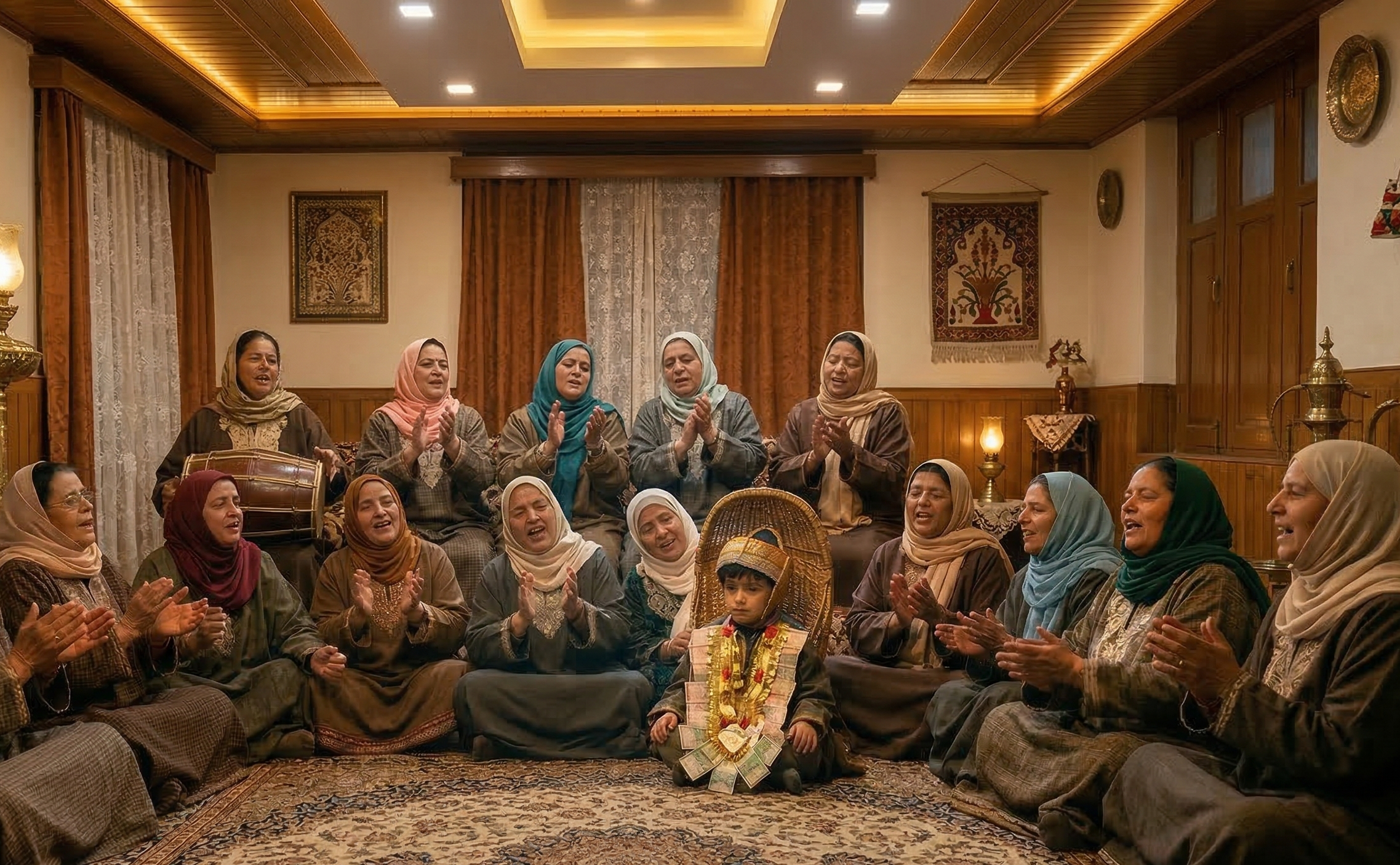
Historically, Khatanhal was not merely a medical procedure but a grand celebration rivaling the scale and fervor of a wedding. In decades past, the ceremony typically commenced after the Fajr prayers, performed by traditional barbers or Hakeems known locally as Naids. These practitioners were the custodians of the ritual, and their role was so central to the social fabric that skipping a neighborhood Naid for the task was considered a grave insult, often resulting in the barber refusing to provide haircuts to the family for an entire year. The atmosphere leading up to the event was electric, with relatives and neighbors invited for a celebratory feast known as Saal. Women would gather through the night to sing Wanwun, the traditional folk songs of Kashmir, pouring their affection into verses dedicated to the Khatan-haej-maharaz, or the little bridegroom of circumcision.
The preparation of the young boy reflected his status as a guest of honor. Dressed in his finest attire and garlanded like a groom, he would wear a Dastar or an adorned Turkish Rumi Toep. In a unique cultural practice, the boy was often made to sit upon an upturned Paej, a wicker basket, beneath which a favorite rooster was placed. This rooster, known as Baang-e-Kokur, served as part of the remuneration or Bakhsheish for the Naid, alongside other tips and gifts. Once the rite was completed, the family would host a Niyaz, a great feast to thank the community and seek blessings. In those days, the modern custom of gifting currency note garlands was absent; instead, the boy was adorned with Posh-e-Maal (flower garlands), Khazir Maal (dry date garlands), or the traditional silver kidney garlands. The air would be thick with the scent of festivities and the ritual of Methaye Chaekin, where candies were showered upon the child in a gesture of joy.
The evolution of Khatanhal over time highlights a significant shift in Kashmiri society’s approach to health and hygiene. While the ritual was once performed on boys aged five or six, it is now a carefully timed procedure guided by modern medical wisdom. The lengthy recovery period, which once stretched across two or three weeks of homebound care, has been reduced to a few days thanks to advancements in surgical techniques. Most families now entrust the procedure to Registered Medical Practitioners or specialized doctors in clinical settings, prioritizing the safety and well-being of the child while still honoring the religious necessity of the act.
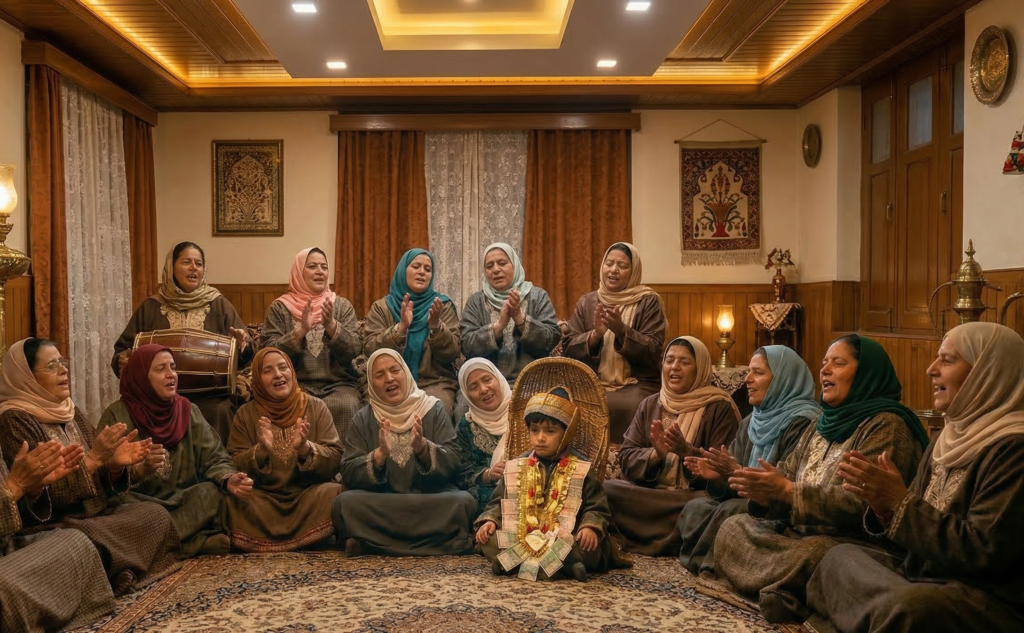
Despite these clinical shifts, the cultural memory of the grander celebrations remains vivid. Renowned Kashmiri poet and social activist Zareef Ahmad Zareef recalls that the ideal timing for Khatanhal was historically Harud, the autumn season. During this time, the crisp air and moderate climate were thought to aid healing, and the season coincided with the peak of the valley’s wedding festivities. Zareef reminisces about the soulful melodies that once filled the mohallas as the Naids worked, with women singing verses that celebrated the child’s entry into a new stage of religious life. These songs were not just music but a testament to the deep roots of the practice in the local culture, marking the moment a boy was recognized as a Musalman within his community.
One of the most picturesque traditions of the past involved the boy’s first outing after his recovery. This was treated as a joyous procession where the Khatan-haej-maharaz would ride on horseback, accompanied by his father or maternal uncle. Family members would walk alongside him, sometimes burning Mash’al lights to illuminate the path toward the local Masjid or Ziya’arat. Upon reaching the shrine, the Molvi would recite the Kalimat, marking the formal beginning of the boy’s spiritual journey. While the modern version of Khatanhal has become briefer and less ceremonial, the essence of the practice as a symbol of purity and devotion remains unshakable. It continues to be a poignant reminder of shared values, passing from one generation to the next as a vital link to the past and a commitment to the future of the community.
The views expressed in this article are solely those of the author and do not necessarily reflect the opinions or views of this Magazine. The author can be reached at [email protected]
Leave a Reply