True gender justice requires more than just changing laws; it requires a revision of conscience.
By Mushtaq Ul Haq Ahmad Sikander
The transition from token celebrations and one-sided empowerment toward a shared, reciprocal ethic of gender justice represents the most significant intellectual shift of our time. Every year, on the 8th of March, the world pauses to honor women, their achievements, and their endurance through ages of marginalization. Yet, beyond the customary tributes and corporate campaigns, International Women’s Day should provoke a deeper introspection into how gendered power structures have been manipulated by civilizational forces across time. The issue is not simply about celebrating empowerment; it is about confronting how gender as a social construct and a cultural narrative has been reinvented to serve shifting economic and political interests.
Human history bears witness to a recurring pattern: the relegation of women to the background of public life. Anthropologists often trace the roots of this inequality to prehistoric divisions of labor where men assumed roles demanding physical prowess, hunting and fighting, while women were assigned nurturing roles such as childbearing and household management. What began as a practical arrangement soon transformed into a moral hierarchy. Physical difference became a justification for systemic subordination. As societies evolved from tribalism to feudal and industrial structures, patriarchy consolidated itself through ideology rather than mere brute force. Honor and virtue were reinterpreted to keep women in their place. Ancient legal codes consistently privileged the male lineage and restricted female agency over property and voice. Even cultural institutions, despite occasional calls to protect women, often sanctified male dominance through ritualized obedience.
This combination of biology, power, and ideology created a system of injustice that persisted for millennia. The patriarch became the law-giver, and in this world, women’s labor, emotional, domestic, and reproductive became invisible. She nurtured and organized, yet her contribution was never quantified within systems of production. Modern economists continue to point out that gross domestic product omits the value of unpaid care work, without which societies would collapse. This labor, though foundational, remained unacknowledged, and a woman’s dependence on male earnings became both the cause and consequence of her bondage.
Male authority was further reinforced by notions of honor. In many traditional societies, a man’s reputation rested upon the perceived obedience of the women in his family. The female body became a vessel of community pride and a theater for moral policing. Any deviation from prescribed norms could be met with fierce reprisals. The paradox was that women’s dependence was portrayed as protection, and men’s dominance was glorified as responsibility. However, patriarchy is not a conspiracy of men but a system that imprisons both genders. It glorifies men as warriors but denies them emotional range; it exalts women as nurturers but denies them autonomy. Both pay a heavy price for the structure they inhabit.
The rise of capitalism and industrialization upended these traditional relations. As machines supplanted physical strength, the economic monopoly of men began to erode. Women entered factories and offices, but capitalism often rebranded this necessity as empowerment to suit its own ends. The new wage-earning woman symbolized progress, yet the reality was complex. The capitalist economy required cheap, disciplined labor, and women were perfect recruits. In this way, the system commodified female labor without necessarily liberating the female self, granting a salary but little true security. Communism offered a parallel narrative, promising to dissolve gender roles but often subsuming women’s individuality into collective industrial goals. Both ideologies shaped the emancipated woman as an economic unit rather than a fully realized human being.
While women have broken countless barriers in education and leadership, this progress coexists with enduring exploitation. More strikingly, the discourse around empowerment has produced new anxieties among men. The traditional provider role still weighs heavily on them, while societal expectations around masculinity remain rigid. Men are told to be successful and self-sacrificing but are rarely allowed to be uncertain or dependent. The feminist awakening has exposed the unequal emotional burdens men carry. In many cultures, a man’s labor outside the home is taken for granted just as a woman’s labor inside it once was. This has given rise to a crisis of masculinity. If equality means shared rights, it must also imply shared responsibilities. Why must men continue as sole providers while being criticized for embodying the very patriarchy that forces them into that role?
A half-baked liberation has occasionally reduced freedom to consumerist autonomy: the right to dress, travel, and work, but stripped of any ethical sense of reciprocity. Autonomy without duty can quickly mutate into alienation. When empowerment becomes selective, demanding male adaptation without corresponding female transformation, it risks creating resentment. One cannot insist that men abandon patriarchy while women retain its traditional protections. This requires rethinking contentious issues such as alimony and domestic violence laws. While these protections stem from historical necessity, they must be applied with a sense of gender-neutral justice to ensure that the law does not become a tool for new forms of partiality.
A mature feminism must embrace the principle of reciprocity. Equality cannot mean total sameness, but it must guarantee equal dignity and shared duty. Men must reimagine masculinity beyond power; protectiveness should give way to partnership, and authority to empathy. In households where both partners earn, both must share domestic chores and caregiving. Emotional labor should become a shared human responsibility. To achieve this, feminism must be self-critical, recognizing that empowerment does not end with demanding rights but continues into fulfilling obligations.
The invisibility of women’s unpaid work remains a profound injustice. If household tasks were monetized, they would constitute a significant share of global GDP. Recognition must precede reform. Progressive policies could include social security benefits or pension schemes for caregivers. Beyond policy, society must recalibrate its moral compass to understand that the person managing a home is performing a foundational economic function. Conversely, we must address the fact that men today are often victims of expectation. A man who chooses to be a homemaker is still stigmatized far more than a woman who chooses a career. The psychological toll of this conditioning is evident in high male suicide rates and emotional exhaustion. Genuine gender justice must empathize with men as well, recognizing that patriarchy dehumanizes everyone involved.
Our understanding of manhood and womanhood is shaped by cultural narratives. From the self-sacrificing figures of myth to the stoic warriors of epics, gender identities have been scripted through imagination. Modernity has begun rewriting these archetypes, but the residual power of cultural myths persists. The task is not to discard heritage but to reinterpret it through the lens of coexistence. True equality demands cooperation, a complementary partnership where every household and workplace moves from hierarchy to task-based collaboration.
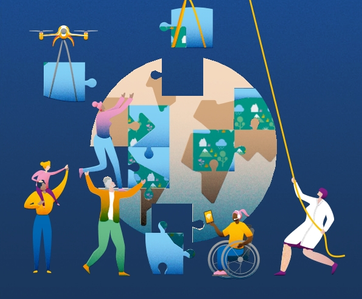
Education will play a decisive role. Boys and girls must be taught the values of empathy and shared labor from childhood. Corporate policies must ensure flexible parental leave for both genders, and media must abandon the tropes of the suffering woman and the stoic man. International Women’s Day should transcend tokenism and serve as a forum for solidarity where both genders examine how far they have come. It must celebrate the homemaker as much as the CEO and the man who cares as much as the woman who leads.
The challenge before modern civilization is to dismantle material inequalities while reshaping emotional education. Policy can legislate fairness, but only values can cultivate empathy. We must build families where chores are shared without resentment and legal systems where justice serves truth rather than stereotype. In this evolution, women must embrace agency with accountability, and men must embrace equality with humility. Feminism, rightly understood, is pro-human. It seeks to heal historical wounds, not open new ones. Revolution begins with the revision of conscience, redefining empowerment as shared responsibility. The future belongs not to a single gender in competition, but to those who live as partners in the shared story of human dignity.
The views expressed in this article are solely those of the author and do not necessarily reflect the opinions or views of this Magazine.
Leave a Reply