Agriculture Hailed as Economy’s ‘Lifeline’ as Govt Announces ‘Viksit Village’ for Every Constituency
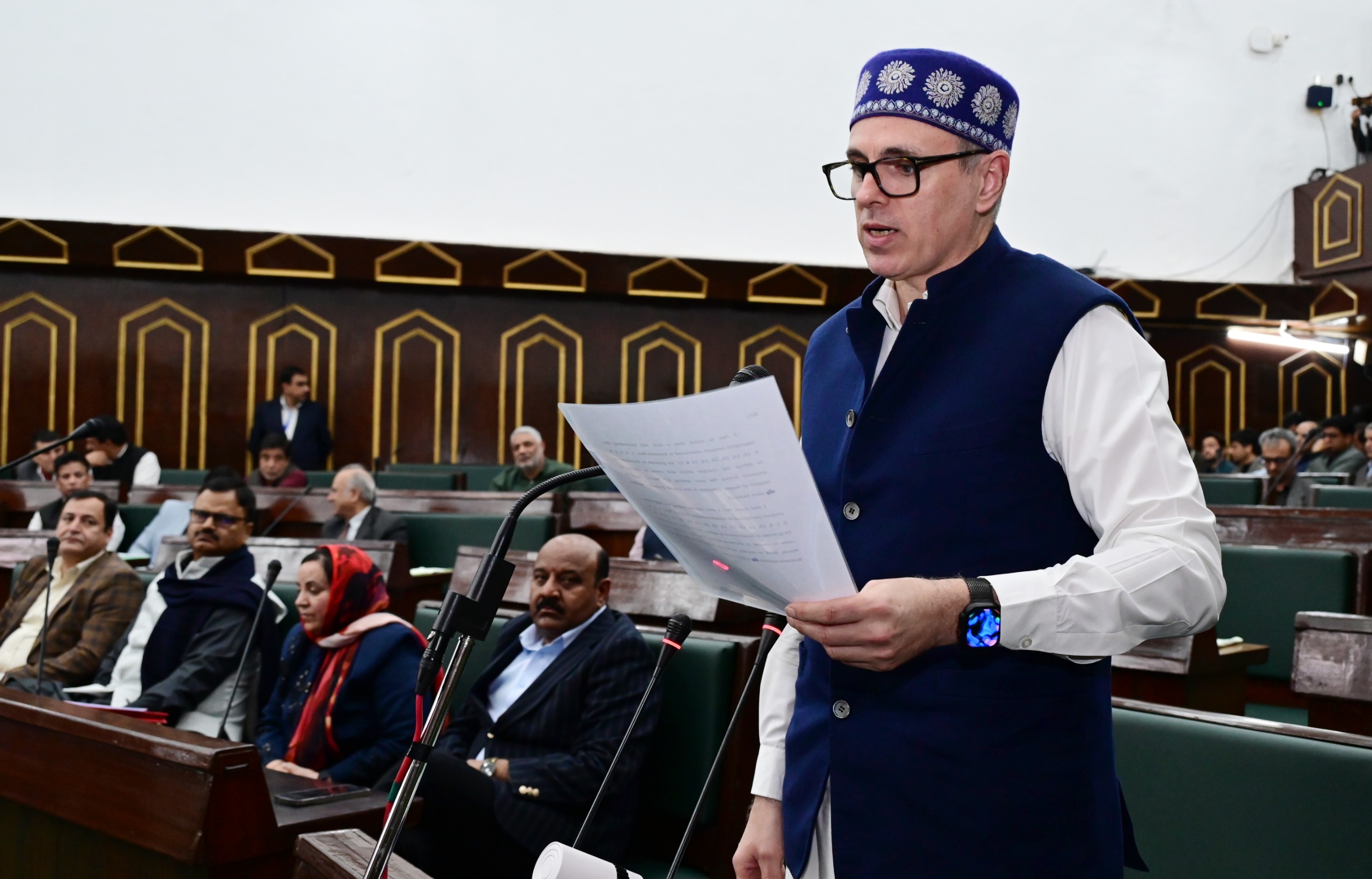
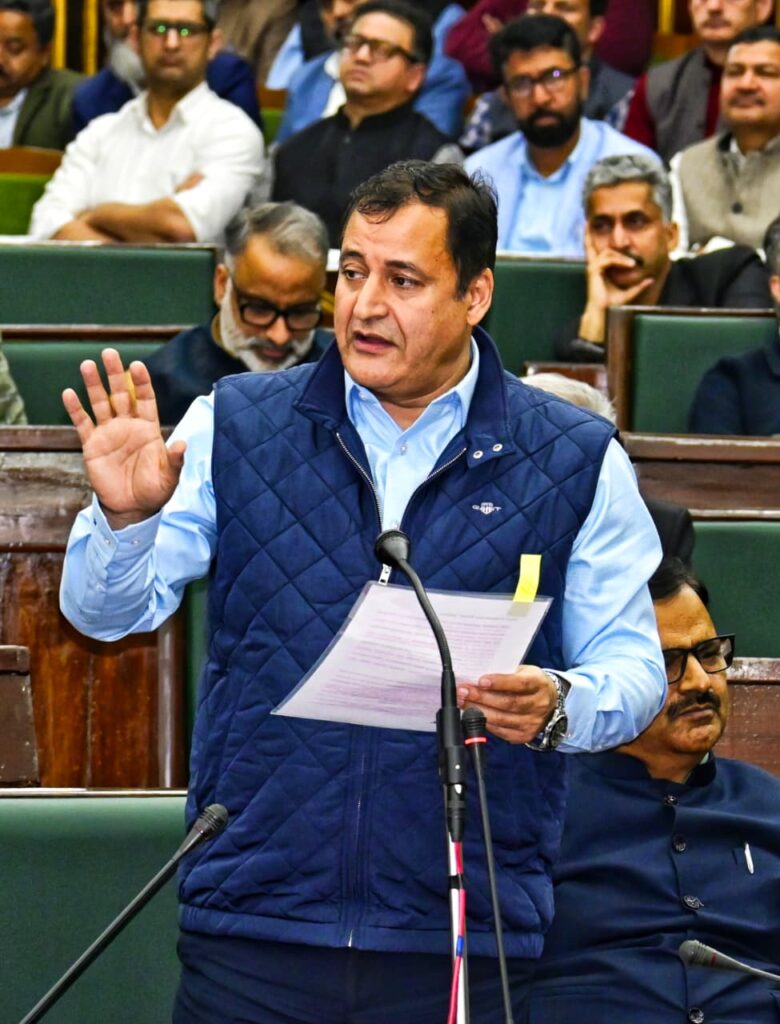
In a landmark session underscoring the pivotal role of the primary sector in the region’s future, the Jammu and Kashmir Legislative Assembly on Tuesday passed robust budgetary grants for the Agriculture Production, Rural Development, Cooperative, and Election Departments. Following day-long deliberations, the House approved the grants via voice vote, signalling a unified legislative push towards modernizing the rural economy. The session was headlined by Minister for Agriculture Production, Rural Development, Cooperatives, and Election, Javid Ahmed Dar, who termed agriculture the “lifeline of Jammu and Kashmir’s economy” and unveiled a sweeping vision for rural transformation.
The legislative approval unlocks a massive capital infusion into the rural and agrarian fabric of the Union Territory. The House passed grants totalling ₹4,56,569.56 lakh for Rural Development and Panchayati Raj, ₹2,42,386.40 lakh for Agriculture, and ₹1,16,040.98 lakh for Animal and Sheep Husbandry. Additionally, the Horticulture sector received ₹69,648.23 lakh, Fisheries secured ₹20,620.56 lakh, Cooperatives were allocated ₹26,611.42 lakh, and the Election Department received ₹36,126.71 lakh.
Winding up the discussion on Demands for Grants, Minister Javid Ahmed Dar presented a compelling economic case for the sector, emphasizing that these areas are central to sustained livelihoods and food security. Citing Ministry of Statistics data for 2024–25, Dar noted that agriculture and allied activities now contribute ₹41,273 crore to the economy, accounting for 19 percent of the SGDP. Breaking this down, he highlighted that horticulture contributes 41 percent, reaffirming J&K’s leadership in high-value fruit production, while livestock contributes 33 percent and core agriculture 25 percent. The Minister stated that the government has adopted a dual strategy: strengthening agricultural infrastructure while simultaneously empowering farmers through beneficiary-driven interventions.
He asserted that J&K has decisively moved away from subsistence-oriented practices towards a diversified, climate-smart, and technology-enabled model. The results of this strategic pivot are already visible, with the net cultivable area expanding by nearly 80,000 hectares—rising from 12.71 lakh to 13.50 lakh hectares—under initiatives like HADP and JKCIP. The government’s push towards vertical farming and protected cultivation has also yielded results, with the establishment of 332 hi-tech greenhouses and 848 polyhouses covering 30 hectares, boosting cropping intensity to 250 percent.
Specific crops have seen remarkable growth trajectories. The Minister noted that a strategic push has expanded the area under oilseeds from 1.4 lakh to 2.1 lakh hectares, nearly doubling production. This large-scale mustard cultivation catalyzed a 77 percent growth in apiculture, with honey production crossing 3,895 MTs. Similarly, mushroom cultivation rose by 31 percent to 2,742 MT. However, the crown jewel remains horticulture. To achieve the ambitious target of expanding High-Density plantations across 5,500 hectares, the government is developing robust rootstock banks and mother orchards. Fruit production has already increased to 26.92 lakh MT, with a commitment to reach 29.72 lakh MT by 2029–30.
Addressing critical infrastructure gaps, the Minister announced that 15,000 metric tonnes of new Controlled Atmosphere (CA) capacity will be added this financial year. To promote balanced regional development, the government will prioritize subsidies for CA storage in districts other than the saturated Pulwama and Shopian belt. To this end, 40 new CA stores with an estimated investment of ₹1,400 crore will be established, with the government providing ₹600 crore as subsidy.
Parallel to the green revolution, a white revolution is brewing in the livestock sector. The session revealed groundbreaking developments, including the import of 40 high genetic merit breeding bull calves from the United States—a first for the region—to revolutionize milk productivity. Additionally, 900 elite mutton-purpose sheep of the Texel and Dorper breeds have been imported from Australia. The UT aims to increase milk productivity from the current 30 lakh MT to 43 lakh MT by 2030, eyeing the status of a net milk exporter. To support this, the Minister proposed the establishment of seven new milk processing plants with a capacity of 1 lakh litres per day, backed by an investment of approximately ₹770 crore.
In a major policy announcement aimed at holistic rural upliftment, the Minister proposed the ‘Viksit Village Project’. Modelled on a modern village framework, the government will establish one Viksit Village in every Legislative Constituency, equipped with modern infrastructure, quality healthcare, and education. An outlay of ₹18,000 lakh has been proposed under UT CAPEX 2026-27 for this flagship initiative. Furthermore, the Minister highlighted the “PAWAN” scheme, a new initiative aimed at the collectivisation of wool farmers through a three-tier cooperative model to strengthen the value chain.
On the welfare front, the Minister provided a detailed report card on rural development. Under MGNREGA, 387.37 lakh person-days were generated in 2025-26. Housing security was a key focus, with 15,093 houses completed under PMAY-G this fiscal year alone, taking the cumulative total to 3.23 lakh. The government aims to construct another 50,000 houses with an outlay of ₹65,000 lakh. Economic empowerment of women also took centre stage with the ‘Lakhpati Didi’ initiative; 2.01 lakh women have already achieved this status, with a target to add another 1 lakh in the coming year.
The Minister also assured the House of the government’s commitment to risk mitigation. He announced the implementation of the Restructured Weather Based Insurance Scheme (RWBIS) with a total sum insured of ₹6,594.93 crore, covering crops like Apple, Saffron, Mango, and Litchi against climate volatility. Digital empowerment continues to redefine governance, with 1,300 operational ‘Kisan Khidmat Ghars’ and over 8 lakh farmers onboarded to digital platforms like Kisan Sathi.
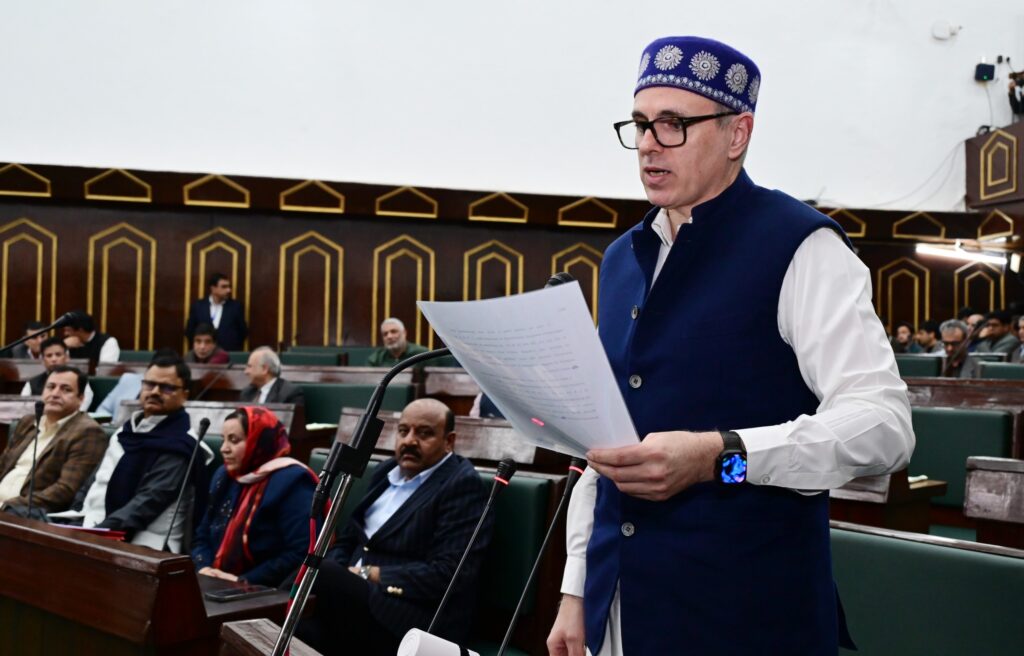
The discussion saw active participation from a wide array of legislators, including Sajjad Shaheen, Peerzada Farooq Ahmed Shah, Surjeet Singh Slathia, Waheed Ur Rehman Para, Sajad Gani Lone, and Mohammad Yousuf Tarigami, among others. Following the Minister’s comprehensive reply and assurances that specific issues raised by the members would be duly addressed, the MLAs withdrew their cut motions. “Public investment must translate into measurable prosperity at the grassroots level,” Minister Dar concluded, stating that the government is ushering in a new era of opportunity, productivity, and prosperity for farmers. The House subsequently passed the grants, setting the stage for a transformative financial year in Jammu and Kashmir’s rural sector.
Leave a Reply