We often obsess over price tags, yet we ignore the invisible ledger of our lives. Whether it’s the career you didn’t pursue or the health you’re trading for convenience, every “yes” is a “no” to something else.
By Mursaleen Bashir
Every choice buys something and costs something. The wiser we become at recognizing the hidden price, the richer our lives will be. This is the fundamental law of human existence, a silent ledger that tracks every minute we spend and every dollar we trade. In the world of economics, they call it opportunity cost. In the world of real life, we call it the “what if.” It is the ghost of the life we didn’t lead, the career we didn’t start, and the version of ourselves we didn’t become. While we often obsess over the price tag attached to a new car or a night out, we rarely account for the invisible cost: the value of the next best alternative that we walked away from.
Imagine standing at a crossroads. Taking the path to the left doesn’t just mean moving toward a specific destination; it means forever giving up the view on the right. This concept is far more than a dry academic theory. It is the invisible force shaping your bank account, your career trajectory, your physical health, and your ultimate happiness. The larger the opportunity cost, the more profound the ripple effect on your future. When we choose a short-term thrill over a long-term goal, we aren’t just spending; we are sacrificing.
A huge opportunity cost occurs when the option we discard carries massive long-term value. We see this most clearly in our finances. Consider the classic example of a luxury purchase. A high-end car brings immediate status and a rush of dopamine. However, if those same thousands of dollars were tucked away into an investment, they would harness the power of compound interest. Over twenty years, that car—which has long since depreciated into a pile of scrap metal—could have been a paid-off home or a secure retirement fund. The true cost of the car wasn’t just the sticker price; it was the financial freedom that was traded away to drive it.
This same logic applies to our professional lives. Stability is a comfortable bed, but it can also be a trap. Someone might stay in a low-paying, unchallenging job because it feels safe. They save themselves the stress of night school or the risk of a new venture. But the hidden cost is staggering. Over a lifetime, the gap between that stagnant salary and the potential earnings of a higher-level career can reach millions. Beyond the money, the cost includes the lost sense of fulfillment and the nagging question of what could have been. The “comfort” of the present is often purchased with the “growth” of the future.
Time is our only truly non-renewable resource, yet it is the one we treat with the most recklessness. We treat hours like they are infinite. When we spend an evening scrolling through social media or binge-watching a television series, we often tell ourselves it is “free” entertainment. But the opportunity cost of those four hours is the workout you didn’t do, the book you didn’t read, or the deep conversation you didn’t have with a loved one. These are silent losses. They don’t hurt today, but they accumulate. Years later, we look back and wonder why we aren’t more skilled, more fit, or more connected. The answer lies in the thousands of tiny choices where we traded our potential for a distraction.
Our physical and emotional well-being are perhaps the most sensitive to these trade-offs. Neglecting your health is a choice that buys convenience today but sells your vitality tomorrow. Skipping the gym or choosing processed food saves time and effort in the moment, but the eventual “price” comes in the form of medical bills, chronic pain, and a shortened life. Similarly, the person who consistently chooses the office over the dinner table may find themselves with a prestigious title but an empty house. The career rewards are tangible, but the emotional distance and the missed milestones of children are costs that no amount of money can ever repay.
In the realm of relationships, the stakes are even higher. We often rush into connections that look beautiful on the surface, blinded by flattery and the excitement of something new. But a relationship built on a shaky foundation or emotional manipulation has a devastating opportunity cost. It drains your mental energy and shatters your peace of mind. Falling for the wrong person too quickly doesn’t just result in a breakup; it steals months or years of your life that could have been spent in peace or with someone who truly shares your values. Taking the time to understand someone’s true intentions is an investment in your future sanity.
From an Islamic perspective, these boundaries are even more defined to help us avoid these steep costs. The guidance that relationships between men and women before marriage are not permissible is often viewed by the world as a restriction. In reality, it is a form of protection. It shields the heart from the “poison” of false promises and the deep regret that often follows temporary affection. By choosing to stay away from such paths, a person is investing in their own spiritual and emotional purity. The “cost” of waiting and maintaining boundaries is small compared to the “gain” of a halal, blessed, and stable future.
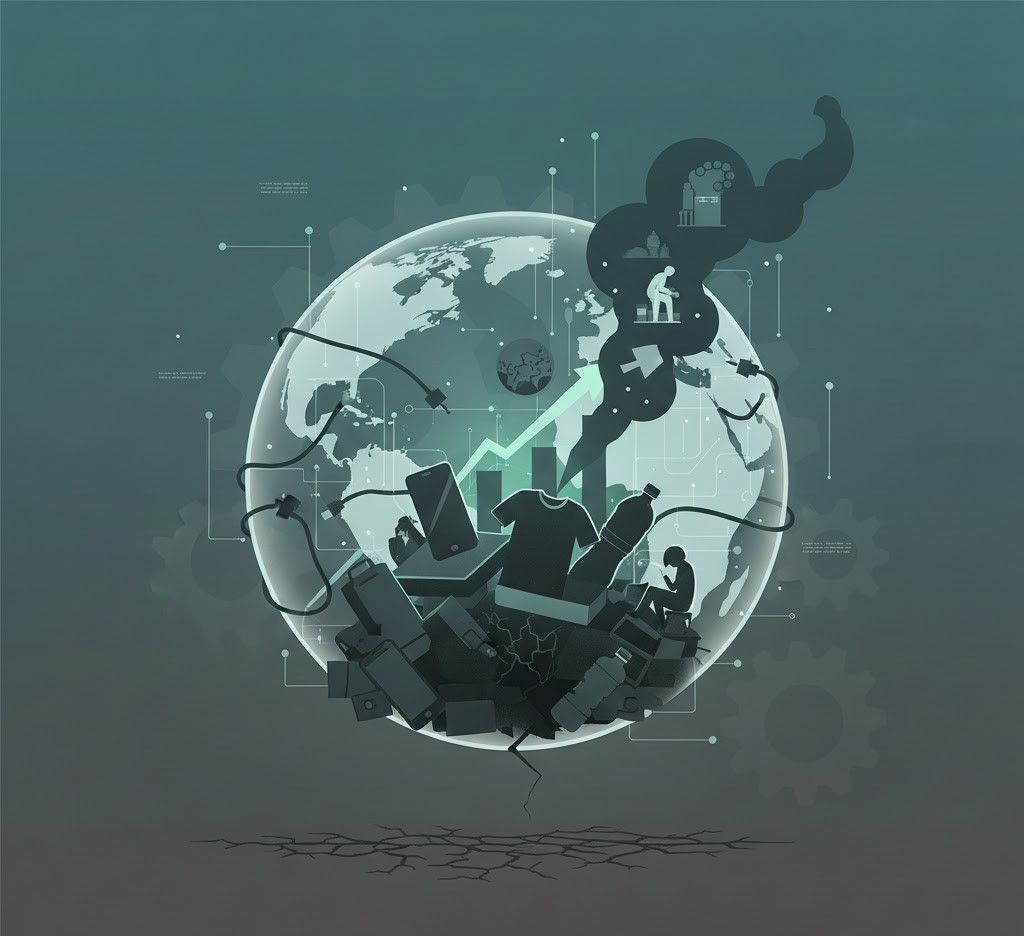
Why do we find it so hard to see these costs? Human nature is wired for the “now.” We are biologically programmed to favor instant gratification. We can see the shiny car, feel the taste of the junk food, or experience the immediate ease of staying on the couch. We cannot “see” the retirement fund twenty years away or the health problems ten years down the line. Because the alternative path exists only in the “what ifs,” it feels less real than the present moment. This short-term bias is the greatest enemy of a life well-lived.
Living wisely does not mean becoming a robot that never has fun or never takes a break. Life is meant to be experienced. It is about finding balance and being intentional. Sometimes, the opportunity cost of working an extra hour is a missed sunset or a laugh with a friend, and in those cases, the work is too expensive. The goal is to stop making choices by accident. When you realize that every “yes” to something trivial is a “no” to something important, you start to take back control of your life’s trajectory.
Every decision, no matter how small, carries a price tag. It may be a price paid in money, time, energy, or peace of mind. By pulling back the curtain on these hidden costs, we gain the power to choose paths that truly serve our best selves. We stop being controlled by our impulses and start being guided by our potential. The richer life isn’t the one with the most things; it’s the one where we traded our time and energy for the things that actually matter.
The views expressed in this article are solely those of the author and do not necessarily reflect the opinions or views of this Magazine. The author can be reached at [email protected]
Leave a Reply