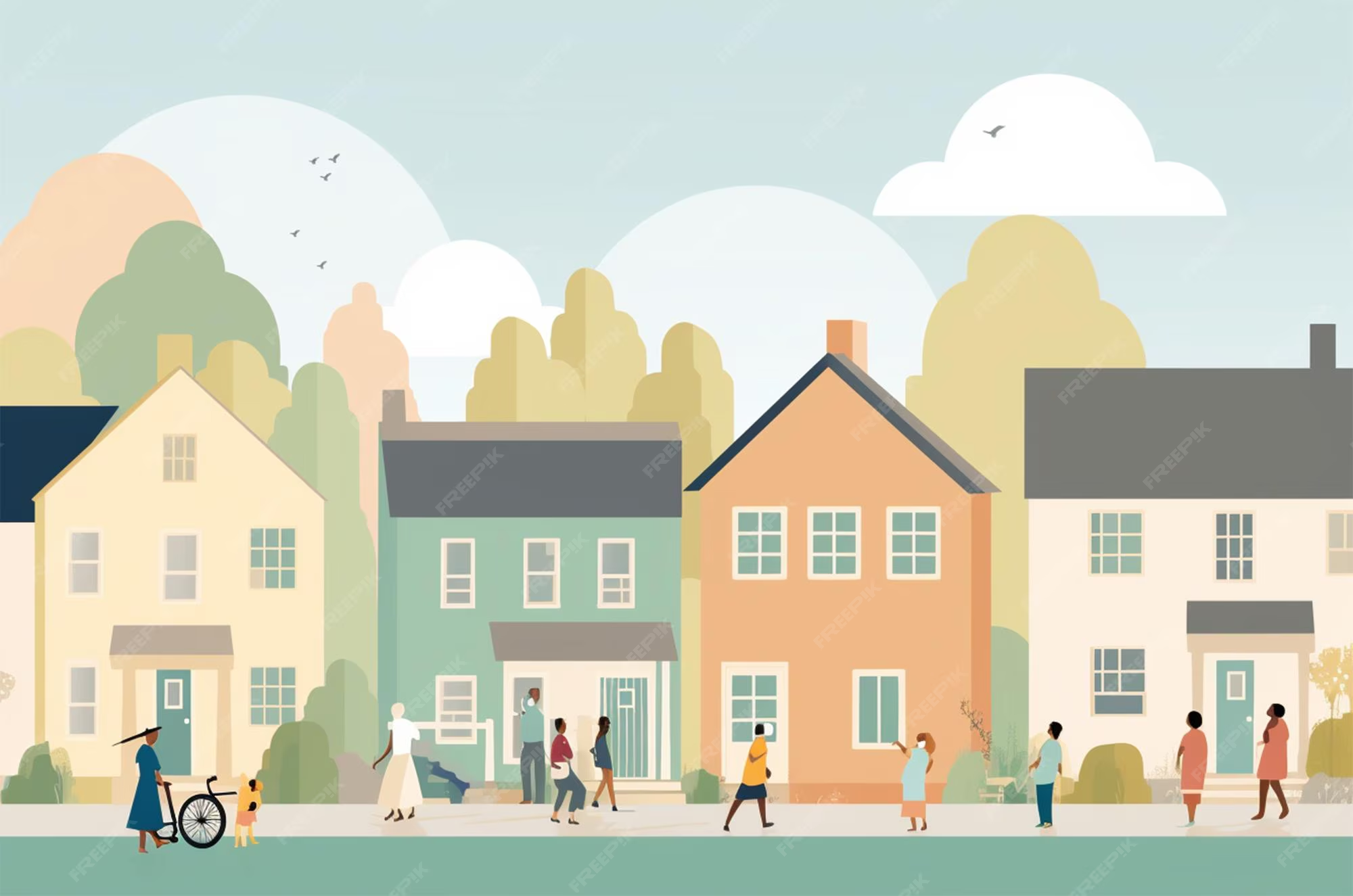
From shared meals to silent hallways, this is the story of how communities dissolved into strangers.
There was a time—close enough to remember, distant enough to ache for—when life unfolded in the open, stitched together by neighbours who lived not just beside one another but with one another. In the neighbourhoods we grew up in, boundaries existed only on paper. On the ground, there was no “mine” and “yours,” only “ours.” Joys travelled freely from home to home, and sorrows were never carried alone. If a child took their first wobbly steps, sweet fritters appeared at every doorstep before the news even had time to settle. When a cow calved, the warm colostrum cheese was shared with every family nearby. A student passing an exam wasn’t a private victory but a neighbourhood celebration. And when grief struck, it struck all of us: radios went silent, laughter was subdued, and festivities were postponed without ever being asked. Neighbours weren’t just people who lived next door; they were an extension of one’s own family. Their triumphs were ours, their wounds felt in our bones.
That world now feels like a blurred photograph forgotten in an attic drawer—familiar, cherished, and heartbreakingly out of reach. We live in a time that worships privacy. Secrecy has become a mark of modern elegance. “Don’t tell anyone,” “Keep it between us,” “It’s none of their business”—phrases once considered cold have become badges of maturity. We boast that we “mind our own business,” unaware that in building walls around our emotions, we’ve dismantled the very bridges that once made community life whole. Our elders’ wisdom—“a shared sorrow is half a sorrow, shared joy is double the joy”—wasn’t metaphor; it was a survival strategy. When a neighbour lost a job, it wasn’t gossip but a call to action. A sick person meant herbal remedies arriving in bowls, nights spent assisting, small donations slipped discreetly into palms, and prayers whispered collectively.
Today, inside our concrete apartments and digitally secured lives, we barely know the people separated from us by a single wall. We hear faint echoes of celebrations or grief but rarely step forward to ask what’s wrong or what’s right. There was a time when children carried plates of food to neighbours, delivering warmth with their small hands and wide smiles. Life was an intricate weave of generosity; meals, stories, and burdens all travelled freely. Now, food arrives through apps, and emotions are reduced to emojis that simulate connection without ever offering it. Our hands are full, but our hearts feel strangely hollow.
We’ve built new fences—emotional, digital, spiritual. We curate our lives into glossy social-media reels where sadness is cropped out and reality polished till it gleams. But no matter how strong the Wi-Fi signal, it cannot reach the human soul. Mental-health experts now warn of a new epidemic: loneliness. Anxiety, depression, and suicides surge not merely because of economics or stress but because so many people no longer feel seen. Connectivity has replaced community, and the gap between the two is turning into a chasm.
The older generation remembers a world where even marriages were discussed with neighbours—not out of nosiness but because relationships were too consequential to be crafted in isolation. Neighbours mediated fights, families stepped in during crises, and no one—neither an unemployed father nor a grieving widow nor a struggling student—suffered unnoticed. But that world cracked, slowly but surely. “Personal space” has mutated into personal exile. We mistake silence for dignity and emotional distance for strength. In guarding our privacy so fiercely, we’ve let our connections wither. Even grief has shrunk; funerals once attended by entire mohallas are now brief, muted gatherings. Joys too have become selective, sometimes secret. Engagements, pregnancies, promotions—good news is now shared with a chosen few, if at all. What was once called razdari—a thoughtful discretion—has transformed into a permanent shield, one that suffocates more than it protects.
We like to say we don’t depend on anyone. It sounds bold and self-reliant. But beneath it lies fear: fear of disappointment, of betrayal, of judgement. We no longer trust our communities to handle our truths gently. By retreating inward, we deny ourselves the most fundamental human experience—to be known and still be accepted. Children raised in such air-tight households inherit this emotional lockdown. They grow up believing vulnerability is dangerous, that victories should be muted, that pain should be hidden. The art of sharing—once considered a virtue—is now written off as oversharing. But when a society forgets how to share, it begins to forget how to care.
The question now isn’t whether we can go back to the old ways, but whether we even want to. The antidote to this slow poison of secrecy isn’t complicated. It begins with one small, intentional act of connection. A knock on the neighbour’s door. A shared cup of tea. A face-to-face conversation without screens flickering in the background. A willingness to admit “I’m not okay,” and the patience to listen when someone else says the same.
Communities aren’t built by policies or apps. They are built by small gestures repeated over time. The woman next door who cries quietly at night may not need advice—she may only need someone to ask if she’s alright. The elderly man on the bench might blossom at the chance to tell his story. The withdrawn child may be waiting for a little bit of kindness to coax them out of their shell.
This isn’t about discarding privacy. It’s about reclaiming humanity. Of course, some things are meant to remain private. But secrecy should protect dignity, not isolate people from one another. Used with compassion, it’s an ethical boundary; used excessively, it becomes emotional hoarding. And that hoarding costs us dearly.
As we rush forward into our hyper-private, hyper-digital futures, maybe it’s time to pause and remember what we abandoned in the race. Dusting off old values isn’t nostalgia—it’s survival. We need to normalise asking “How are you?” and genuinely meaning it. We need to celebrate each other’s joys again and mourn each other’s losses. We need to teach our children that openness is not a flaw but a form of courage. Screens can wait. People shouldn’t have to.
Secrecy thrives in silence—but connection thrives in a single brave moment. Maybe all that’s needed is one knock on one door.
The views expressed in this article are solely those of the author and do not necessarily reflect the opinions or views of this Magazine. The author can be reached at [email protected]
Leave a Reply