Parents across Kashmir say private schooling is slipping into a marketplace maze — with fee shocks, vendor tie-ups, and shifting curricula pushing families to the edge
By Javid Amin
Every year, as Kashmir wraps up its examination season, families brace for the familiar scramble of admissions, supplies, and new routines. But in recent years, what should be a hopeful transition has curdled into a season of dread. Parents across the Valley describe a rising sense of anxiety — unexpected fees, sudden curriculum shifts, compulsory vendor purchases, and a creeping fear that their child’s education could be held hostage over financial disputes.
What they see is not just a school system evolving; it is one drifting toward opaque commercialisation, leaving families to wonder whether classroom learning is being quietly replaced by a marketplace logic.
Curriculum Churn and the Confusion It Breeds
One of the biggest complaints this year comes from the rapid, unexplained changes in teaching and assessment patterns. Instead of sticking with the JKBOSE structure, several private schools have switched abruptly to “lead modules,” app-based systems, and hybrid evaluations. These changes often arrive with no parent consultation — or even basic clarity.
Parents describe a carousel of teaching models. “We were adjusting to JKBOSE, then the school shifted to an app module. Two months later, they added a hybrid pattern,” one Srinagar parent said.
Behind these shifts lies a suspicion: that schools are aligning themselves with third-party vendors, not educational needs. When a curriculum change comes packaged with new books, new technology, and new “prep modules,” parents see not innovation — but an invoice.
The fallout is immediate. Children struggle to adapt, parents scramble to decode new expectations, and families suddenly faced with extra costs wonder if the school will switch the pattern again next year.
When Results Become Leverage
Another increasingly common — and deeply distressing — practice is the withholding of exam results over unpaid “dues,” even when families have paid their regular fees. Parents are often told that results, transfer certificates, or promotion orders will not be issued until every last add-on charge is cleared.
Legally, the FFRC prohibits schools from charging unauthorized fees or withholding services not linked to tuition. Yet on the ground, parents report a very different reality.
“We paid everything except one unclear ‘annual activity’ charge. They didn’t give my child’s result,” a parent from Anantnag said.
The psychological impact is crushing. Children lose confidence. Parents feel punished. The academic journey becomes inseparable from the financial struggle.
Vendor-Linked Buying
Perhaps the most universally resented practice is the forced purchase of books and stationery from school-designated outlets. These outlets, often directly aligned with school management, sell materials at prices 20–30% higher than the market.
Parents no longer see this as a convenience; they see it as coercion. If they buy elsewhere, they fear their child will be denied certain materials or modules.
A Srinagar mother said, “The books at the school’s vendor cost Rs 6,500. The exact set was Rs 4,700 in the market. But we were told the vendor books are mandatory for the lead module.”
This system creates a captive customer base — one that schools and vendors can rely on every academic year.
Fee Hikes That Shock Household Budgets
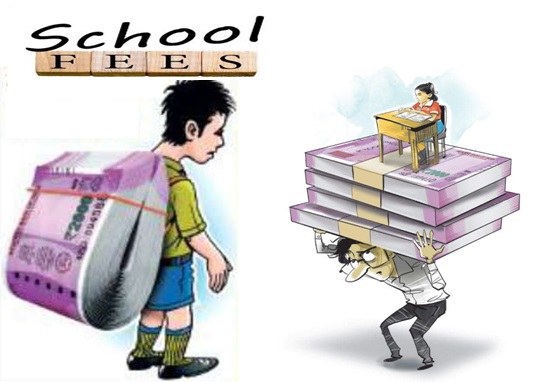
Unexpected fee hikes have become the flashpoint of parental anger. Many families say they find out about revised fee structures only after the new session begins — when it’s too late to switch schools or plan finances.
A 2024 parents’ group survey found that 78% of private schools in Kashmir had raised fees without prior consultation. The rationale — infrastructure, salaries, digital needs — is rarely backed by transparent disclosure.
For middle-income families, even a 10–20% increase destabilises carefully planned budgets. When hikes arrive alongside curriculum shifts and vendor-linked mandates, the combined pressure becomes overwhelming.
The Emotional Toll
Behind the numbers lies a quieter crisis unfolding inside Kashmiri homes. Parents describe feeling trapped, anxious, and powerless — unable to challenge schools, yet unable to absorb the rising costs.
Many skip other household expenses, borrow from relatives, or delay medical or home needs to meet fee demands. Children pick up on the tension. Some feel guilty. Others become demotivated or anxious about school.
When education becomes a source of stress rather than a path to empowerment, the damage extends far beyond finance.
A System Tilting Toward Commerce?
None of this is happening in isolation. The growth of private schools, rising operational costs, vendor relationships, and weak enforcement of regulations have all contributed to a system where business considerations overshadow pedagogical clarity.
When schools switch curricula based on vendor tie-ups, when supplies are linked to single outlets, when results are withheld over disputed charges — families begin to see a system that treats students as customers.
This perception has eroded trust, perhaps more than any fee hike ever could.
Regulation Exists — But Awareness Doesn’t
The FFRC’s rules are clear:
- No admission fees
- No unauthorised charges
- Clear breakdown of every fee head
- Receipts must reflect all components
- Schools must get fee structures approved
And yet, violations remain rampant because many parents do not know how to assert their rights — or whom to approach when schools cross the line.
What Parents Are Demanding Now
Parent groups across Kashmir are now calling for:
- Full fee transparency before the start of every academic year
- No mandatory vendor-linked purchases
- Stability in curricula
- A strict ban on withholding results
- Stronger FFRC monitoring and faster complaint redressal
These are not radical demands — they are the basic building blocks of a fair school system.
What Parents Can Practically Do
A realistic checklist for families navigating the coming session:
- Ask for a written fee breakdown — including annual charges and any module-related costs
- Check if the school has FFRC approval for its structure
- Document every communication: receipts, circulars, fee notices
- Question vendor-linked supply mandates
- Verify curriculum stability before buying books
- Report irregularities to FFRC; complaints can be filed confidentially
Parents, especially when united as associations, have more leverage than they realise.
The Way Forward: Rebalancing the System
For schools, the path is equally clear: communicate transparently, justify costs, offer curriculum stability, and avoid tying education to vendor deals. For regulators, the priority must be active monitoring, timely enforcement, and public disclosure of compliant and non-compliant schools.
And for parents, awareness is the most powerful tool. Fee structures, curriculum changes, vendor affiliations — all must be questioned, scrutinised, and documented.
Kashmir’s children deserve an education system that prioritises learning over logistics, stability over sudden shifts, and transparency over transactions. The current crisis is not inevitable — it is a product of choices. Better choices can still be made.
The views expressed in this article are solely those of the author and do not necessarily reflect the opinions or views of this Magazine.
Leave a Reply