In a valley of many faiths, Nund Reshi’s simple ethics became a unifying language of compassion and humility.
Kashmir is a land that remembers. Its rivers remember the footsteps of poets and kings; its mountains remember whispered stories of love, loss, and quiet resilience. And woven into that collective memory walks a saint who never asked for attention, never sought status, and never dressed spirituality in grandeur. Hazrat Sheikh Noor-ud-Din Wali (RA)—Nund Reshi to the Kashmiri tongue—arrived like morning mist: soft, nearly invisible, and transformative.
He lived in a time when the valley echoed with many spiritual voices—Islamic scholarship mingling with Shaivite philosophy and remnants of Buddhist thought. Across the region, Sufi traditions brought poetry, meditation, and metaphysics, yet Nund Reshi chose a different path. He turned not to royal courts or scholarly centers but toward the soil and the people who worked it. His Rishi Order was less a theological construct and more an ethical revolution: spirituality grounded in labour, tenderness, simplicity, and service.
His most quoted line—“Ann poshi teli yeli wan poshi,” food will last as long as forests last—feels almost prophetic today. It reads like an environmental slogan, but its force lies deeper. It is a moral instruction, a warning stitched to compassion: protect the forests, respect the rivers, live with balance. For Nund Reshi, greed wasn’t ambition; it was decay. Strength came from restraint, and power from humility.
He embodied this philosophy. He ate the food ordinary people ate, lived as they lived, and walked the valley as a companion, not a preacher. Luxury didn’t merely disinterest him; it contradicted his worldview. In a society stratified by kings and clergy, his rejection of privilege was its own form of resistance—quiet, human, and profoundly radical. Each shared meal, each gesture of healing, each moment of solidarity was a sermon delivered without words.
And then there was Lal Ded, the wandering mystic and poetess whose Shaivite verses still pulse through Kashmiri consciousness. She sang to Shiva; he spoke of Allah. Yet their encounter was not a clash but a convergence—a dialogue between two seekers who recognized the moral truth in each other’s journey. They did not attempt to convert or contradict, but to complete a conversation about compassion, simplicity, and spiritual honesty. Their exchange remains one of the valley’s most tender myths: proof that faith, at its best, is a bridge rather than a boundary.
Nund Reshi’s own voice comes to us through his shruks—brief, startlingly simple Kashmiri verses. They carry no ornate metaphors, no grand philosophical scaffolding. They speak of soil, ploughs, hunger, forgiveness, forests, and villages. Through them, he drew the light of the Qur’an and the teachings of Prophet Muhammad (peace be upon him) into a language the common folk not only understood but felt. His ethics were deeply Islamic, yet deeply Kashmiri—a fusion that made faith intimate and accessible.
He transformed revelation into reflection. The spiritual became practical, and divine wisdom found its place in the rhythm of everyday life. Each shruk is a distilled lesson: work honestly, share freely, forgive generously, stay grounded. They democratized the sacred, dissolving the distance between the saint and the shepherd, the scholar and the ploughman. His teachings held women in dignity, upheld honesty as the highest form of piety, and reminded the community that wealth measures no one’s virtue.
Poverty, he believed, was not shame; dishonesty was. Growing food was an act of worship. Sharing it was devotion. His version of holiness was not cloistered or dramatic—it was lived, cooked, cultivated, and carried in daily gestures.
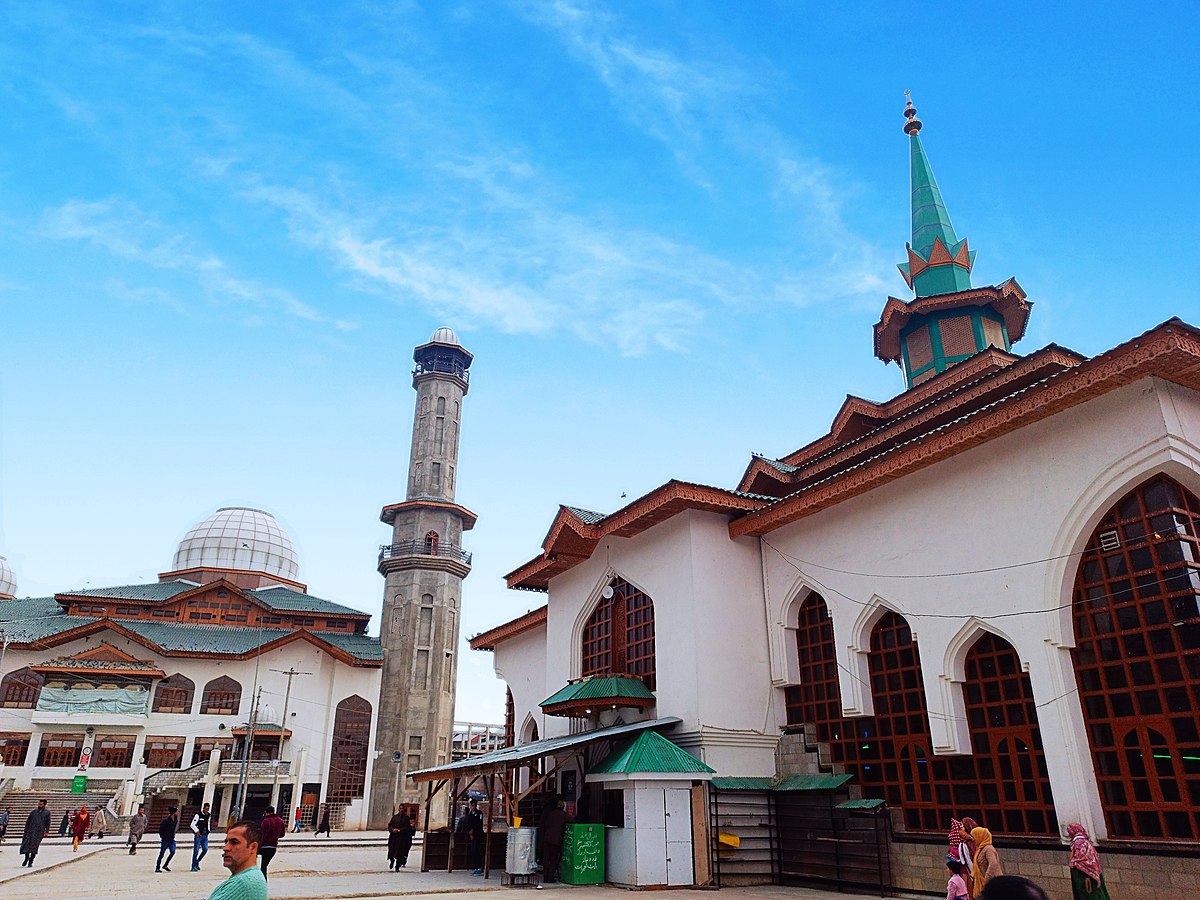
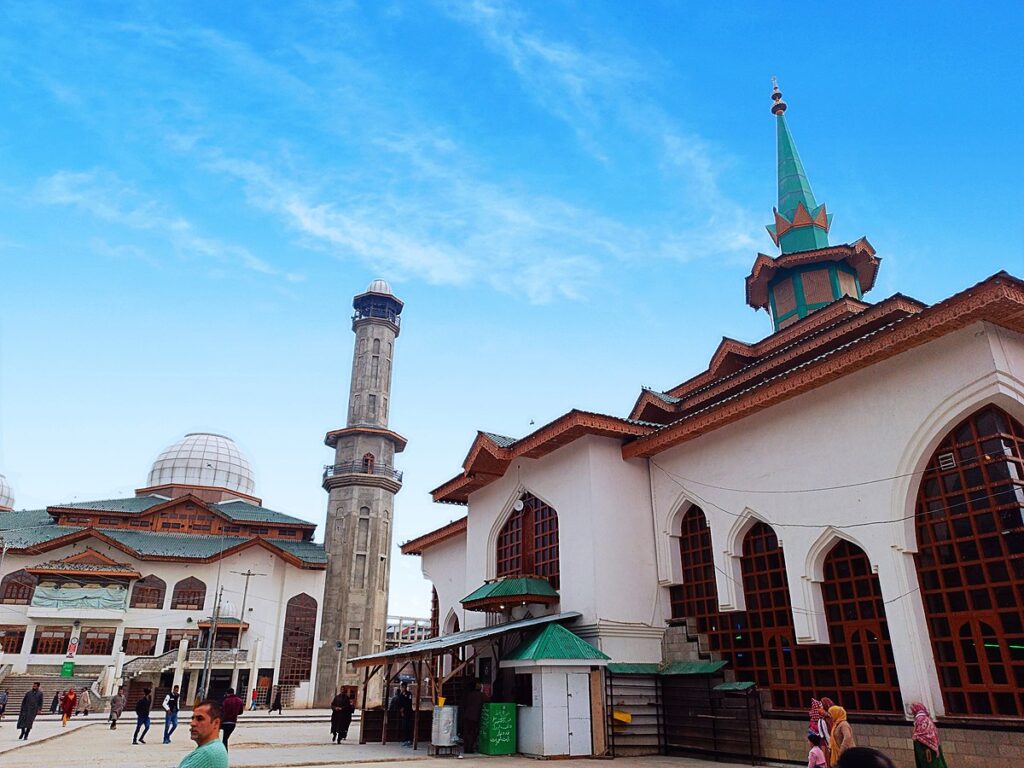
Centuries later, at Charar-e-Sharif, his presence still hums below the surface. Pilgrims arrive not out of fear, but affection. The shrine does not tower; it welcomes. The valley seems to breathe differently there—the wind quieter, the footsteps softer. Even in silence, the place speaks: simplicity is strength; compassion is sacred; divinity hides in everyday kindness. A loaf of bread shared, a field tended with care, a hand extended in forgiveness—these, he taught, are acts of worship.
In a world increasingly dominated by noise, haste, and hardened certainties, his whispers feel startlingly relevant. They remind us that faith is meant to soften the heart, not sharpen divisions; that the sacredness of life lies in the ordinary; that humanity remains the clearest measure of devotion. His teachings call Kashmir—and perhaps all of us—back to the fundamentals of Islamic ethics: mercy, honesty, humility, and service to people as service to God.
Empires have risen and fallen in the valley since his time. Boundaries have shifted, rulers have come and gone, and the landscape has endured seasons of beauty and distress. But the mist he arrived with has never quite lifted. It lingers—in the memory of the people, in the hush of the shrine, in the moral vocabulary of the land he helped shape.
If we listen closely, it still carries his quiet instruction: Be human first. Honour the earth. Honour each other. Love without measure.
Nund Reshi came like mist—and like mist, he remains, softening edges and reminding Kashmir that true courage and true faith lie not in power, but in compassion lived quietly, every single day.
The views expressed in this article are solely those of the author and do not necessarily reflect the opinions or views of this Magazine. The author can be reached at [email protected]
Leave a Reply