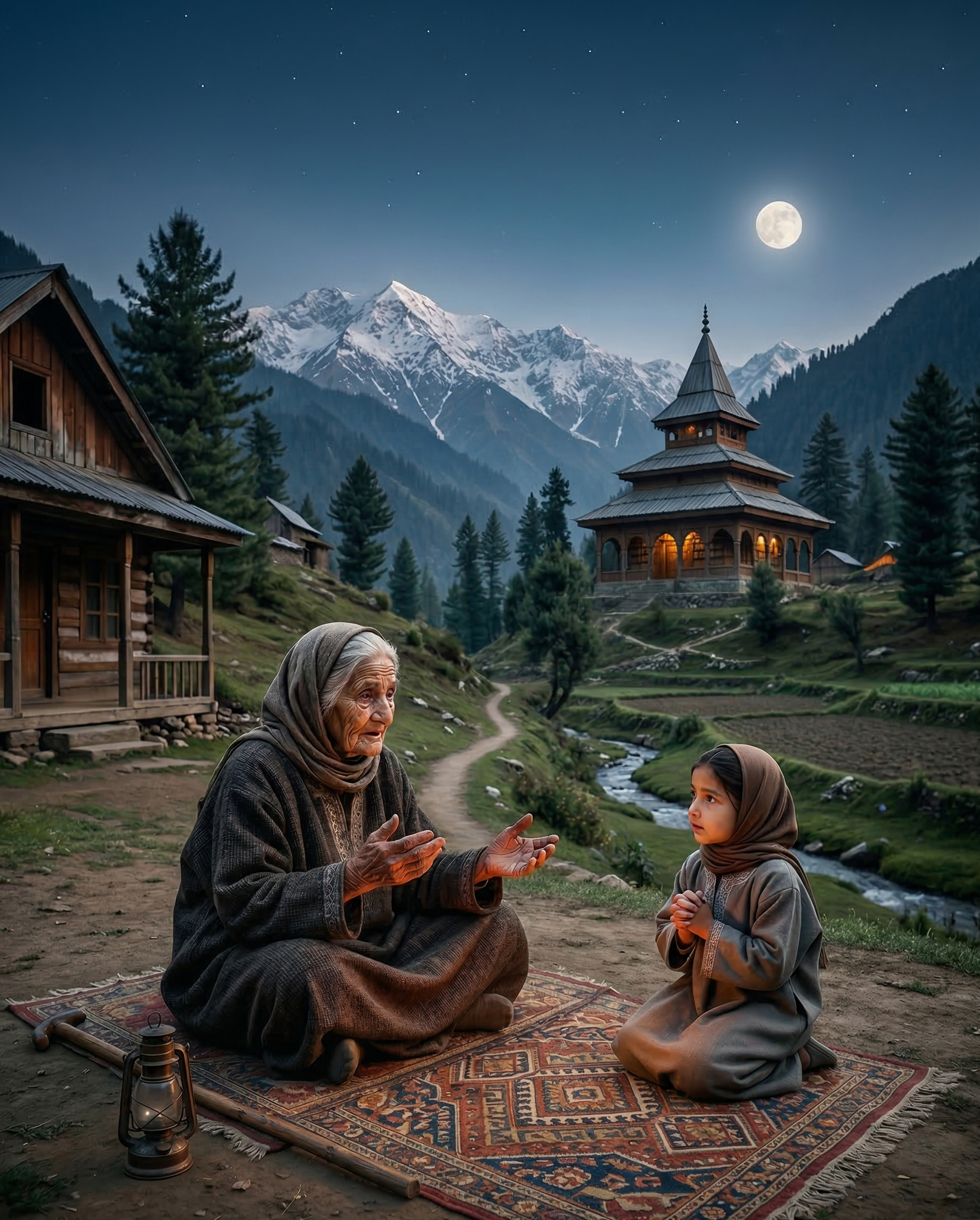
While formal histories often remain silent, the female Rishis of the Valley were more than mere disciples. They were seekers and transmitters of a localized faith that favored ethical living over institutional power.
By Khursheed Dar
The spiritual history of Kashmir is often told through the grand narratives of its male saints and the architecture of its towering shrines, yet this history remains fundamentally incomplete without the women mystics whose presence shaped the Valley’s ethical life. They were not mere disciples existing in the shadow of men, nor were they passive recipients of inherited wisdom. Instead, they were seekers, transmitters of insight, and custodians of a spirituality that resisted spectacle. These women translated the high-minded vision of the great poet-saint Lal Ded into lived practice, carrying faith into homes and villages where it took root quietly and endured through centuries of upheaval. Their contribution is felt rather than seen, precisely because words and public acclaim were never their chosen weapons. The broader context of these mystics is examined by Professor Mohammad Ishaq Khan in his work on Kashmir’s transition, where he explains how Sufism and the Rishi tradition localized Islam through ethical living rather than institutional dominance. This unique cultural environment allowed women to participate fully in spiritual life, even when formal historical records largely remained silent about them.
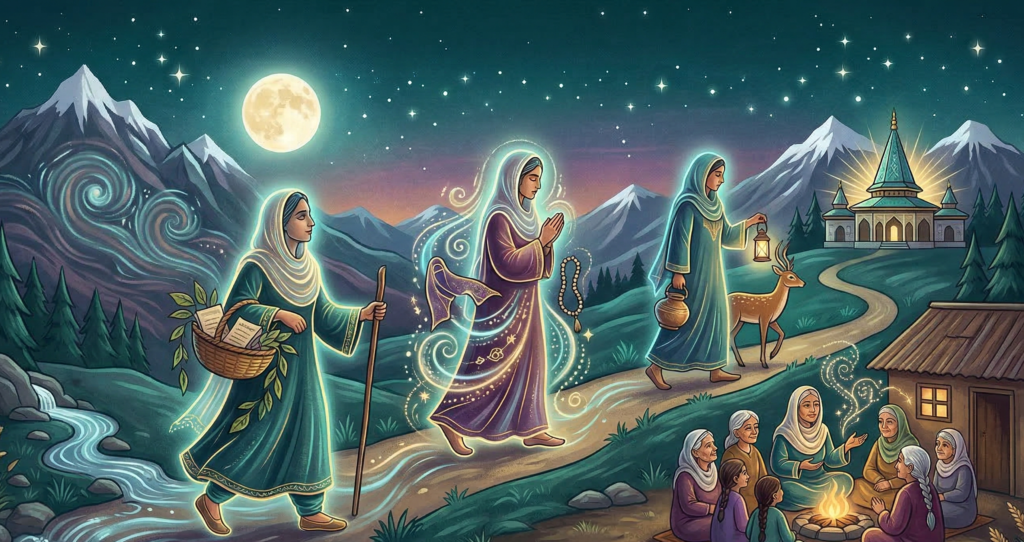
Among these lesser-known figures stands Sham Ded, a peasant girl who encountered the patron saint of Kashmir, Hazrat Sheikh Nuruddin Wali, not in a formal school of theology but in a conversation that was sharp, unsettling, and intensely alive. At Honchipura, the modern-day Hanjipora in central Kashmir, the Sheikh often tested the minds of those around him with taunts meant to shatter the ego. Sham Ded responded without fear. She did not bow in blind submission; she understood the essence of the challenge. When the Sheikh passed away, grief did not silence her; it gave her a new language. She composed an elegy that stands as the first of its kind in Kashmiri literature, a woman mourning a master while speaking with an authority entirely her own. The historian Hassan, in his biographical accounts of Kashmiri saints, records Sham Ded not as a historical footnote but as a primary bearer of tradition. She lived as the Rishis lived, surviving on wild vegetables, practicing extreme restraint, and finding an intimacy with the forests rather than the markets. She wandered from village to village, carrying the verses of her master like embers wrapped in cloth, speaking to women who cooked, labored, and aged unnoticed. In doing so, she ensured that the mysticism of the Rishi order did not freeze into rigid scripture but remained breath and memory. Even today, elderly Kashmiri women recite these verses not as literature but as counsel, proof that Sham Ded’s journey did not end at Poshkar, where she finally settled near the shrine of Hazrat Baba Latifuddin.
Then there was Shanga Bibi, also known as Yawan Matchie, a figure whose life unsettles neat ideas of purity and redemption. Once a courtesan, she was sent to test the resolve of Sheikh Nuruddin Wali, but she was instead met with words that turned the test inward. The Sheikh’s warning that she would eventually repent was not a public condemnation but an invitation to transformation. Her subsequent change was not a spectacle performed for approval; it was a slow, inward, and irrevocable shift in being. In seeking to test the saint, she found herself tested by her own conscience. Hassan records that she rose so fully in her devotion that she was eventually entrusted with service at her master’s tomb, an honor rarely granted to any follower and almost never to a woman. Her burial near the shrine at Chrar-e-Sharief is more than a symbolic gesture; it is a statement on the nature of Kashmiri sainthood, which once allowed for a redemption without residue. While the historian lingers on her physical beauty and its potential to unsettle others, that beauty is eventually reoriented into a discipline of the self. What fails outwardly awakens inwardly, and beauty is returned to its older meaning: not something that conquers others, but something that refines the soul.
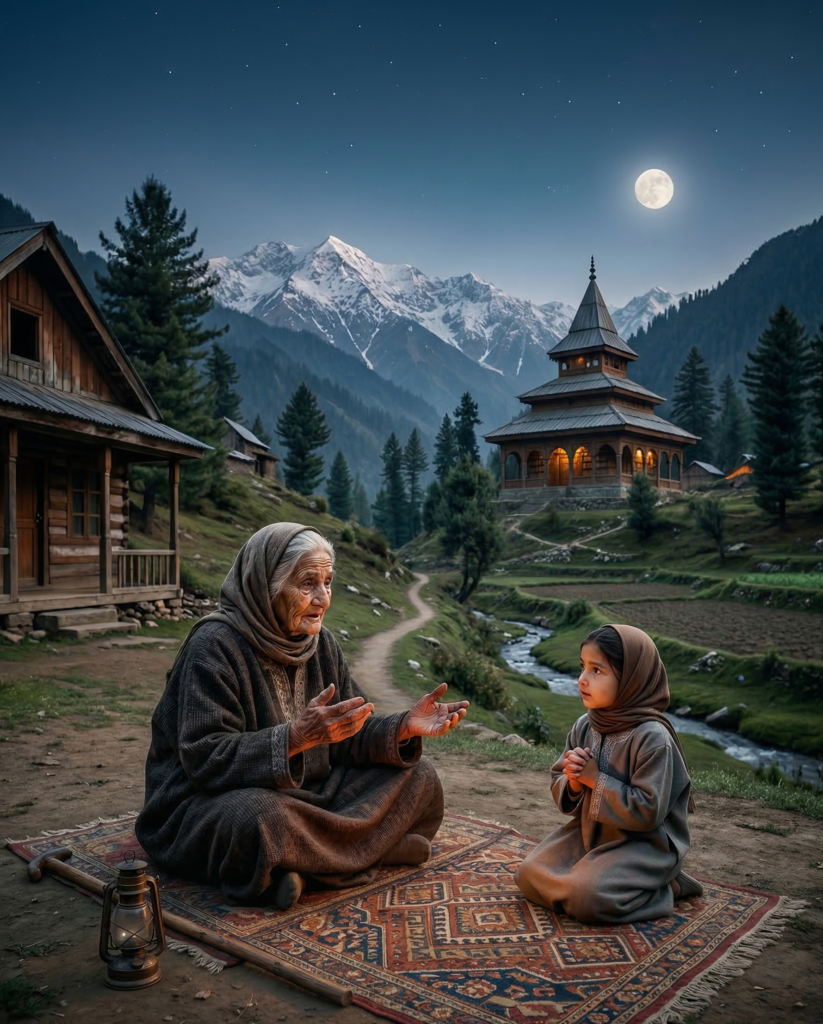
The sisters Behat Bibi and Dehat Bibi, both trained under the Sheikh, further complicate the assumption that spiritual knowledge in the Valley arrived only through Persian-speaking elites. Their recorded conversations with Hazrat Mir Syed Muhammad Hamadani reveal a confidence that dissolves the importance of gender altogether. When asked whether she was a daughter or a son, Dehat Bibi replied that in the process of annihilating the self, such categories vanish. This was not mere rhetoric; it was a lived philosophy that challenged the social hierarchies of the time. Their resting places at Zalsu stand as quiet witnesses to an era when courage and spiritual depth, rather than gender, determined a person’s worth. Other women like Sala Bibi and Deta Bibi appear only briefly in the records, almost reluctantly acknowledged by historians who admit how little survives about them beyond their devotion and asceticism. Yet this absence speaks volumes. It tells us that women were present everywhere in the spiritual landscape, even if they were recorded nowhere. Their spirituality was not meant to be archived; it was meant to be practiced. They gave away their meager possessions, fed the poor, and built moral bridges between belief and the realities of daily life.
Another significant mystic, Ganga Bibi, entered the path through a deliberate choice shaped by love and resolve. When her husband, Lanker Mal, joined the Rishi order under the influence of Baba Luda Mal, she followed him not as an echo, but as a companion on a grueling path. She fasted often yet never withdrew from the necessity of labor. For her, austerity did not mean an escape from the world. She worked with her hands, earned little, and gave away what she had without hesitation, turning her labor into mosques and bridges and her belief into something tangible that people could walk upon. When her husband withdrew into the deep forests of Dandakvan, Ganga Bibi remained, moving between the wilderness and her duties. She carried water for his ablutions across uneven paths through silence and fear, never announcing her sacrifice to the world. Local stories say wild animals retreated before her, and whether one views this as faith or folklore, the underlying meaning remains the same: a life lived in total harmony with the divine and the natural world.
Spiritual Landmarks of Kashmir’s Women Mystics
| Mystic Name | Primary Location | Significance of Site | District |
| Sham Ded | Poshkar (Nag) | Her final place of settlement near the shrine of Baba Latifuddin; known for her intellectual courage. | Budgam |
| Shanga Bibi | Chrar-e-Sharief | Buried within the inner sanctum of the Sheikh-ul-Alam shrine complex, a rare honor for a woman. | Budgam |
| Behat & Dehat Bibi | Zalsu Village | Their shared tomb stands as a monument to their roles as the only female khalifas (successors) of the Rishi order. | Budgam |
| Sham Ded (Birth) | Honchipura | The site of her transformative encounter and sharp intellectual exchange with Sheikh Nuruddin Wali. | Central Kashmir |
| Ganga Bibi | Dandakvan | The wilderness area where she balanced spiritual service with manual labor and asceticism. | Forest Reaches |
What these women mystics offer modern Kashmir is not merely a sense of historical pride but a warning. They remind us that when spirituality becomes loud and performative, faith loses its depth. When faith seeks worldly power and institutional dominance, it forgets the core of compassion. The women mystics practiced a religion that entered homes quietly, sat beside the hearth, and spoke in the language of courage rather than authority. Their legacy survives not in marble monuments but in the collective memory of the people, specifically in the voices of those who still remember what it meant to live lightly on the earth. Islam in the Valley did not arrive as an edict of power but as a form of ethical persuasion, shaped by lived example. These lesser-known women belong to this very process of cultural transition, where faith entered everyday life through restraint, compassion, and moral conduct. Their lives suggest that the truest history of a people is often found in the silence between the records, in the lives of those who sought no fame but left an indelible mark on the soul of the land.
The views expressed in this article are solely those of the author and do not necessarily reflect the opinions or views of this Magazine. The author can be reached at [email protected]
Leave a Reply