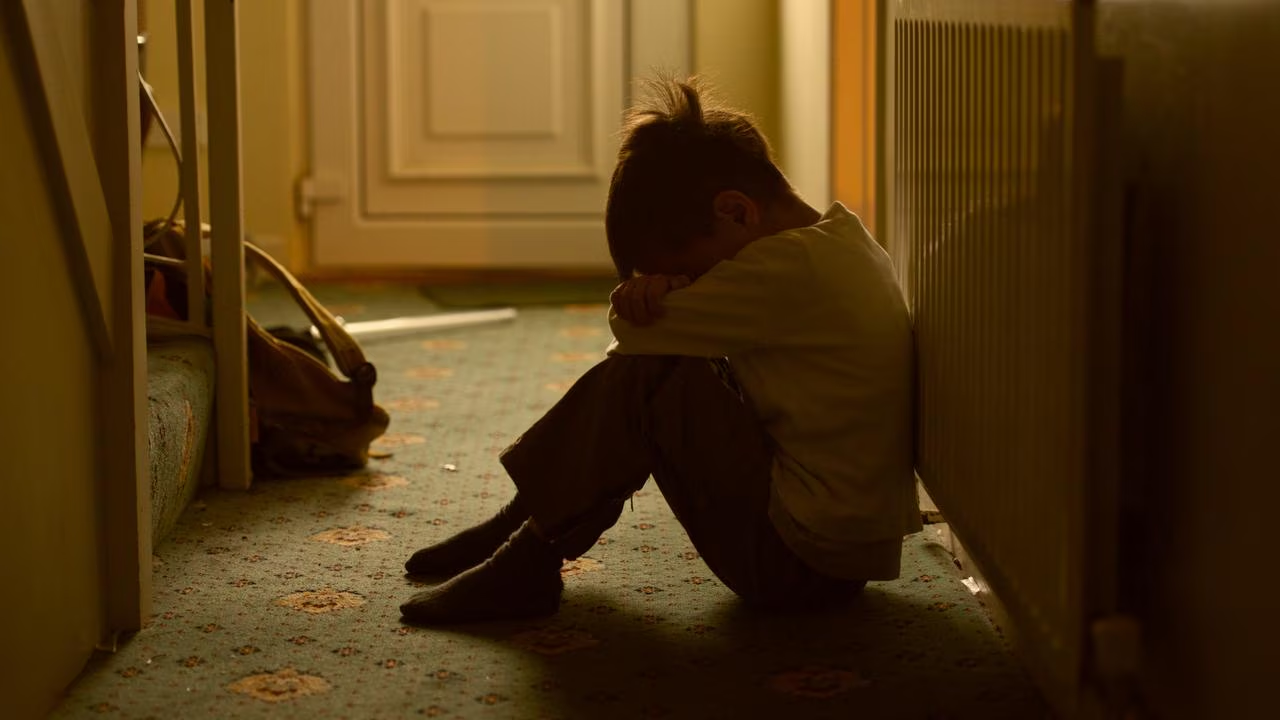
The internet has stripped humanity bare, making young children mature before their time and giving predators a key to the bedroom door. As we move through 2026, the intersection of material lust and digital accessibility has created a perfect storm for exploitation.
By Syed Mustafa Ahmad
The escalating crisis of child sexual abuse has shifted from a hidden societal shame to a global emergency that demands immediate, rigorous investigation. As we move through 2026, the data paints a harrowing picture of vulnerability and systemic failure. According to recent international monitoring reports, reported incidents of child sexual exploitation have seen a double-digit percentage increase over the last five years. This surge is not merely a byproduct of better reporting mechanisms but a reflection of a world where predatory behavior has become more sophisticated, digitalized, and pervasive. To address this, one must move beyond the surface-level discomfort and analyze the psychological, social, and technological engines driving this epidemic.
At its core, the problem is rooted in a fundamental misunderstanding of childhood development and the manipulation of natural curiosity. Children are born into the world with an inherent, innocent curiosity about their own bodies. Developmental psychologists have long noted that infants and toddlers explore their fingers, toes, and sensitive areas as a part of sensory discovery. However, this natural exploration is often where the first cracks in protection appear. Our society frequently reacts to this innocence with either shamed silence or hyper-sexualized suspicion. By failing to provide a neutral, educational framework for children to understand their own physical boundaries, we leave them unequipped to identify when those boundaries are being breached. When a child’s natural inquisitiveness is met with adult predatory intent, the result is a catastrophic destruction of the child’s future psychological health.
The psychological landscape of the abuser is equally complex and increasingly dangerous. We are witnessing a rise in “sexual addiction” frameworks, yet the term often fails to capture the predatory calculation involved in these crimes. The modern journalist must look at the power dynamics at play. Many perpetrators are not shadowy figures in alleyways but individuals occupying positions of trust and authority—educators, religious leaders, and even family members. They exploit their status to groom victims, using the child’s desire for success or approval as a weapon. In a world increasingly obsessed with material gain and competitive achievement, children are often pushed into high-pressure environments where the “gatekeepers” to their dreams turn out to be beasts in suits.
A primary catalyst for this deterioration is the persistent failure of home training and the “shame culture” surrounding sex education. For decades, the mere mention of sexual health has been treated as a taboo, leading to a “nervousness” among parents that serves only the predator. The data suggests that children who are taught the clear distinction between a “good touch” and a “bad touch” are significantly more likely to report an incident before it escalates. Yet, in many traditional households, we continue to prioritize a false sense of modesty over the actual safety of the child. We wait until the damage is irreparable before we find the courage to speak. This silence is a gift to the abuser. Breaking this cycle requires a radical shift in how we communicate within the family unit, turning the home into a fortress of open dialogue rather than a basement of secrets.

Simultaneously, the digital frontier has fundamentally altered the anatomy of abuse. The internet has effectively “stripped humanity bare,” as one might observe, removing the traditional barriers that once protected childhood innocence. In 2026, the prevalence of AI-generated illicit content and the ease of peer-to-peer grooming through encrypted platforms have outpaced current legislative efforts. While we once worried about what a child might see in a magazine, we now face a reality where every body part is enticed and commodified on a screen held in a child’s hand. This hyper-exposure forces a premature, distorted “maturity” upon young boys and girls, drawing them into a world of sexualized lust before they have the emotional cognitive ability to process it. The internet has not only made predators more accessible but has also desensitized the youth to the gravity of sexual interactions.
Beyond the home and the screen lies the broader failure of society. We have historically relegated sex to the “forbidden tree,” treating it as something illegitimate to even discuss. This cultural hypocrisy allows evils like child exploitation to flourish in the shadows of our “decadence.” We often mistake useless, restrictive traditions for protective culture, while ignoring the actual mechanisms of safety. Our legal systems have historically focused on savage punishment after the fact, rather than collective prevention. While justice is necessary, the journalist’s lens must focus on why the evil was allowed to flourish in the first place. We have punished the symptom while ignoring the societal rot that encourages the worship of lust and the objectification of the vulnerable.

Addressing this crisis requires a multi-pronged offensive. First, there is an urgent need for professional counseling for underage children in environments that are supportive rather than interrogatory. Monitoring is no longer a choice but a necessity; parents must be vigilant about digital footprints and school performance, as sudden changes in behavior are often the first red flags of trauma. However, monitoring must be paired with boldness. We must raise children who are empowered to say “no,” who understand their worth, and who are not easily swayed by the temptations or threats of those in power.
Furthermore, the legal framework must evolve to match the digital age. Laws must be swift and uncompromising, ensuring that those who exploit children face the full weight of justice regardless of their social or professional standing. But laws are only a secondary defense. The primary defense remains the home. If we can transform our households into spaces where children are seen, heard, and educated, we can prevent the “bitter results” we see in current statistics. The goal is not just to survive this era of rising abuse but to dismantle the structures that allow it to persist. By replacing panic with education and silence with advocacy, we can hope to reclaim the safety of childhood for the next generation.
The views expressed in this article are solely those of the author and do not necessarily reflect the opinions or views of this Magazine.
Leave a Reply