As the 40-day harsh winter period sets in, fresh precipitation clears the valley’s smog but snaps connectivity to border areas. While tourists flock to a snow-clad Gulmarg, locals turn to the trusted Kangri to brave the chill.
By Rayees Ahmad Kumar
The calendar has turned, and with it, the atmospheric mood of the Kashmir Valley has shifted dramatically. The forty-day period of harshest winter, known locally and affectionately as Chilla-e-Kalan, officially commenced on the intervening night of Saturday and Sunday. Its arrival was not silent; it announced itself with a marked change in weather conditions across the Valley, bringing a simultaneous mix of hardship and relief that defines life in this Himalayan region.
The onset of this formidable forty-day spell has coincided fortuitously with fresh precipitation. For weeks, the Valley had been gasping under prolonged dry conditions, resulting in a thick, choking blanket of fog and smog that deteriorated air quality to alarming levels. The arrival of Chilla-e-Kalan has acted as a natural cleanser. While the higher reaches of Kashmir welcomed a fresh blanket of white snow, the plains were washed by intermittent rainfall. Weather officials report that this precipitation has successfully dispersed the stagnant pollutants, leading to a tangible improvement in visibility and overall air quality, particularly in urban centers like Srinagar that were previously grappling with a grey, hazy suffocating gloom.
However, the beauty of the snow brings with it the inevitable logistical challenges of mountain life. Authorities have issued advisories urging citizens to remain cautious, particularly when traveling to snow-bound areas. Chilla-e-Kalan is notorious for its severe cold, freezing nights, and the potential for heavy snowfall that can sever connectivity in an instant.
The impact on the ground has been immediate. The famous Sadhna Top, a vital link connecting North Kashmir’s Kupwara with the remote Keran Valley, witnessed a staggering accumulation of nearly three feet of snow. Similarly, the Razdan Top received more than a foot of snow, forcing the official closure of the Bandipora-Gurez road. The connectivity map of the region has shrunk as the Srinagar-Ladakh highway, the historic Mughal Road, the Anantnag-Kishtwar link, and the Machil-Kupwara road were all closed following massive snowfall in the upper reaches. Meanwhile, the plains received rains that brought minimum temperatures above the season’s normal, providing a brief, albeit damp, respite for children and the elderly.
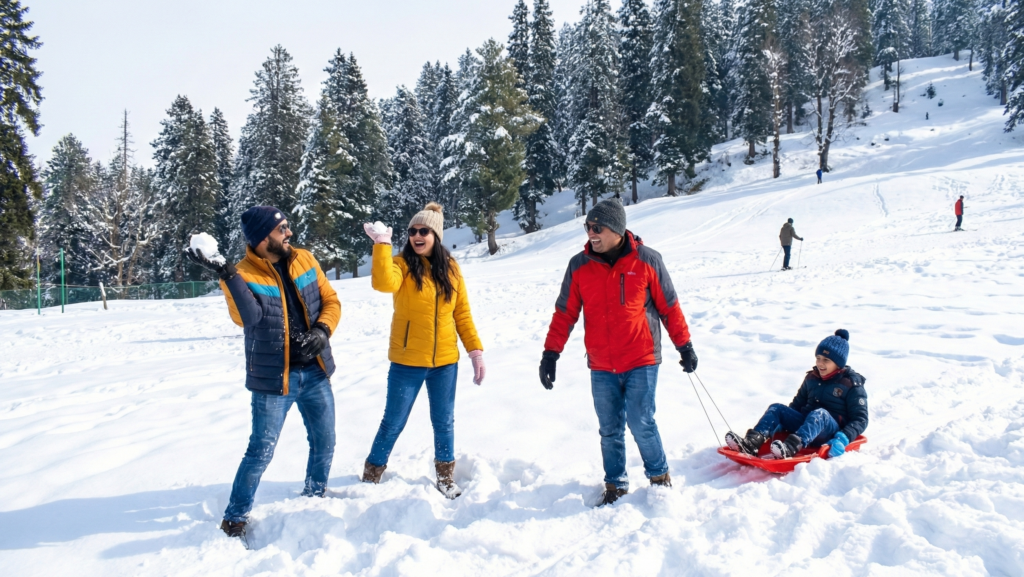
Yet, amidst the closures, there is jubilation in the tourism sector. The season’s first significant snowfall has transformed Gulmarg—Kashmir’s premier winter attraction—into a picture-perfect winter paradise. After a worrying dry spell, approximately ten inches of fresh snow blanketed the vast meadows overnight. The transformation has rekindled the spirit of tourism stakeholders and adventure operators, who were previously looking at the dry slopes with deep concern. Now, hope for a bountiful season has been restored. Tourists, delighted by the pristine white landscape and the renowned Kashmiri hospitality, have become de facto ambassadors, appealing to people nationwide to experience the charm and warmth of a Kashmiri winter.
Beyond the aesthetics and the economy, the snow carries a far more critical existential weight. It is pertinent to note that in Kashmir, snow is not just scenery; it is survival. Only a substantial snowfall during this period can rejuvenate and recharge the dried-up water resources—the rivers, rivulets, ponds, and lakes. This “White Gold” sustains life by ensuring the prospect of a healthy agricultural crop in the coming year. In the absence of adequate snowfall, the Valley faces the grim prospect of drinking water shortages during the peak summer season. Therefore, despite the immediate harshness, the locals view this precipitation as nothing short of a divine blessing.
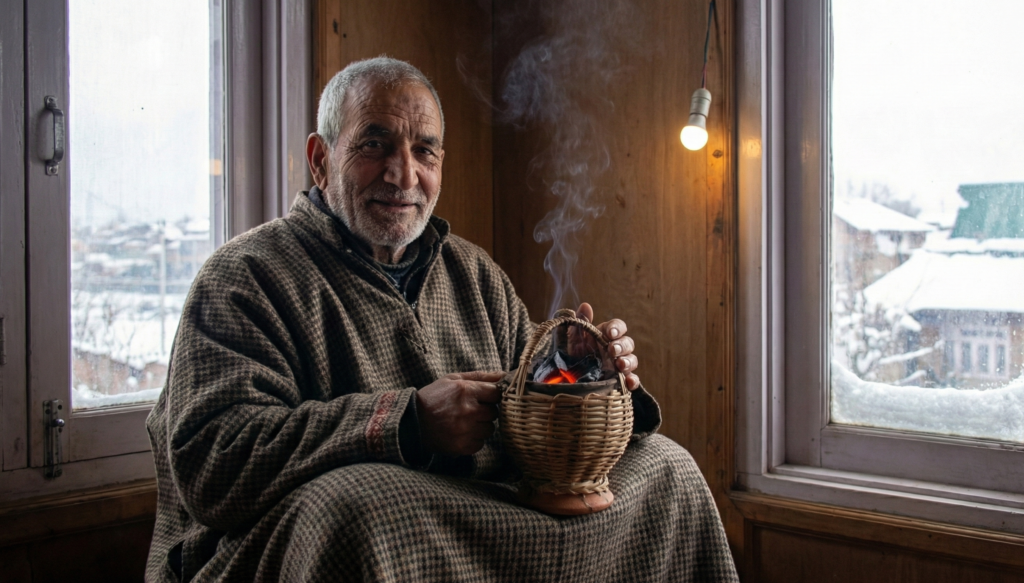
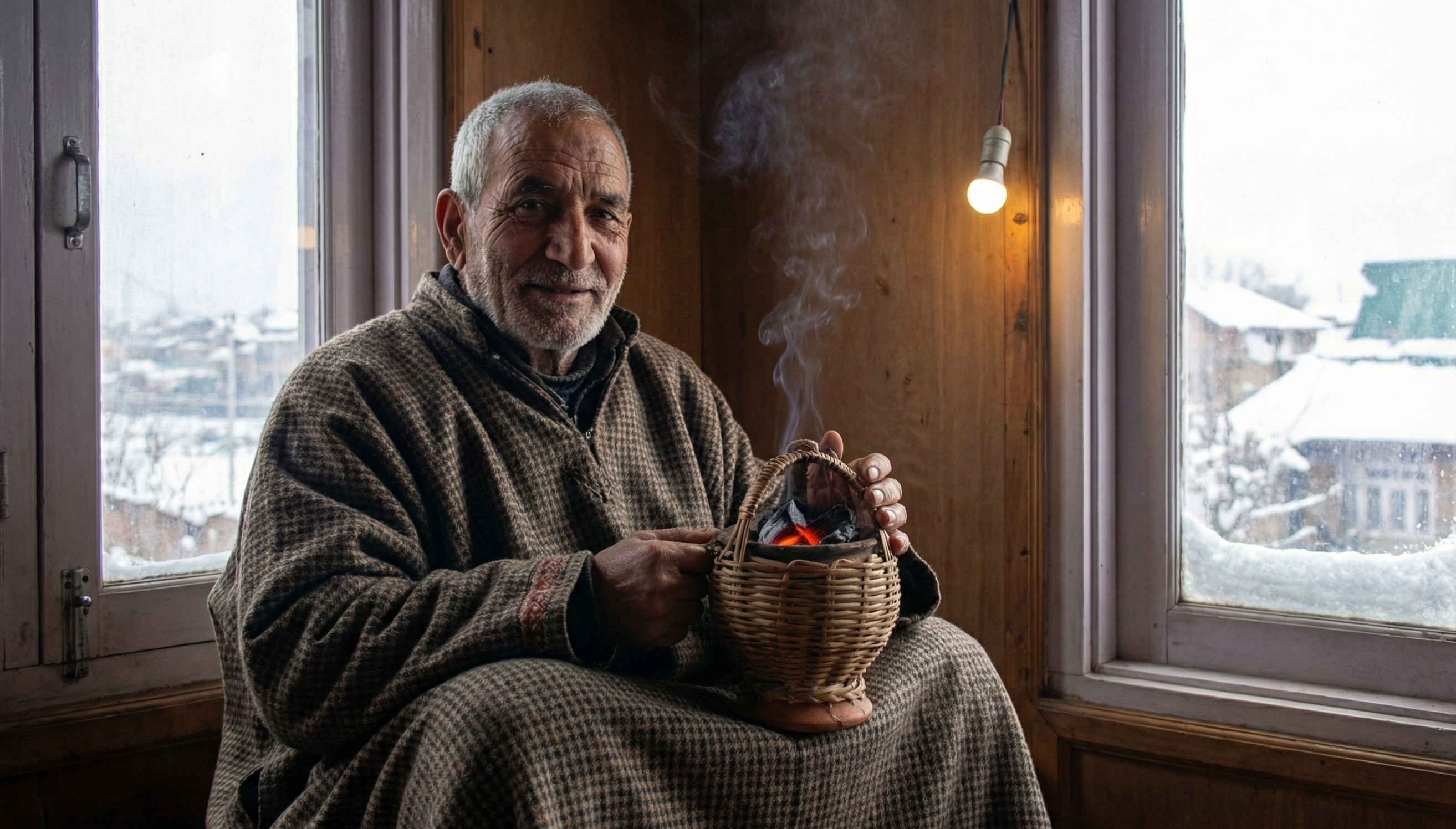
To navigate this freezing period—which will be followed by the milder twenty-day Chilla-e-Khurd and the ten-day Chilla-e-Bachha—Kashmiris turn to age-old traditions. When modern amenities like heaters, blowers, and air conditioners are rendered useless by frequent power cuts, the Kangri comes to the rescue. This portable heater, a clay vessel encased in a finely woven wicker framework by skilled artisans and filled with glowing embers, has kept the inhabitants of Kashmir warm for centuries.
This cultural resilience was on full display as the onset of Chilla-e-Kalan coincided with the celebration of ‘International Pheran Day’ on December 21st. The Pheran, a traditional knee-length woollen robe, is a unique marker of Kashmiri identity and the ultimate shield against the cold. In Srinagar’s commercial hub, Lal Chowk, scores of locals and tourists gathered to celebrate the day, donning their Pherans and carrying Kangris, reclaiming their heritage in the heart of the city.
However, as we settle into this freeze, a walk down memory lane reveals how much the winters have changed. Looking back at childhoods spent in the valley decades ago, one recalls parents strongly advising against venturing out without heavy headgear and mufflers. The winters of the eighties and nineties were far more unforgiving. It was not uncommon to witness four to five feet of snow accumulating even in the plains—a sight now rare. Children would gleefully play on slippery slopes, indulging in friendly battles with hard snowballs. Facing the winters in those days was a fascinating, visceral experience that seems to be slowly fading into history.
As Chilla-e-Kalan takes its throne for the next forty days, Kashmir braces itself—balancing the joy of replenished water sources and booming tourism against the biting cold and severed roads, all while wrapping itself in the warmth of the Pheran and the glow of the Kangri.
The views expressed in this article are solely those of the author and do not necessarily reflect the opinions or views of this Magazine.
Leave a Reply