Kashmir was once a society raised by a tribe, where wisdom flowed like a river from the old to the young. Today, that river is running dry. We explore the ‘strange loneliness’ of the modern Kashmiri home and the high price our children pay for the absence of their greatest guardians.
By Khursheed Dar
There are truths that arrive quietly, like snowflakes touching the ground before sunrise. You do not hear them falling; you only see the world changed when dawn finally breaks. The truth about the receding presence of elders in our children’s lives is like that—silent, but enormous. It settles on our homes, our society, and our collective future with a weight that we are only beginning to measure. In the rush of the twenty-first century, we have allowed a profound silence to grow where there once was a symphony of voices.
Sometimes, one might imagine Kashmir itself as an elder—a wise, stoic woman wrapped in a faded pheran, watching from the corner of a room as we rush through our modern errands. She keeps waiting for us to sit beside her, to hold her weathered hands, and to listen. But we rarely do. We are too busy navigating the digital currents of a globalized world to notice that the very anchors of our identity are drifting away.
Once, a Kashmiri childhood was raised by a tribe. It was a world populated by grandparents, neighbors, storytellers, carpet-weavers, and shepherds returning from highland pastures with pockets full of tales and the scent of wild thyme on their clothes. A child grew like the walnut tree: slowly, under the patient, enduring gaze of elders who understood the necessity of time. They knew how to wait for things to ripen. Today, the walnut trees still stand against the Himalayan horizon, but their guardians are missing. Their stories remain unheard, like abandoned manuscripts collecting dust in forgotten attics, their ink fading before the next generation can learn to read the script.
The modern era has birthed a strange, sophisticated loneliness. It builds houses but empties homes. Across the Valley, the symptoms are visible to anyone who pauses to look. You see it in the eyes of old parents whose children are scattered across different continents and time zones, linked only by the flickering, pixelated intimacy of a video call. In some villages, the only sound at dusk is the rhythmic creaking of iron gates as elders return from the masjid, walking slowly—not merely because of age, but because there is no one waiting for them behind the heavy wooden doors.
Meanwhile, our children are growing up hungry for gentleness in a world that feeds them noise. They are being raised in an environment that prizes speed over depth, and data over wisdom. They need someone who knows the old calendar of the seasons—someone who remembers what the world looked like before phones became mirrors and mirrors became prisons. They need a grandmother who knows that the first dusting of snow on Harmukh foretells the exact character of the winter to come. They need a grandfather who can name every bird that visits the paddy fields by its song alone. These elders are the only ones who can offer stories not found in the digital ocean, but etched in memory like a chronicled prayer.
Somewhere in the middle of this fading landscape lies the syncretic heart of Kashmir. It is an old, intricate interweaving of traditions where Muslim and Pandit grandmothers once hummed the wanwun in unison, where a neighbor might quote a couplet of Lalla Ded to explain a harvest, and where a Pandit hakeem might recite botanical lore that echoed the teachings of centuries. They all belonged to the same moral universe—a place where wisdom did not flow from a single lineage but from many rivers merging into one great lake. Our elders were the custodians of that syncretism. As they retreat into silence, a whole way of knowing, a specific Kashmiri epistemology, begins to disappear.
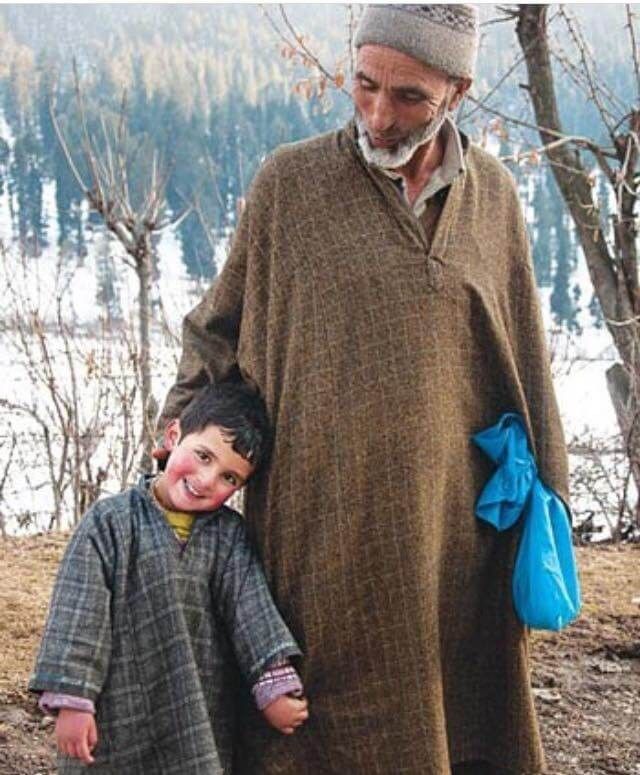
Kashmir has been rearranged by this quiet migration of the elderly out of the center of our lives. Their retreat is not loud or violent; it is the retreat of lamps dimming one by one in a long corridor. We do not realize how dark the hallway has become until the last lamp flickers out. The tragedy is not only that the elders are lonely; the deeper tragedy is that our children are growing up without the “emotional architecture” that once held this society together.
Elders were the first schools we attended, long before we ever donned a uniform or opened a textbook. They taught us the grammar of our culture: how to greet a guest with genuine warmth, how to sit with humility, how to respect the sanctity of silence, and how to hold grief without collapsing under its weight. Most importantly, they taught us how to wait for spring even when the winter felt endless. They taught us, without the blunt instruments of lecture or punishment, that life must be carried with both hands.
When elders disappear from the ecosystem of childhood, children grow up lopsided. They may be brilliant, technologically gifted, and globally competitive, but they risk becoming spiritually hollow. They might know how to swipe through screens faster than any adult, yet they lack the “literacy of the soul”—the ability to sit beside an aging person and listen to the slow, rhythmic music of their breathing. There is a profound education in understanding the trembling of hands that once held you, the intentional pauses between stories, and the way a voice softens when it traverses the terrain of the past.
Kashmir is a palimpsest of such memories. Every village has an old woman who once led the wanwun the night before a wedding, her voice a bridge between generations. Every mohalla has an old man who once carried his grandchild through apple orchards, pointing out the secrets of the earth. These elders still live among us, but they have become shadows—rarely invited into the fast-paced, high-pressure parenting models that have entered our homes like unannounced and demanding guests.
Modern parenting is obsessed with a clinical perfection: the highest grades, the most fluent English, the most prestigious school bags, and the most “secure” futures. But in this frantic pursuit, we have neglected a foundational truth: a child who grows up without elders grows up without emotional rivers. Those rivers once carried the fragments of story, sorrow, truth, and hope that allowed a child to navigate the complexities of adulthood.
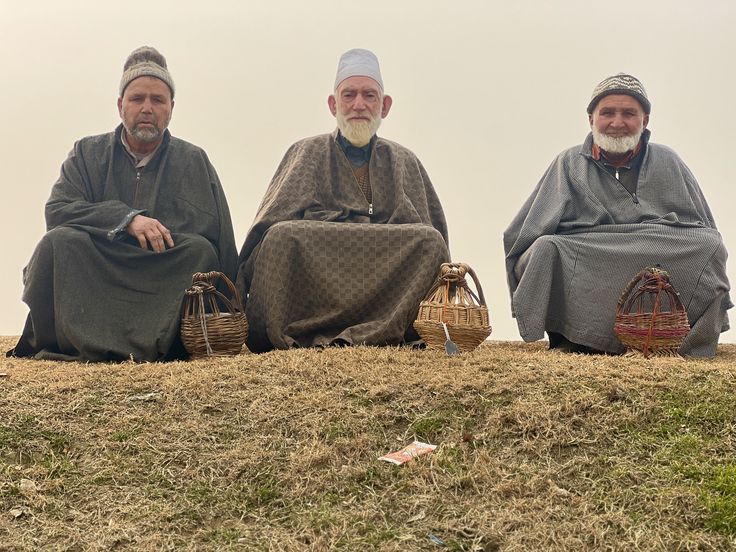
If one follows those rivers back to their source, one finds a landscape where the presence of the elderly is not just a cultural preference, but something sacred. Their absence is not merely a social “issue” to be debated in seminars; it is an open wound in our social fabric. We need to return, gently and deliberately, to that old rhythm where elders were not seen as inconveniences or liabilities, but as anchors. Their arthritic hands still know how to cradle the confusion of a child. Their fading eyesight still recognizes the contours of innocence better than our own distracted vision ever could. Their stories still breathe, waiting for an audience.
What they require from us is remarkably little. They do not ask for grand gestures, only a place in the living room, a cup of nun chai shared without the constant hovering of a smartphone, and a conversation that is allowed to drift from the present into the past. This weaving of continuity is what sustains the well-being of our children.
By restoring the rightful place of elders in our homes and our imaginations, we allow them to be the caretakers once again—the keepers of memory and the living libraries of experience. Perhaps, when a child finally sits beside an elder again, the old woman Kashmir will smile from her corner, her shawl wrapped tightly against the mountain chill, whispering, “At last, you have remembered.”
The views expressed in this article are solely those of the author and do not necessarily reflect the opinions or views of this Magazine. The author can be reached at [email protected]
Leave a Reply