Journey back to a time when Sundays were for ghost stories, business was done with a handful of rice, and life moved at the gentle pace of Raheem Kak’s walking stick. A heartwarming ode to the simplicity we’ve lost.
In the quiet shadows of the hills, where the morning mist often lingered longer than the night itself, there lived a man who became a legend in our small world. His name was Raheem Kak. To an outsider, he might have appeared as just an old man herding animals through the open fields and orchards, but to us, the children of the neighborhood, he was the keeper of magic, history, and humor. He did not live in a world of rushing clocks and digital screens; he lived in a time when days were measured by the movement of the sun and the length of shadows. For us, the week dragged on slowly just so we could reach Sunday, the day we could run to the fields to find him. Sundays were never dull when Raheem Kak was around. He was a storyteller of the highest order, a man who could turn a dull afternoon into an adventure filled with myths, past glories, and the occasional shiver of a ghost story.
He was sharp, both in his tongue and his mind. Despite his rustic appearance, his calculations were quick, and his wit was quicker. He had a favorite saying that he would often throw at us when we tried to act smarter than we were: “Ungji tull kam trakh.” It was his way of telling us to be precise, to pay attention, and to keep our wits about us. His nature was a mix of peace and playfulness, a gentle soul who knew how to command the attention of a dozen rowdy children. I remember one specific afternoon that still plays in my mind like a film scene. We were sitting around him on the grassy bund of the Zaingair canal, listening with rapt attention as he spun another one of his tales. The water flowed quietly beside us, and the air was still. Suddenly, a snake slithered out from the grass near where he sat.
Panic usually strikes instantly, but Raheem Kak turned the moment into theater. He shouted at the top of his voice, “The Jinn has become a snake!” and then, to our absolute horror, he collapsed onto the ground, pretending to be dead. We were children, innocent and easily frightened. We didn’t wait to check his pulse; we panicked. I remember running away, tears streaming down my face, terrified that our beloved storyteller had been taken by a spirit. Later, we found out he had stood up, dusted off his clothes, and laughed heartily, telling people he had “eaten the snake alive.” It was a joke, a dark bit of humor, but at the time, I was so scared that I rushed home screaming for my mother. When I told her the story, breathless and shaking, she locked me inside the compound for my own safety. It felt like a nightmare then, but looking back, it was just the wild, raw humor of a man who lived life without fear.
But Raheem Kak was more than just a herder and a prankster. In the evenings, after returning from the fields, he transformed into a businessman of the most humble kind. He sold fried potatoes, a delicacy he called “Till Munj.” The smell of those frying potatoes would waft through the village air, drawing us in. In those days, money was not the only way to buy things. His business worked on the ancient system of barter. We didn’t always have coins, but we had paddy, rice, or eggs from our homes. We would run to him with a handful of rice or an egg, and in exchange, he would hand over the hot, salty fried potatoes. It was a transaction built on trust and simplicity. Those days were defined by love, respect, and a deep sense of brotherhood that seems to have vanished from the modern world. Those memories shine in my mind like the sun blazing among the stars, bright and impossible to ignore.
The simplicity I saw in elders like Raheem Kak is something I desperately miss in today’s world. Now, everything feels artificial. The love people claim to have, the promises they make, the relationships they build—even friendship—often feel fake. The honesty and warmth that were the bedrock of the old days have faded away, replaced by a cold, transactional way of living. I often find myself longing for that era of true peace, when every morning began not with the alarm of a phone, but with the soft, melodious sound of prayers and the recitation of Durood Sharif echoing from the mosque loudspeakers. The air itself felt sacred then, filled with a calm faith that settled over the village like a protective blanket. That gentle beginning to the day was like a healing medicine. It gave us the strength to face the hours ahead. Life moved slowly and gracefully. Each day felt full of meaning, and each year carried the weight of timeless contentment.
Today, when I look around, I see a world that is fast, restless, and far removed from that tranquility. The contrast is sharpest when I think of the holy month of Ramadan. In the past, Ramadan was the true healing therapy of the year. Elders like Raheem Kak carried golden wisdom in their hearts, narrating traditions and guiding us to recite verses from the Holy Quran. The evenings were magical, especially as the time for breaking the fast approached. We children would gather on the small bridge of Lone Mohalla. It was our daily ritual to watch the groups of crows and other birds flying back to their nests. It was a simple sight, but it was part of the rhythm of our lives. When the call for iftar finally echoed across the rooftops, we sat together, sharing our food and laughing without a single worry in our heads. We exchanged our caps, shared dates, and ate our favorite sweet dish of mixed sugar and rice, known as “khand tumul.” We lived with open hearts, sharing and caring without boundaries.
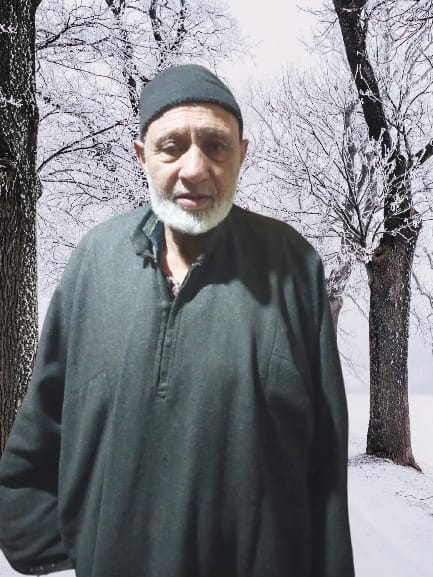
Time has moved on, relentlessly pushing us into the future, but the warmth of those days still lives inside me. The voices, the laughter, and the simple togetherness of people like Raheem Kak feel like buried treasure now, hidden under the noise and stress of modern life. We were not rich by today’s standards, yet we were content. We had less stuff, but we cared more for each other. Faith was not just a ritual we performed; it was a way of living. It has been almost ten years since I last spent time with Raheem Kak, even though he still lives nearby. Life, with its busy schedules and demands, kept us apart. However, one day, while returning from duty, I saw him in the market.
He was walking with a stick, his frame older and more fragile than the giant I remembered from my childhood. I was shocked to see how much time had passed. I approached him and greeted him warmly. He looked at me, his eyes squinting slightly, and replied, “Gobra theek chuka ch kohund govak,” asking if I was well and whose son I was. His words, spoken in that familiar, rough-edged tone, brought back a flood of memories. I smiled and, instead of just saying my name, I answered him with his own old saying: “Ungji tull trakh kotah go.” A spark of recognition lit up his face. He laughed, the sound rusty but genuine, and said, “You made me smile after a long time. You must be my friend.” We stood there in the busy market and talked for a while. I reminded him of the ghost stories that used to keep us awake at night, and the taste of his fried potatoes. He was surprised and happy that I remembered it all.
Before we parted ways, I promised him that I would write about him and his life, to capture the legend of the hills on paper. He blessed me with a smile that was full of peace and a quiet pride. Looking back at that encounter, and at the years that shaped me, I realize that the true beauty of life lies in simplicity. It lies in genuine relationships and in moments shared without expecting anything in return. The peace we search for so desperately today was once found in open hearts and honest prayers. Those old days remind me that no amount of wealth or technology can replace the calm that comes from compassion, faith, and unity. If we can bring even a small part of that spirit back into our lives, perhaps we will once again find the healing we have lost.
The views expressed in this article are solely those of the author and do not necessarily reflect the opinions or views of this Magazine.
Leave a Reply